

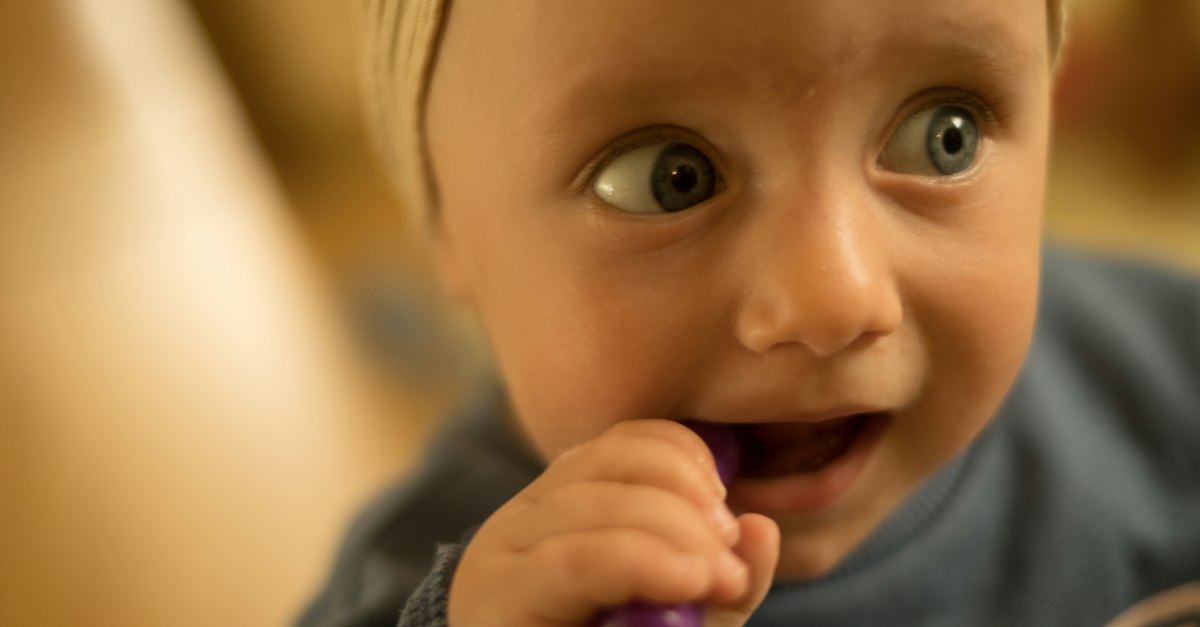
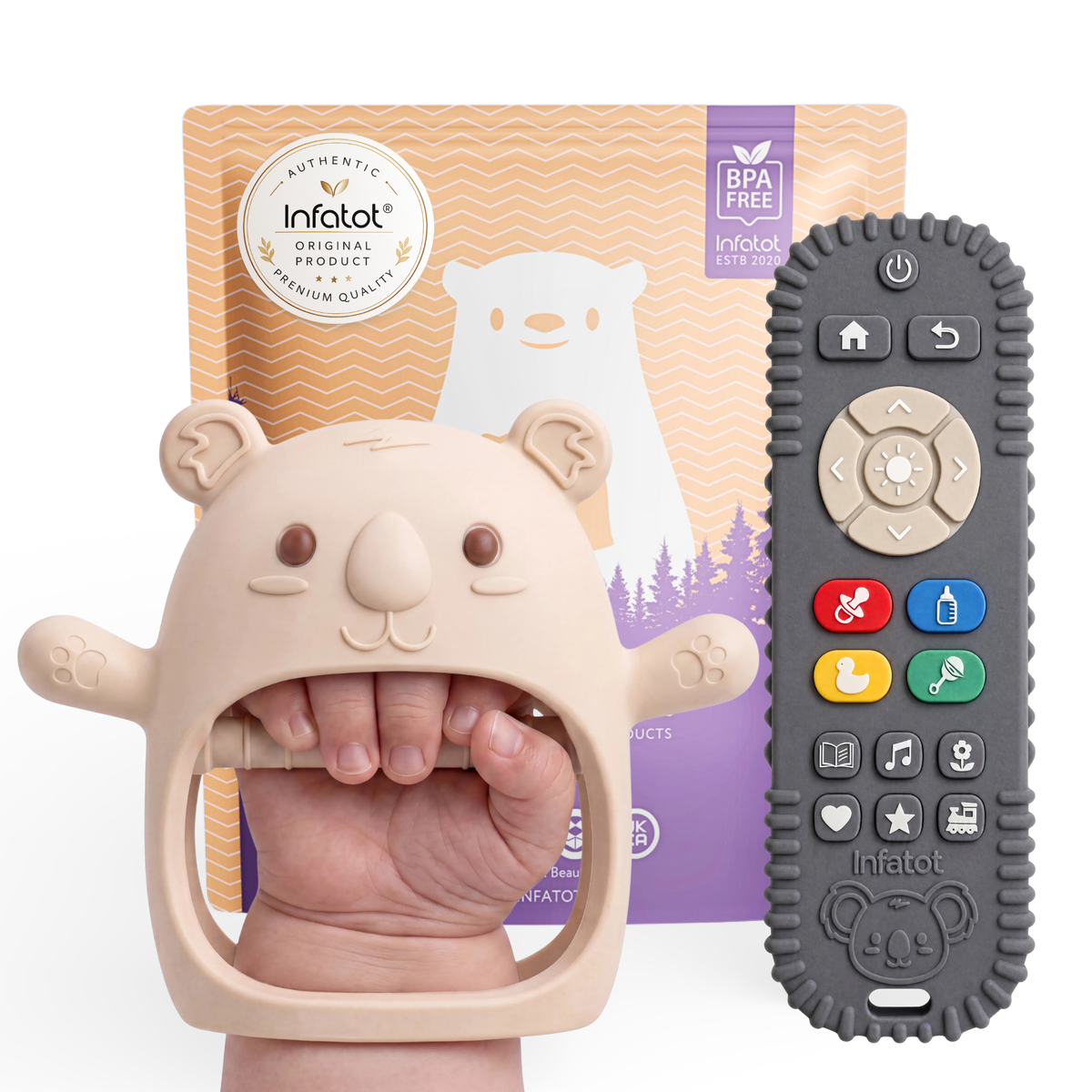
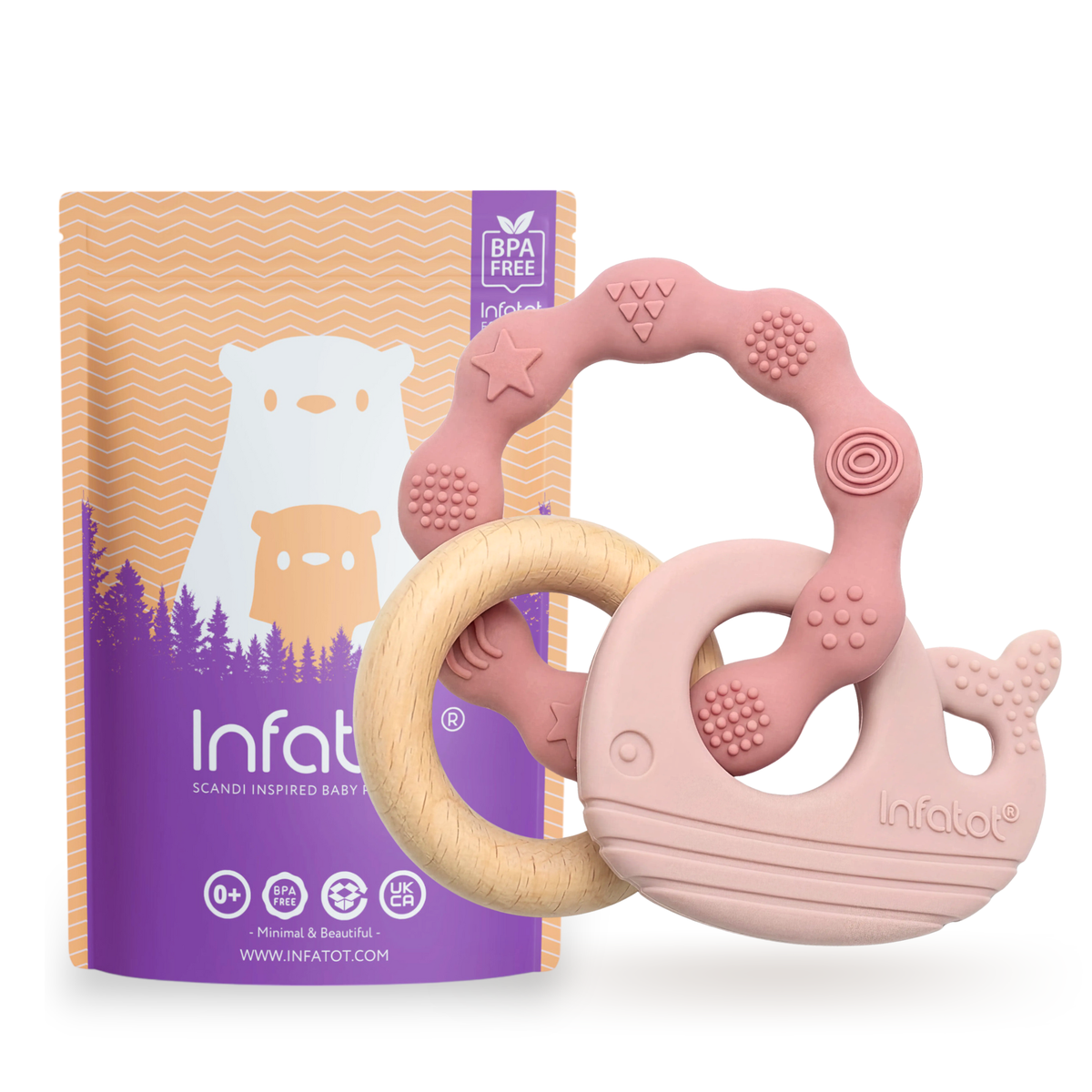
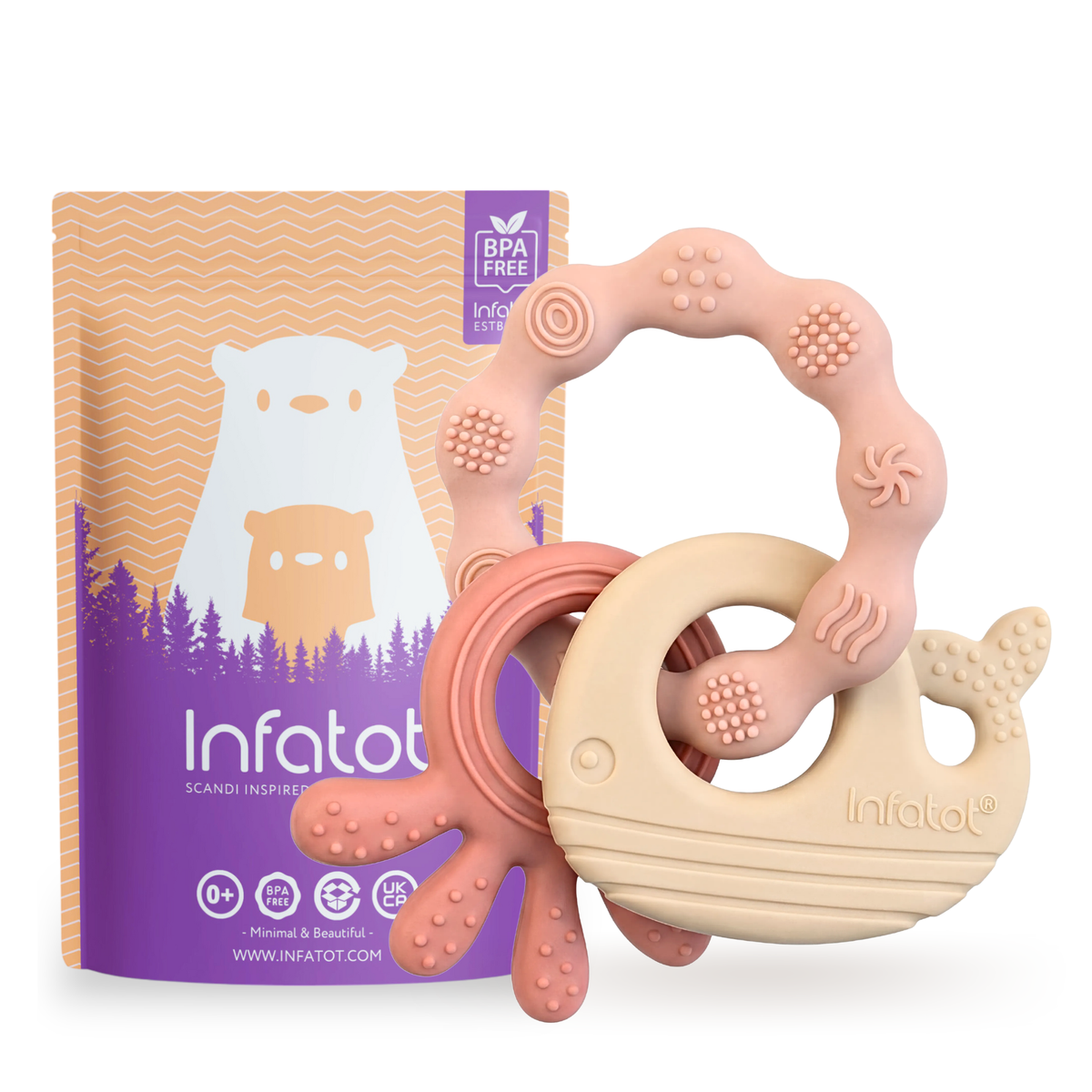
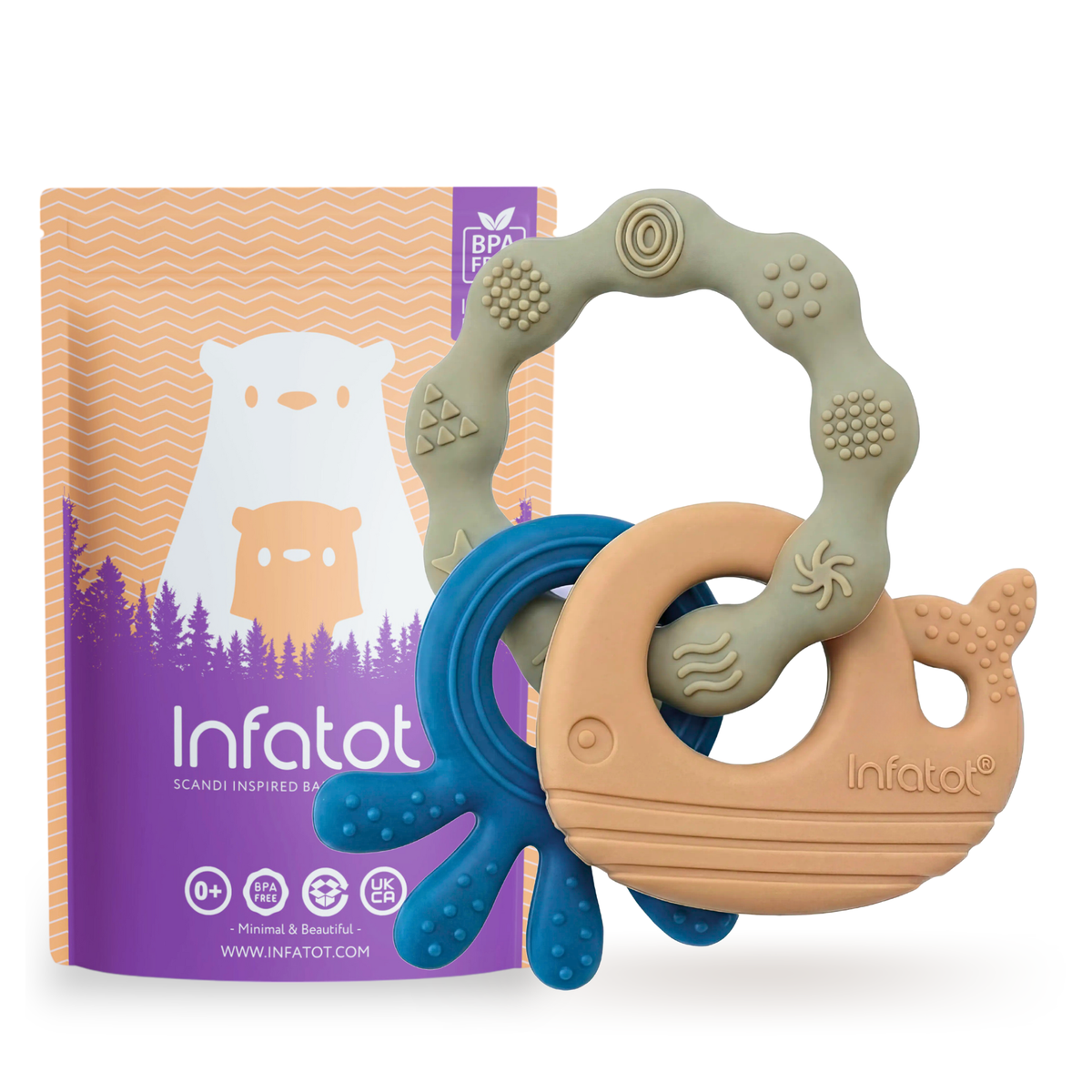
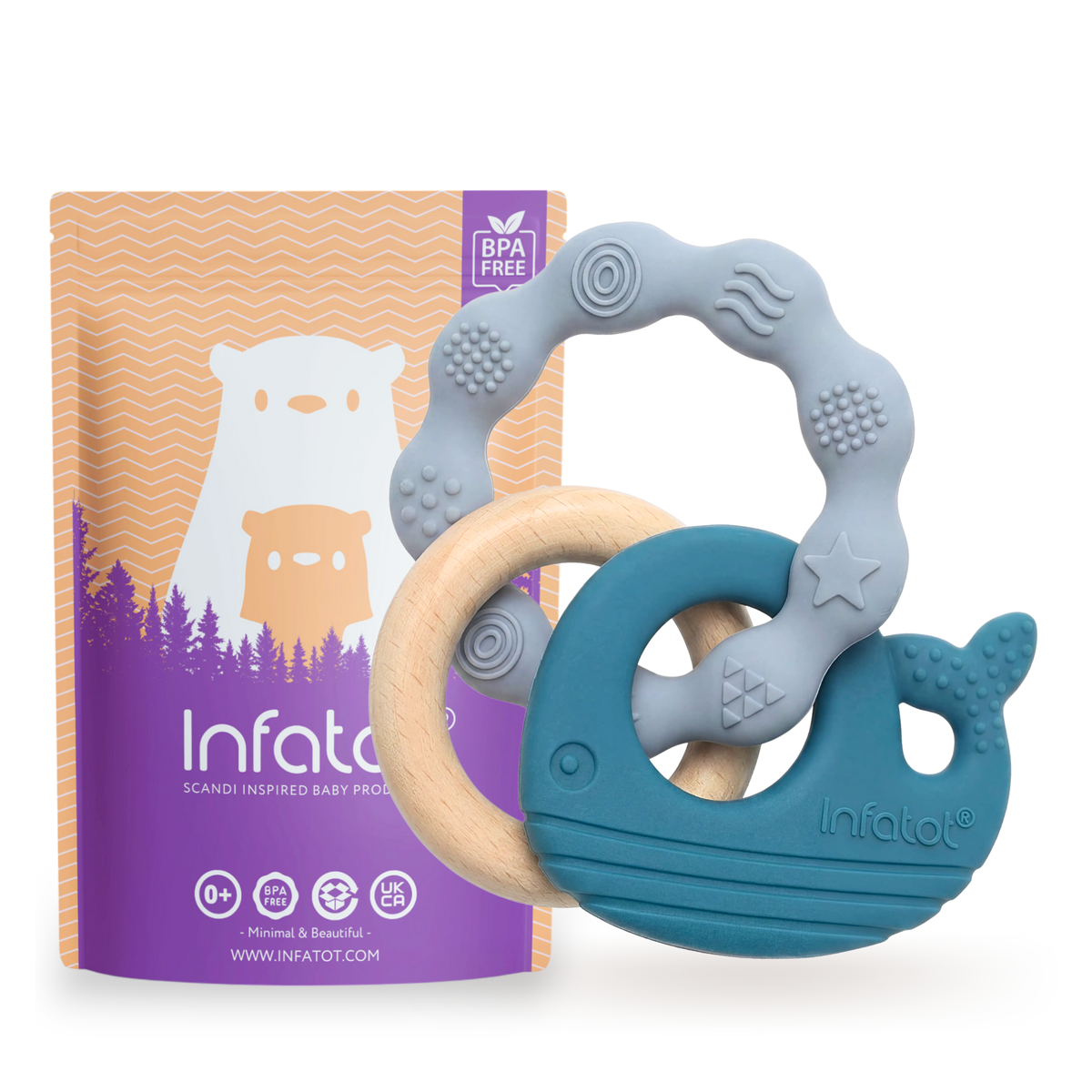
Quick answer: Two or three teethers is usually enough. One can be in use while another is clean or chilling in the fridge, and a spare can live in the changing bag. Once your baby has a clear favourite, more teethers mostly end up in a drawer.
Most babies start teething at around 6 months. Some start before 4 months and some after 12 months. The first molars usually arrive at around 12 months, and most children have all their milk teeth by 2 to 3 years, so the teethers you buy now may be used for a long time (NHS teething symptoms).
The NHS says you may have to try a few different things before you find what works for your baby. That's a good reason to buy a small mix of teethers rather than a large pile of the same one.
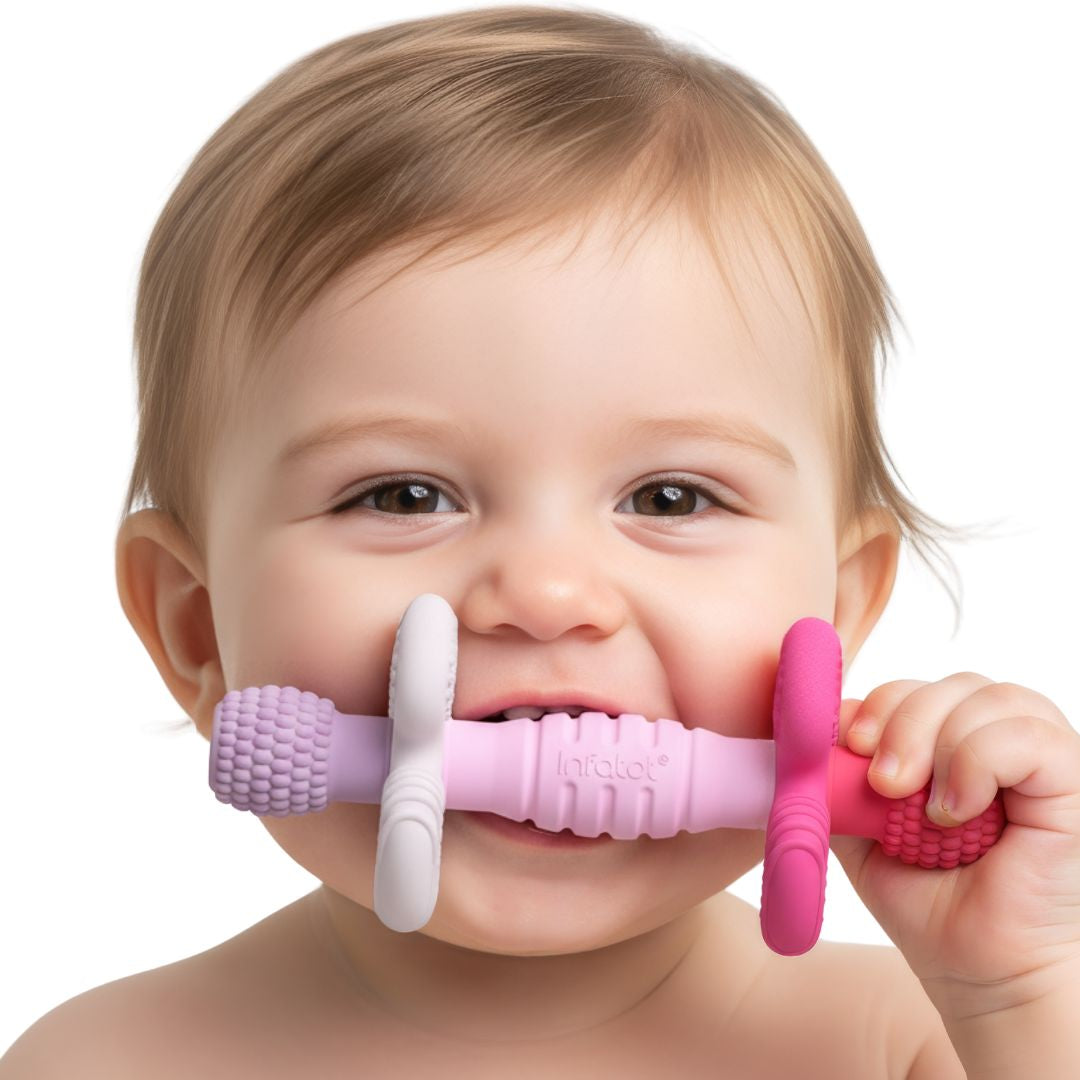
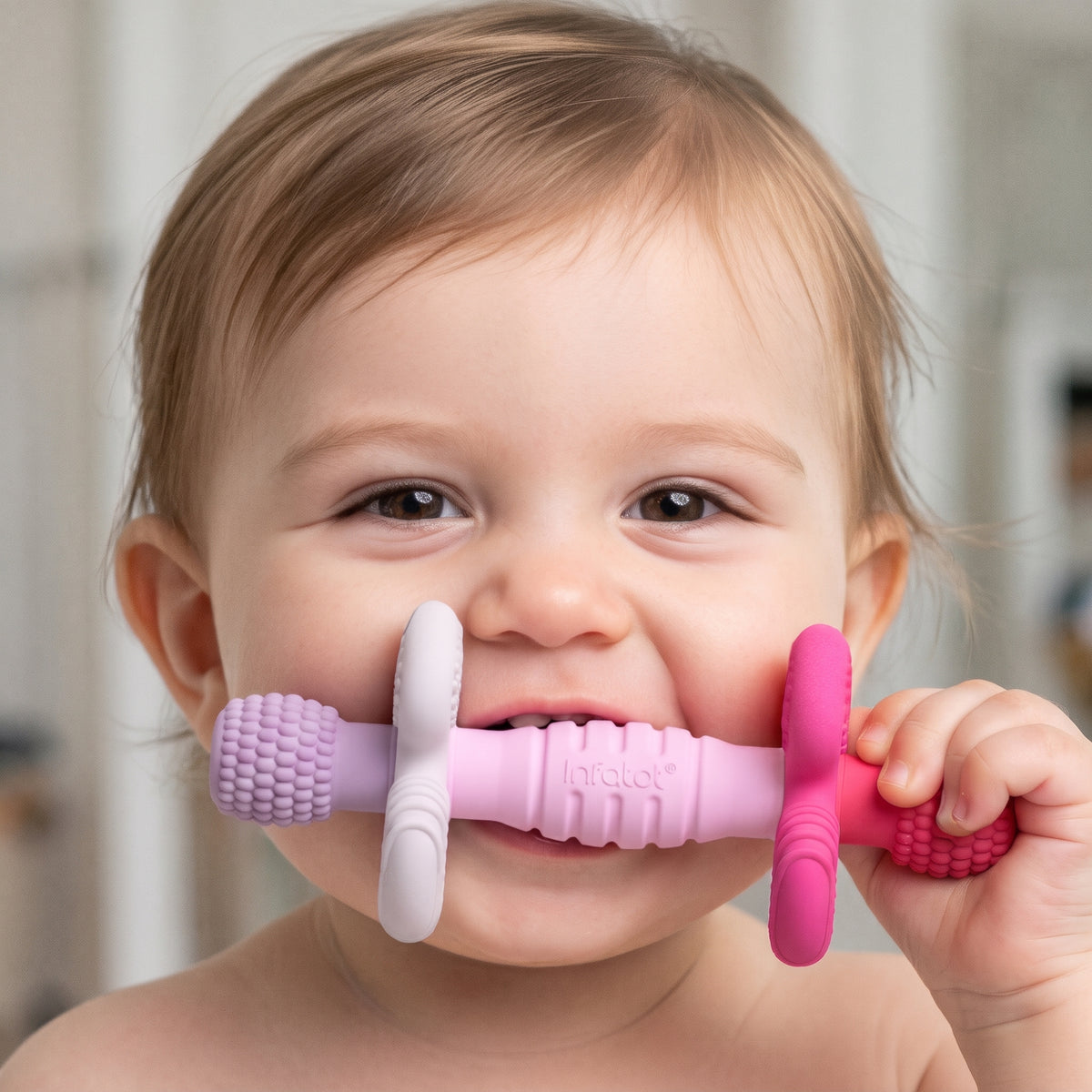
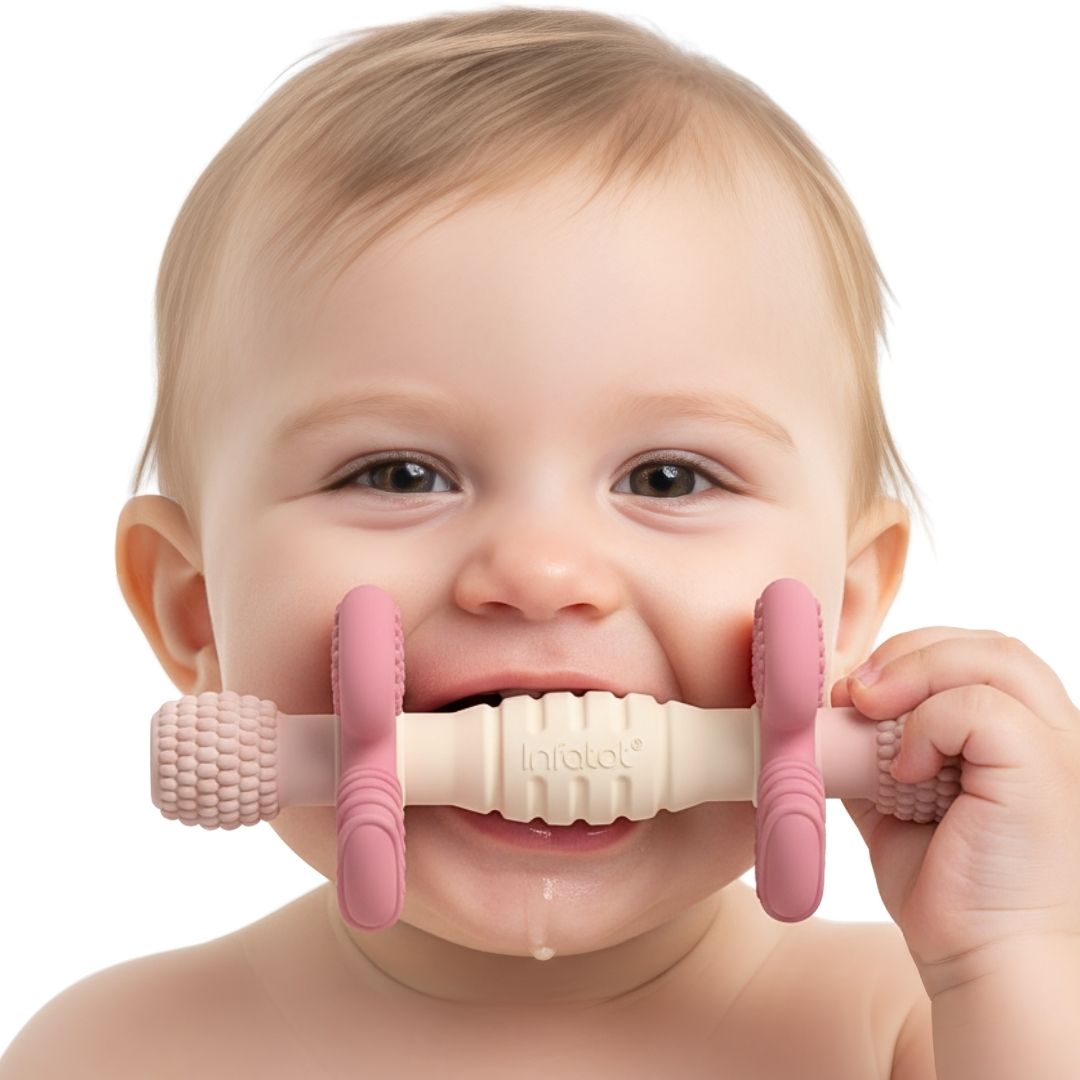
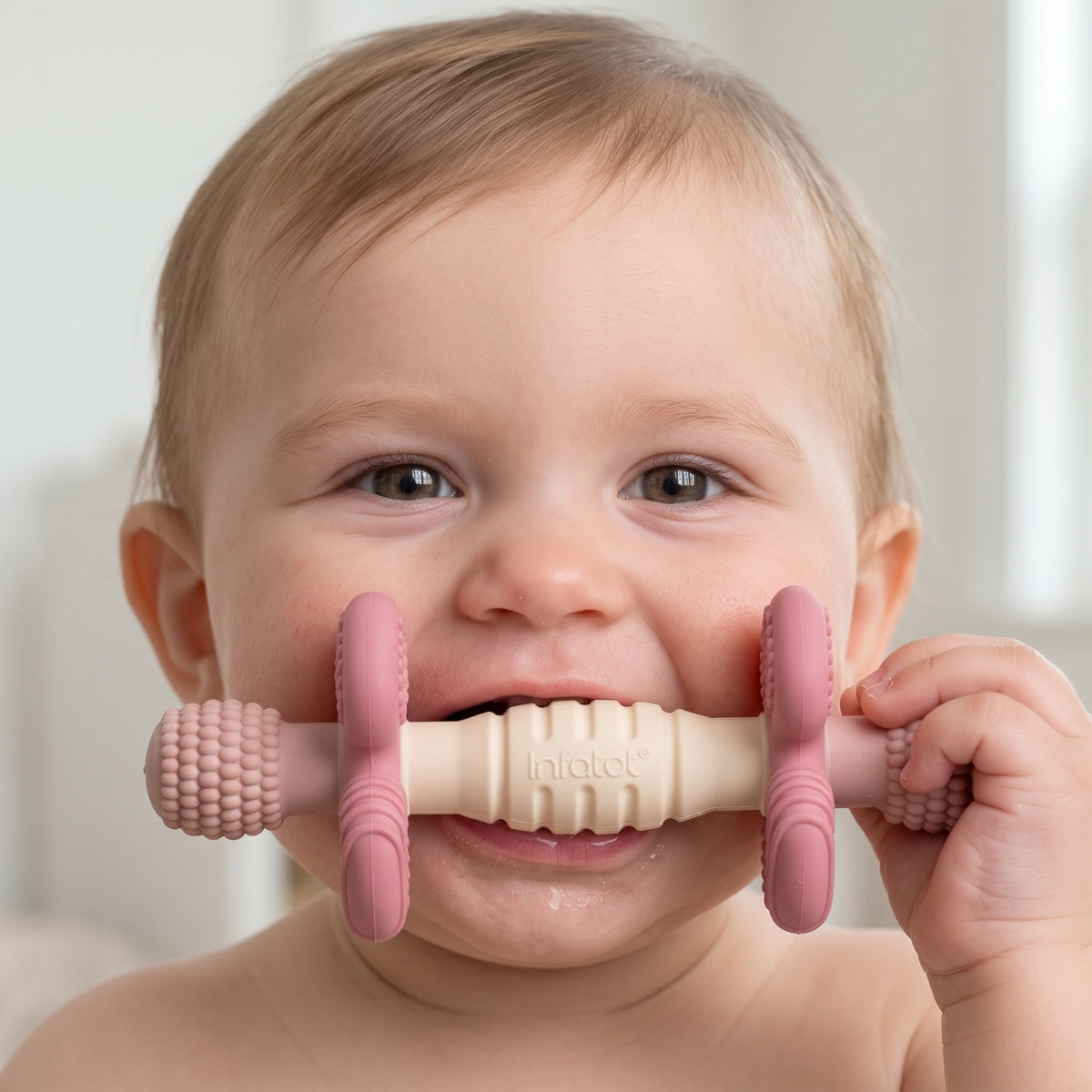
The NHS says teething rings give your baby something safe to chew, which may ease their discomfort and take their mind off sore gums. Some can be cooled in the fridge first. With two at home, one can be chewed while the other is washed and chilled. A third in the changing bag means you don't have to remember to pack one before you go out.
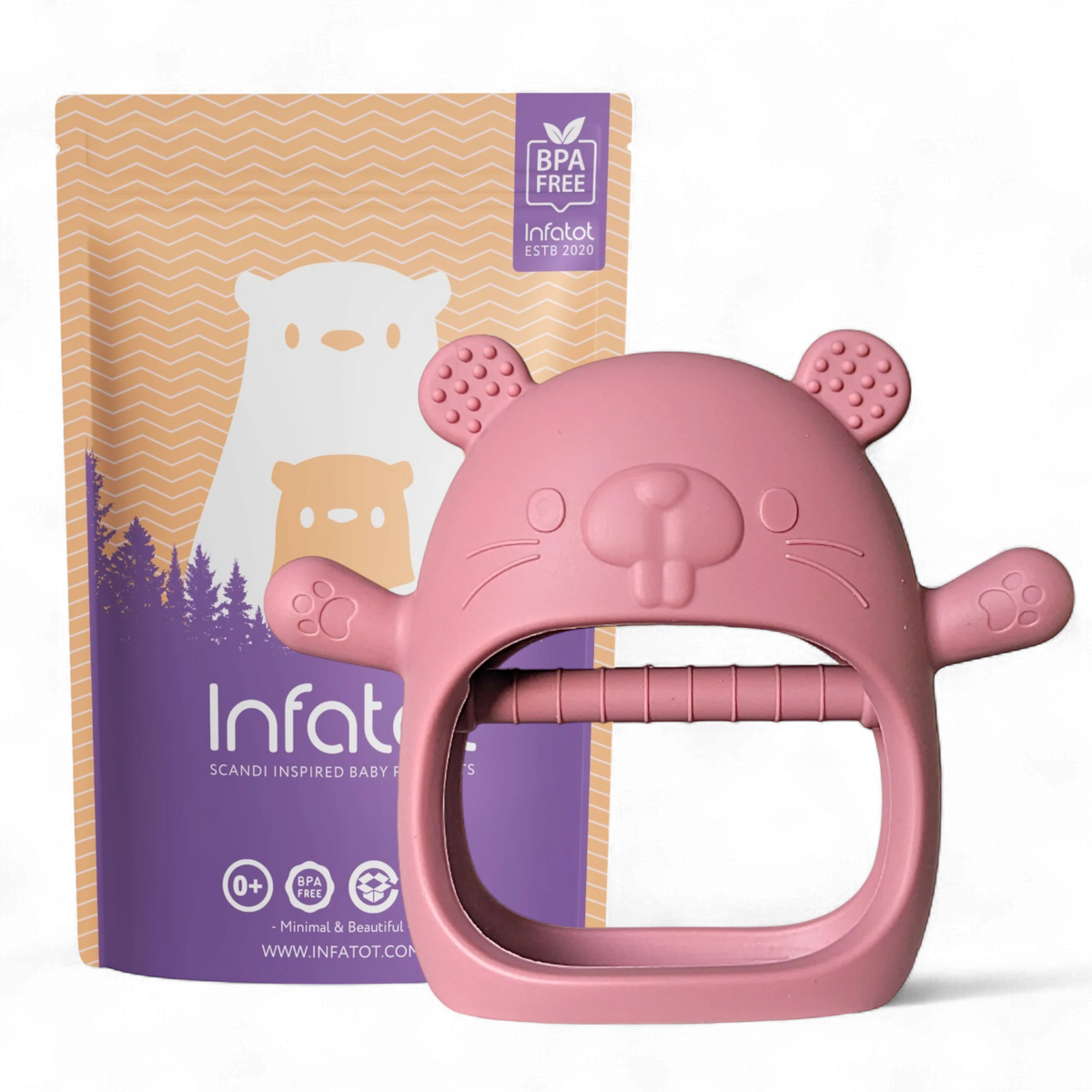
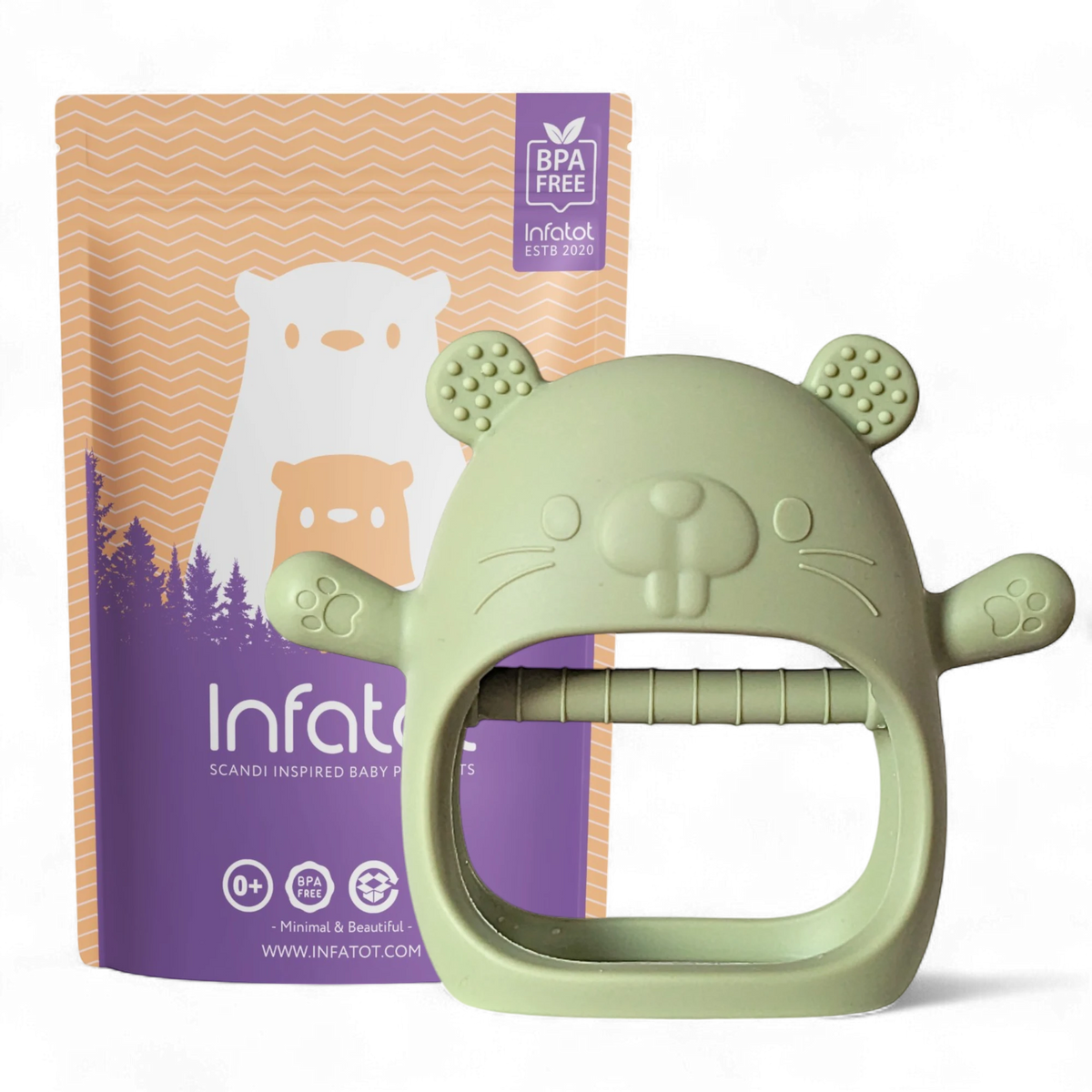
Choose different shapes and textures rather than three of the same. Your baby may prefer a firm ring on some days and something softer on others, and a mix helps you work out what they like before you spend more. There's more on this in Why different teether textures matter for your baby's mouth and first foods.
When one teether becomes the one your baby always reaches for, stop buying. A second copy of the favourite is more useful than a new design.

Wash each teether the way its instructions say, and swap in the clean one whenever the one in use has been dropped or has been chewed for a while. Having two at home makes this easy, because there's always a clean one ready.
Check the instructions for how long to chill it. The NHS advises never putting a teething ring in the freezer, because a frozen ring could damage your baby's gums. The Oral Health Foundation adds that frozen rings can become too hard.
Try this. Put the spare teether in the fridge as soon as you've washed it, so the next swap is already cool when your baby needs it.
Babies and toddlers put everything in their mouths, so toys with small parts are a choking risk for under 3s. A few quick checks from the Child Accident Prevention Trust apply to teethers too.
Once your baby is 6 months or older and weaning, the NHS suggests healthy things to chew on, such as raw fruit and vegetables. Soft fruit like melon can soothe gums. The Oral Health Foundation advises soft textures, such as ripe fruit or well-cooked vegetables cut into appropriate pieces. The Child Accident Prevention Trust says to cut melon, apple, carrot and cucumber into thin strips, and to steam or simmer harder food to soften it for weaning babies. Always watch your baby while they're eating in case they choke.
If your baby is in pain, sugar-free paracetamol can be given from 2 months, and ibuprofen from 3 months if your baby weighs more than 5kg, following the instructions that come with the medicine (NHS; Oral Health Foundation). Gently rubbing their gums with a clean finger, or a cuddle and some play, may also help.
Teething can cause a mild temperature below 38C (NHS), so a temperature of 38C or higher isn't a teething symptom. NCT says that if your baby has a fever, seems very upset or is clearly unwell, you shouldn't assume it's teething and should get medical help right away. The NHS points to its separate advice on high temperature (fever) in children, which sets out when babies and children under 5 need urgent medical help.
The NHS suggests avoiding rusks, because nearly all brands contain some sugar, and sugary foods can cause tooth decay even when a child only has a few teeth.
The NHS says there's a lack of evidence that teething gels work, and recommends trying teething rings or sugar-free paracetamol (from 2 months) or ibuprofen (from 3 months) first. The Oral Health Foundation adds that ibuprofen is only for babies who weigh more than 5kg. NCT says gels with a mild local anaesthetic should only be used for babies over 5 months. If you use a gel, choose one made for young children and ask a pharmacist for advice. General oral pain relief gels are not suitable for children.
General information, not individual medical advice. Speak to your GP, midwife or health visitor about your baby’s needs.
Teether on the floor again: what to do when you're out with the pram
Read moreabout Teether on the floor again: what to do when you're out with the pram
Molars at 12 to 18 months: helping a toddler with back-teeth teething
Read moreabout Molars at 12 to 18 months: helping a toddler with back-teeth teething
Sickness bug in babies and toddlers: spotting dehydration early
Read moreabout Sickness bug in babies and toddlers: spotting dehydration early


Share:
How much should a baby eat at 6 months? Portion sizes for the first weeks of solids
Fine motor play for a baby who has just learned to sit