


Quick answer: If a teether lands on a café floor or the pavement, put it away and give your baby a clean spare. Wash the dropped one at home using its own cleaning instructions. A rinse under clean running water is a fallback when there's no spare. Never fix a teether to a cord round your baby's neck.
Teethers get dropped all the time, especially once your baby can grip, wave and throw. On a walk, that usually means wet pavement, grit or a café floor.
UK health guidance doesn't set a rule for teethers dropped outdoors. It's much clearer on attaching them. The NHS and RoSPA both warn against anything tied round a baby's neck, so the realistic answers are a spare in the changing bag and a teether that's harder to drop.
The NHS sterilising guidance covers bottles, teats and other feeding equipment until your baby is at least 12 months old. It doesn't mention teethers, so cleaning one comes down to the maker's instructions. For example, the Koda Koala Teething Pair listing says to clean it with water and rinse it after each use. It can also go in the dishwasher, in boiling water or in a steam steriliser.
Out with the pram, the simplest habit is to swap and wash later. Put the dropped teether in a separate bag, hand over a clean one and clean the dropped one properly at home. If you have no spare, a rinse under clean running water at least removes grit and crumbs. Then give it a full wash once you're home.
Tying a teether on stops it hitting the floor, but the safety advice is clear. The NHS says never to tie a teething ring round your baby's neck because it could be a choking hazard. The Oral Health Foundation gives the same advice.
RoSPA explains that there's a strangulation risk with any cord round a child's neck, especially a baby's. It does not advocate any cord being placed round a baby's neck at any time. Its concerns about amber teething necklaces also include beads and clasps coming loose and becoming a choking hazard.
Leave any cord off and pack a spare teether instead.

Two teethers and somewhere clean to keep them cover most trips. Pack them last so they sit at the top of the bag.
Try this. Choose a spare that looks different from the everyday teether. When it comes out of the bag you'll know it's the clean one, even after a long day.
These ideas often come up on a walk or at baby group. Each one sits alongside what the guidance says.
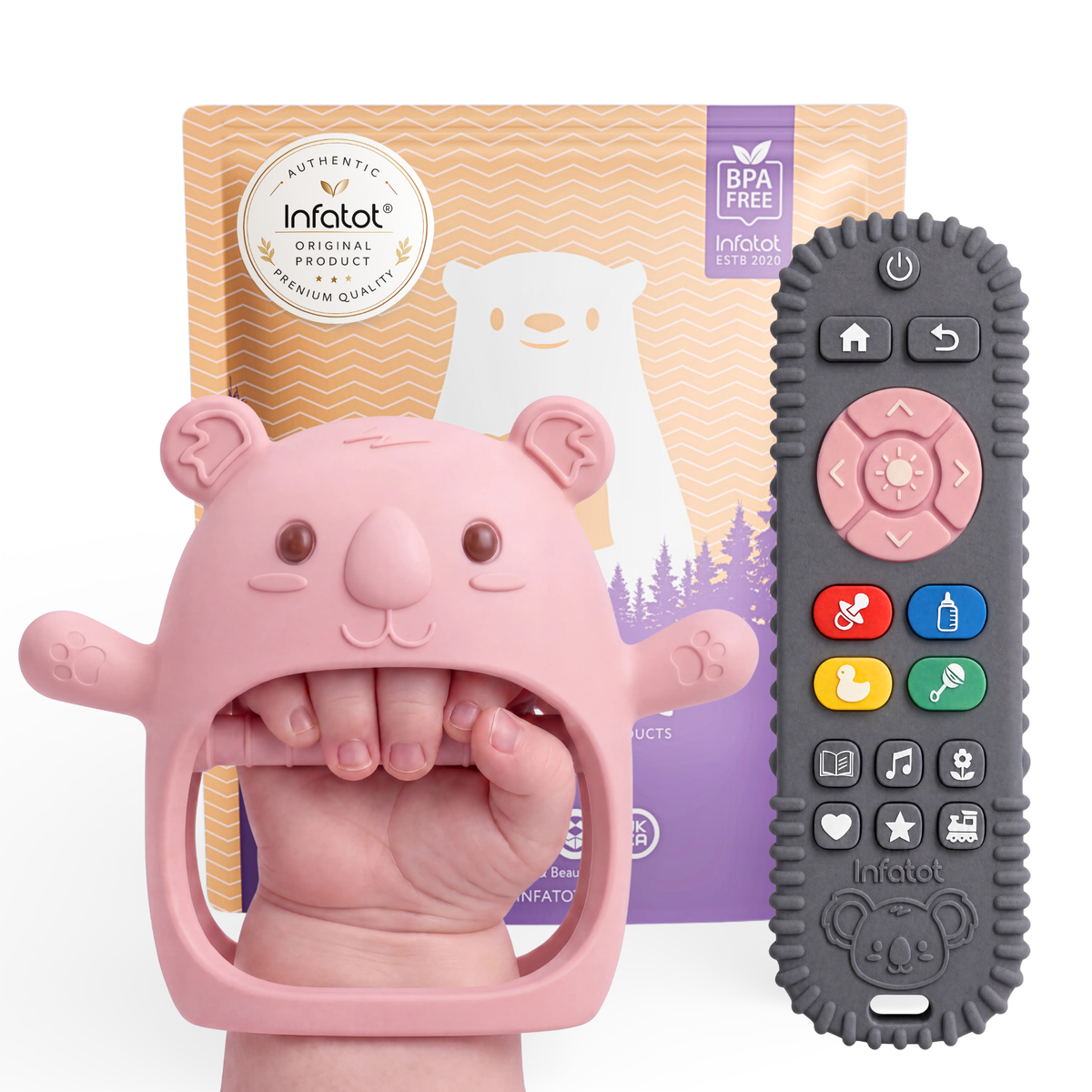
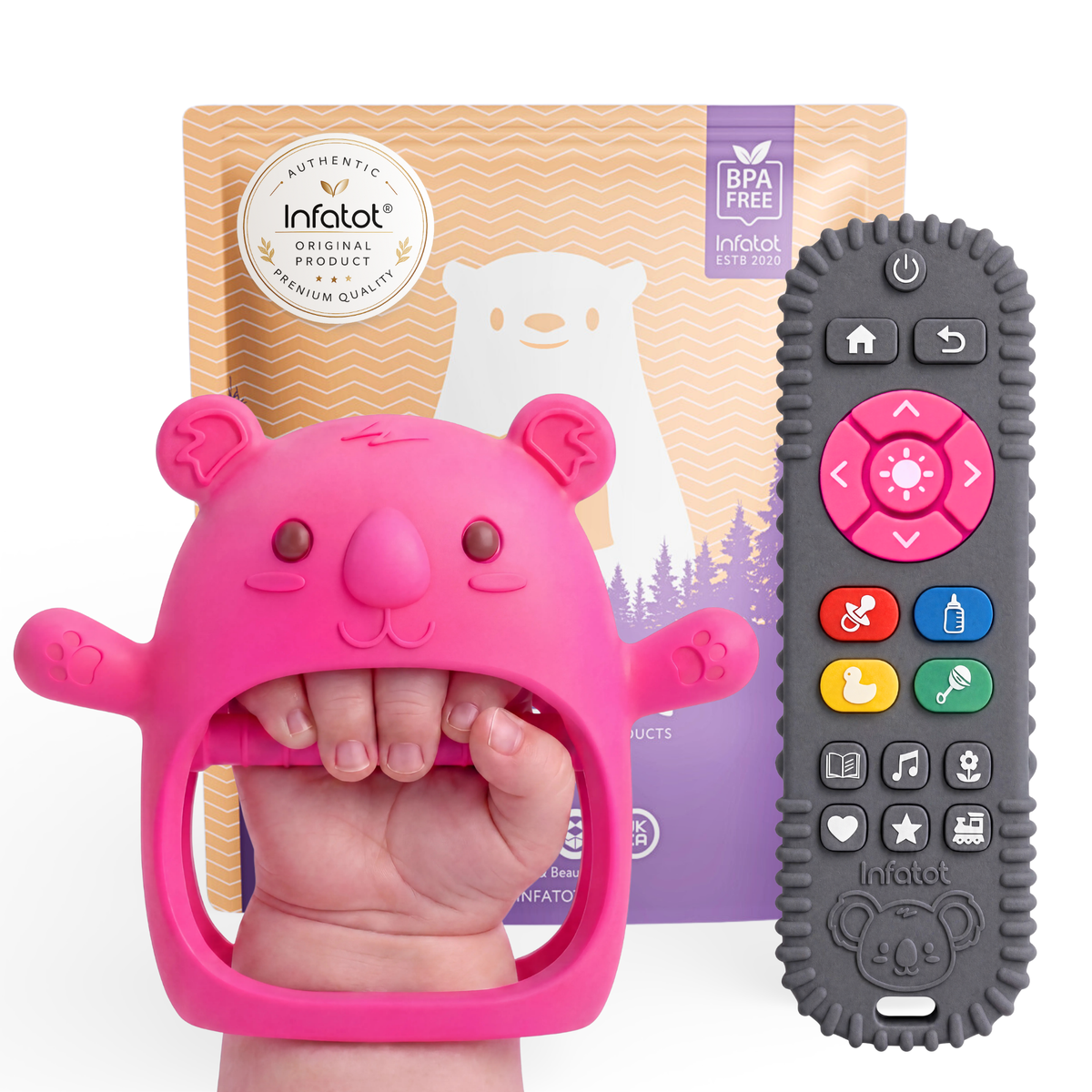
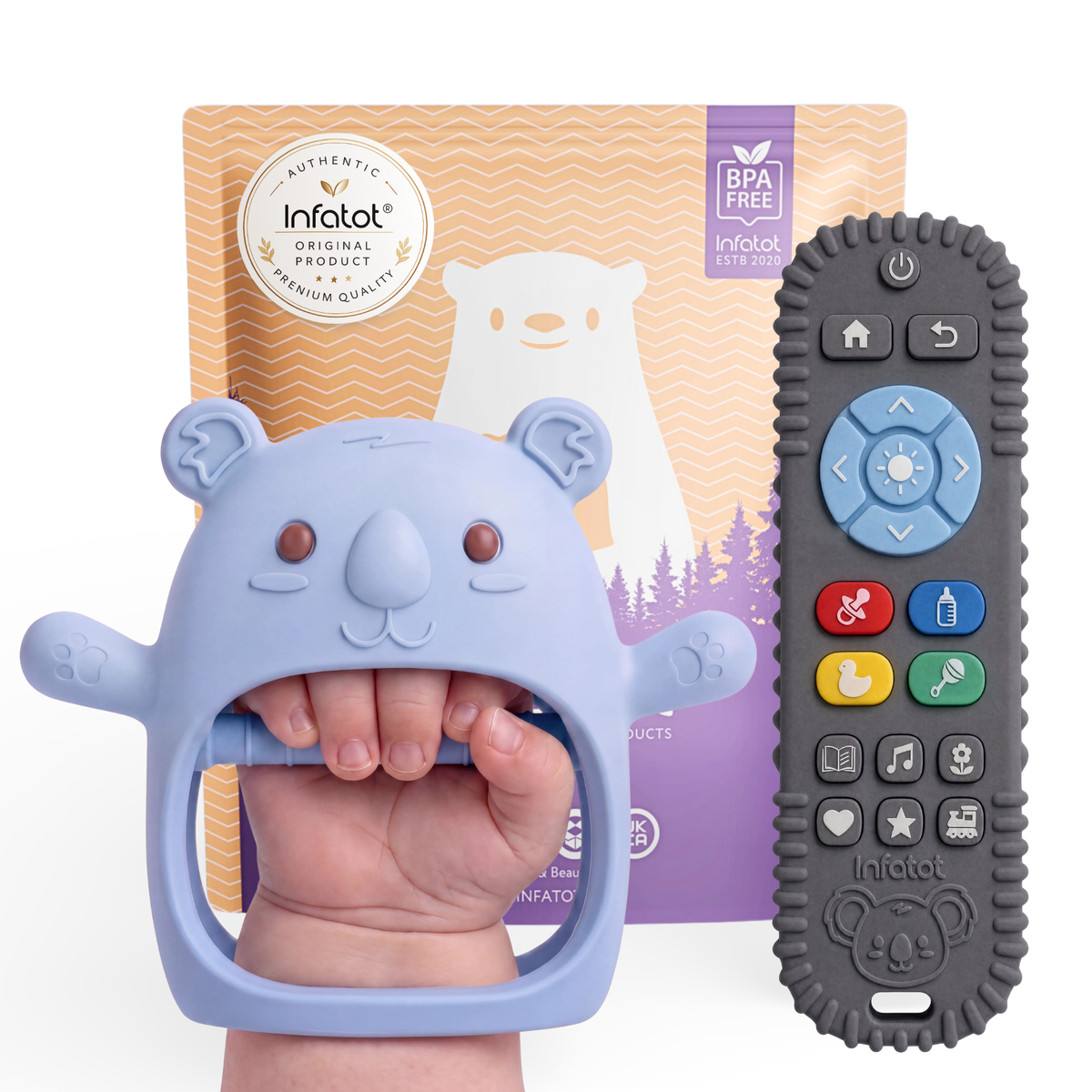
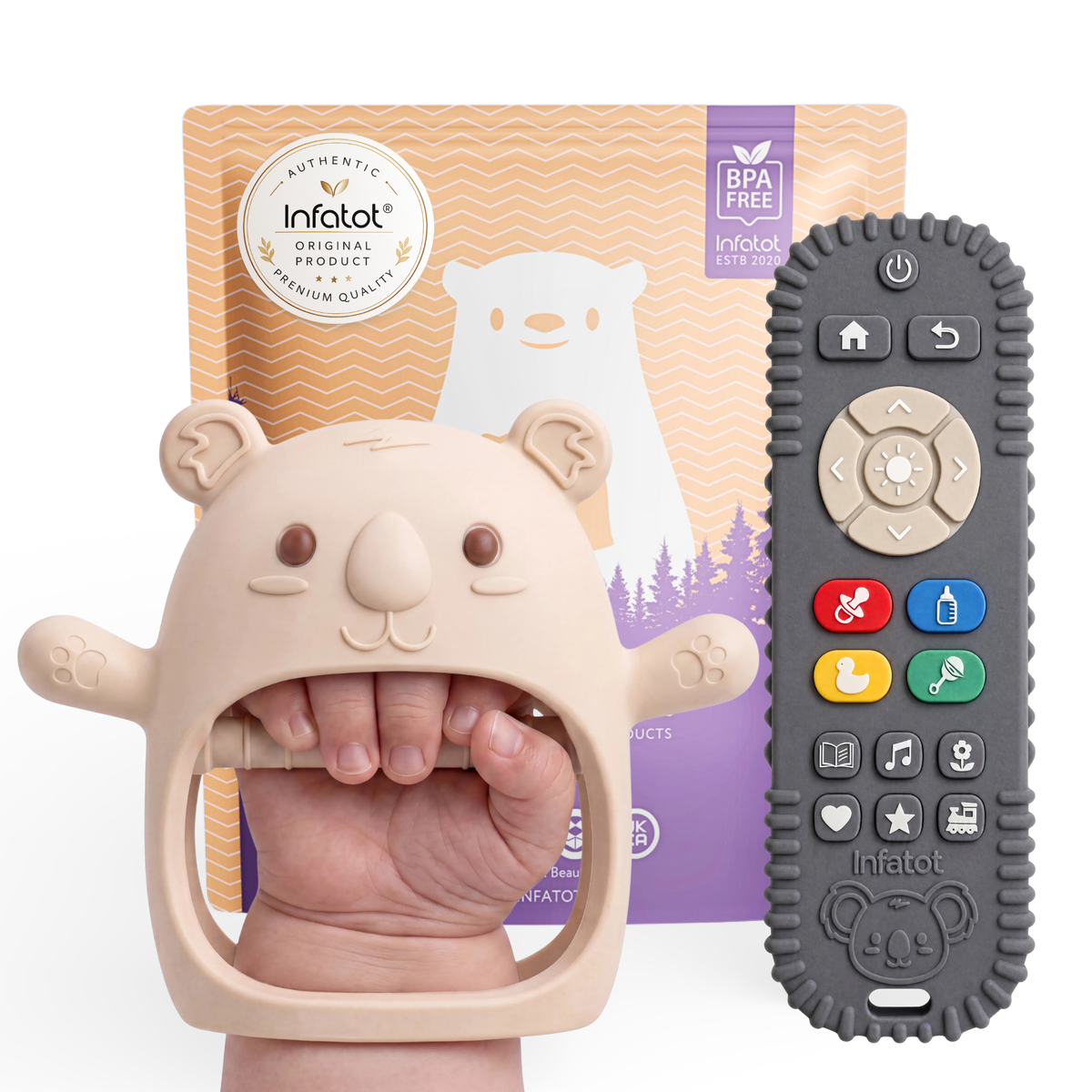
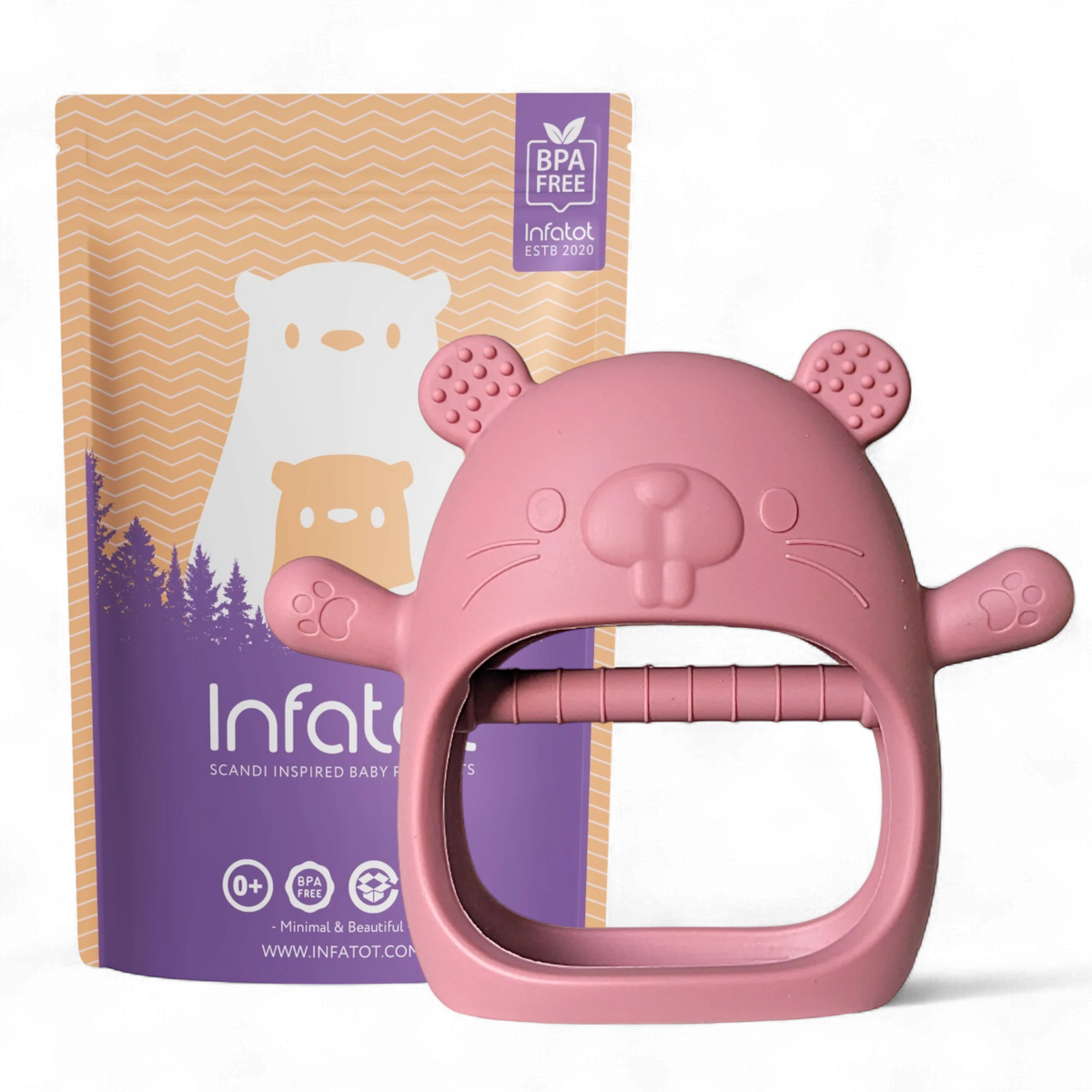
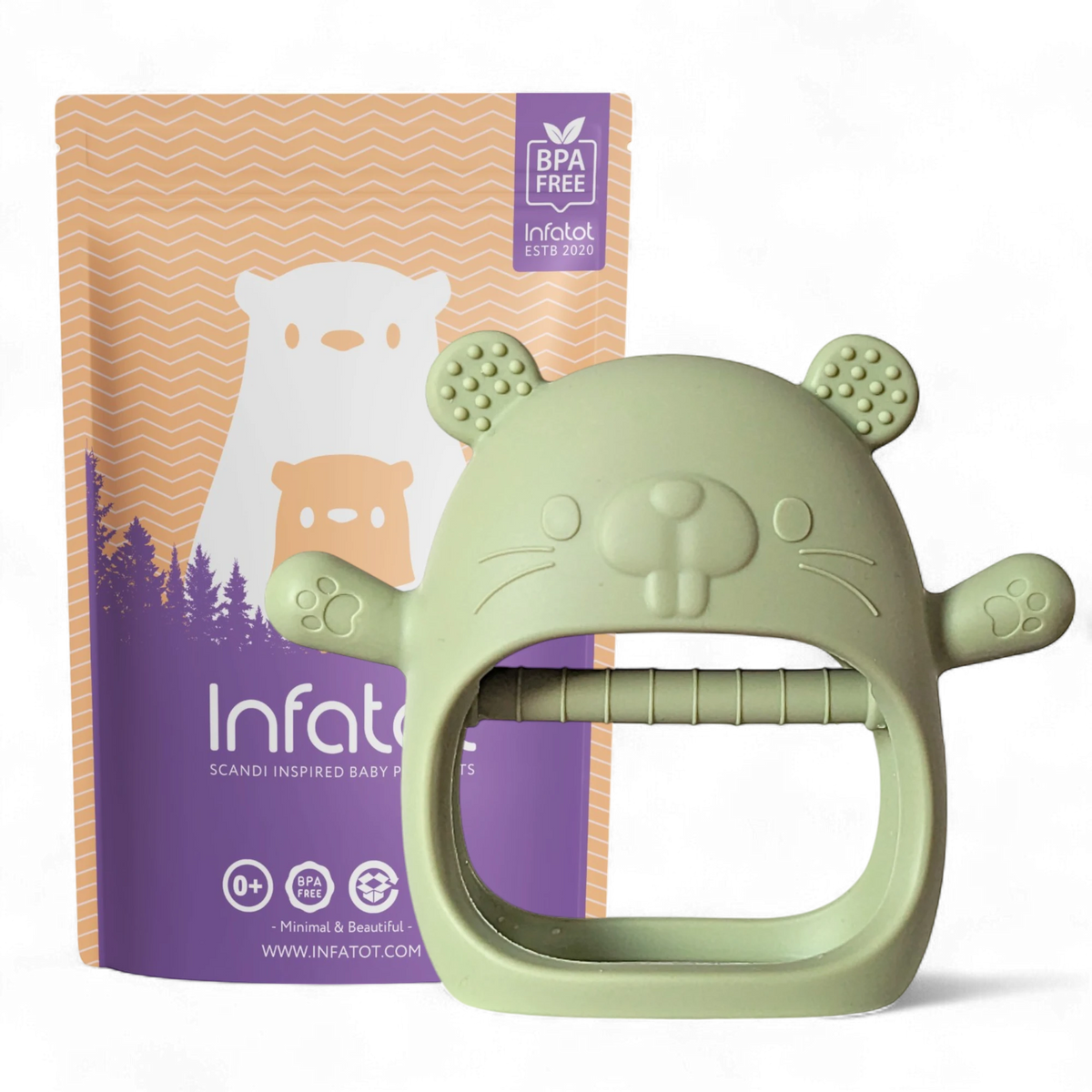
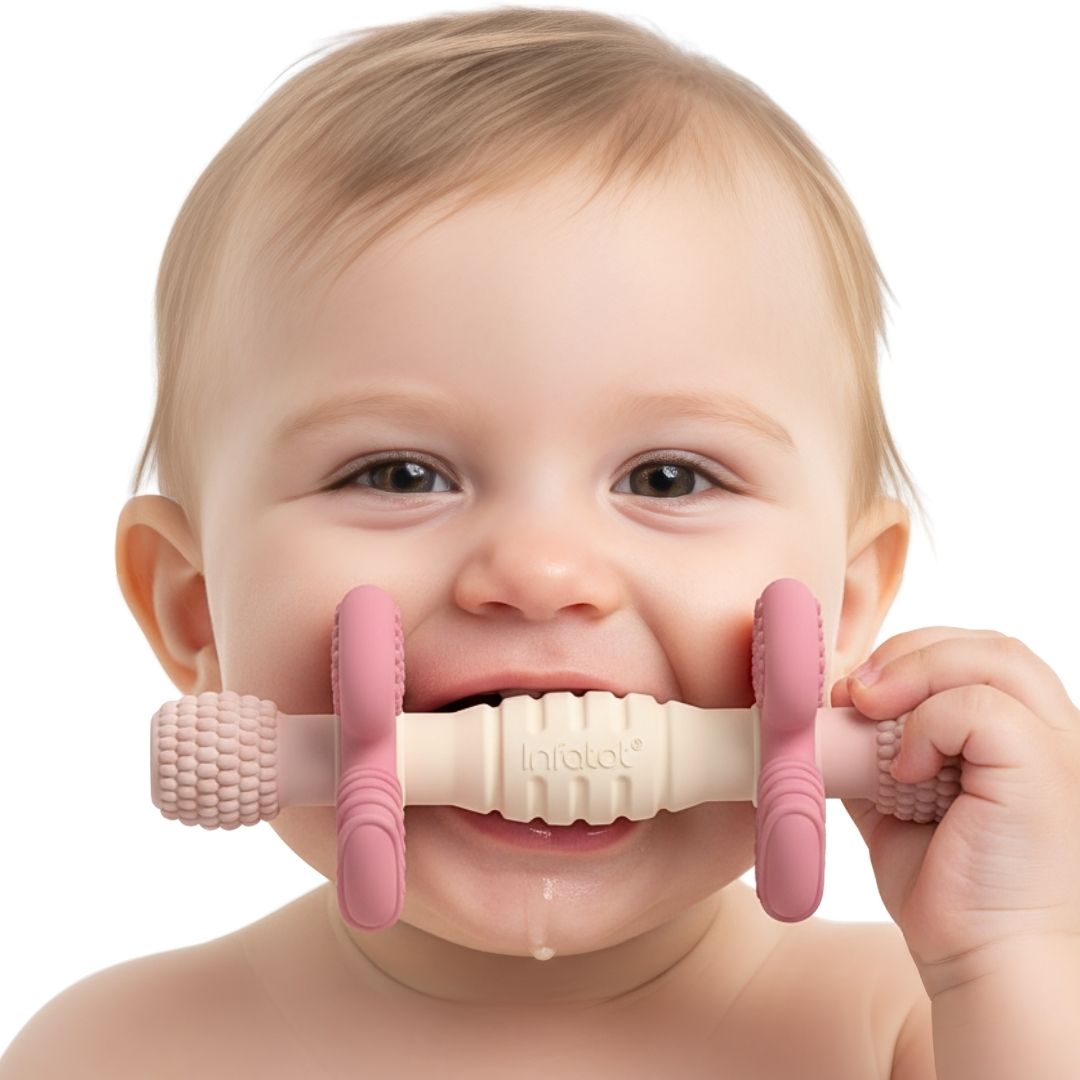
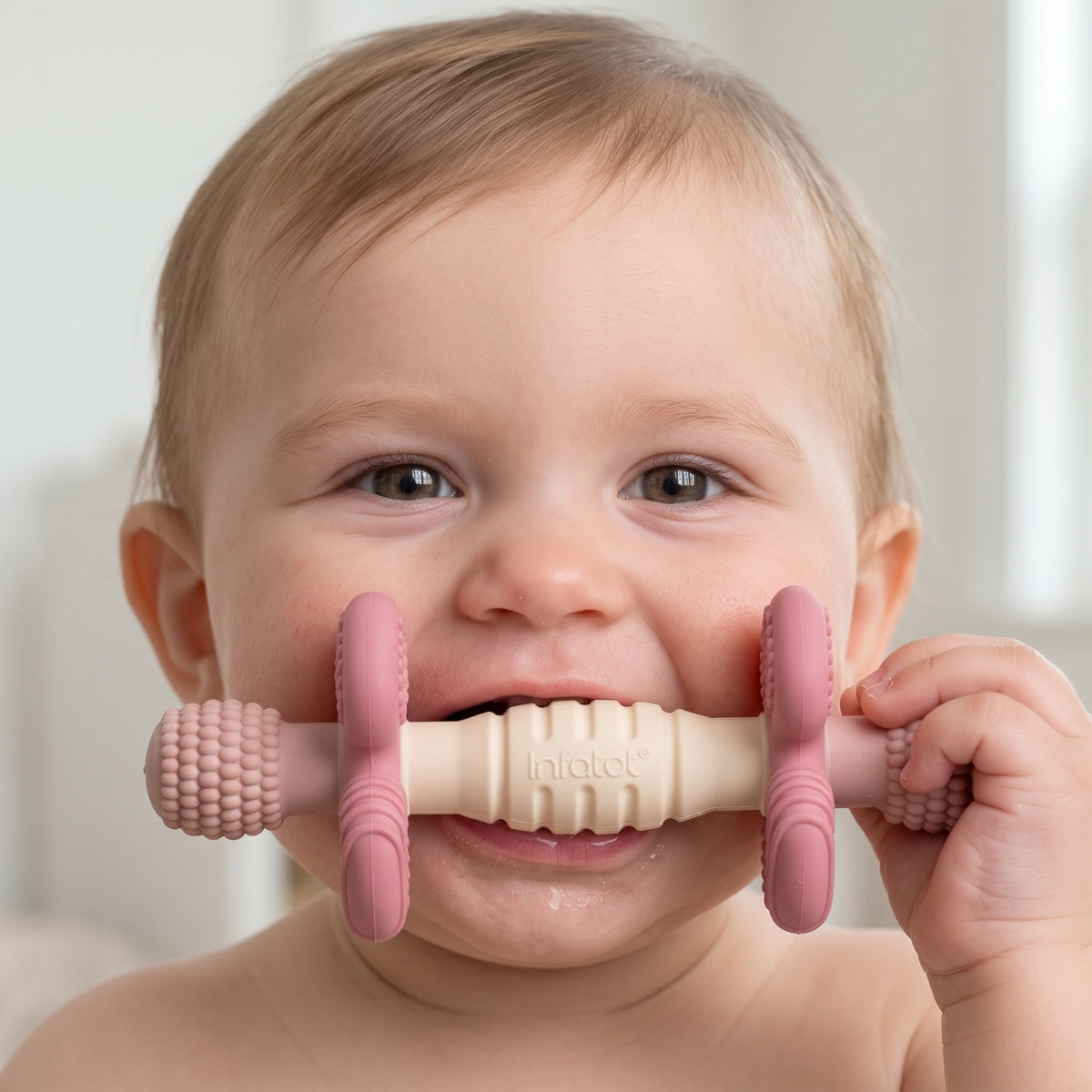
A teether that stays on your baby's hand falls on the floor less often, and it does this without a cord. The Koda Koala Teething Pair comes with a silicone koala mitten and a handheld remote-shaped teether with raised buttons. The mitten has an open design that lets air move around your baby's fingers.
Swap between the two pieces, and keep one clean in the bag while your baby uses the other. Both pieces come in the same colour: blue, plum, cream, teal or pink.
From Infatot
Koda Koala Teething Pair
The mitten stays on your baby's hand so it hits the floor less often, and the handheld teether is a ready spare.
If your baby seems in pain or distressed and comforting or a teething ring hasn't helped, a sugar-free children's paracetamol can be given from 2 months. The Oral Health Foundation says ibuprofen can be given from 3 months if your baby weighs more than 5kg. Follow the dose on the label for your baby's age or weight, and ask a pharmacist if you're unsure. Children under 16 should not have aspirin.
The Oral Health Foundation says teething doesn't usually cause serious illness. There is no strong evidence that it causes diarrhoea or a high fever. If your baby seems very unwell or you're worried, contact your doctor.
General information, not individual medical advice. Speak to your GP, midwife or health visitor about your baby’s needs.
Sleeping at Grandma's over Christmas: setting up a travel cot safely
Read moreabout Sleeping at Grandma's over Christmas: setting up a travel cot safely
Gagging or choking when your baby starts solids
Read moreabout Gagging or choking when your baby starts solids
Why babies grab everything, including the TV remote, and what to give them instead
Read moreabout Why babies grab everything, including the TV remote, and what to give them instead



Share:
Gagging or choking when your baby starts solids
Sleeping at Grandma's over Christmas: setting up a travel cot safely