


Quick answer: Set up the travel cot in the room where you sleep, away from radiators, heaters and direct sunlight. Use only a firm, flat mattress, with no duvets, pillows or soft toys. Lay your baby on their back with their feet at the foot of the cot, and keep the room between 16C and 20C.
Guest rooms aren't set up for babies. The spare bed sits against a radiator, the heating runs high for older relatives, and someone kindly offers a quilt to soften the travel cot. Before you go, decide where the cot will stand and what goes in it, so you're not sorting it out at bedtime with a tired baby.
The safer sleep advice is the same as at home, for every sleep, day or night. If your baby was born before 37 weeks, the NHS says to follow it for a year from their due date, not their birth date.
The NHS says to use a firm, flat mattress and keep the cot clear of anything that could cover your baby's face or head. That means no pillows, duvets, cot bumpers, loose blankets or soft toys, and nothing to keep your baby in place, such as pods or nests (NHS: reducing the risk of SIDS). A thin travel cot base can look uncomfortable to relatives. A folded duvet or pillow laid on top to soften it goes against this advice.
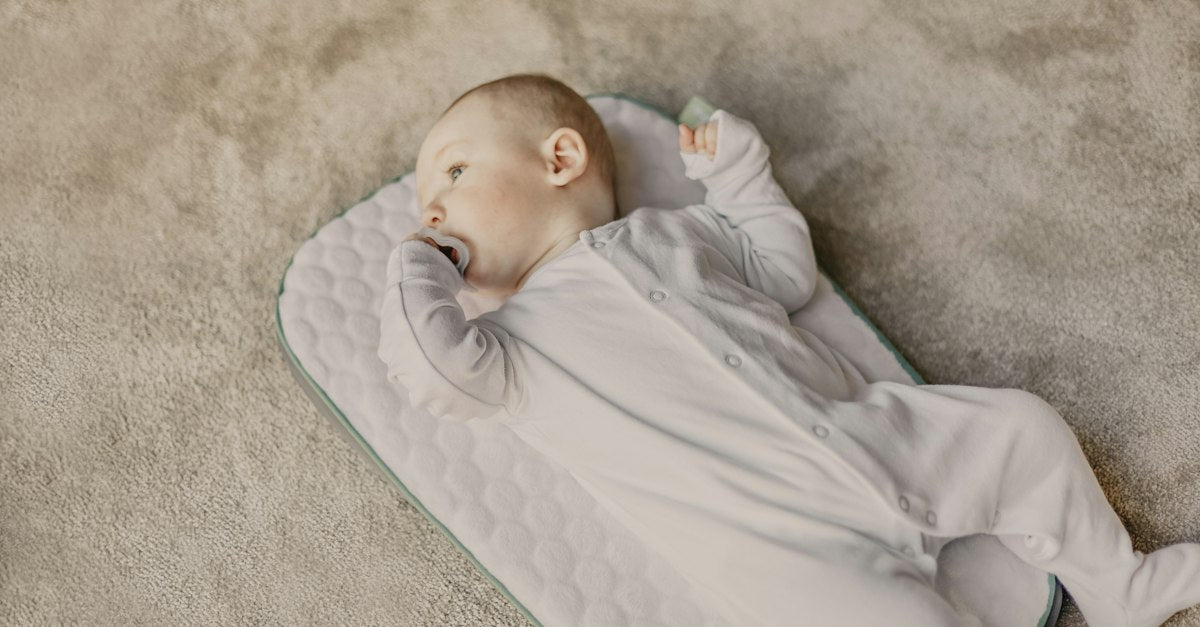
For warmth, the NHS suggests lightweight blankets, sheets or a baby sleeping bag. Lay your baby on their back in the feet-to-foot position, with their feet at the bottom of the cot. If they roll onto their front, move them onto their back until they can roll both ways by themselves.
Do this when you arrive, while the room is still light and your baby is awake.

Overheating can increase the risk of SIDS, and the NHS says it can come from too much bedding, too much clothing or a room that's too hot. Older relatives often keep the heating higher than you would at home. To check your baby, feel their chest or the back of their neck. If their skin is hot or sweaty, take off one or more layers of clothing or bedding. Cool hands and feet are normal.
Your baby should never sleep with a hot water bottle or electric blanket, however cold the guest room feels. Take off their hat and extra layers as soon as you come indoors or get into the car, bus or train, even if it wakes them. For what to put them in at night, see what should a baby wear to bed when the house gets colder?
16–20C
The NHS range for the room your baby sleeps in. Use a room thermometer to check it.
Long drives, a busy sofa, drinks after dinner and relatives who smoke are all part of a family Christmas, and each one affects where and how your baby should sleep. The NHS advice for these situations is below.
The parts of your routine that travel easily help your baby recognise bedtime in a new room. The NHS lists bath, night clothes and a fresh nappy, a story, dimmed lights, a cuddle and a lullaby. The Sleep Charity suggests packing a favourite bedtime book, keeping the familiar parts of the routine and not cramming too much into each day. It says a night or two of disrupted sleep is normal and usually settles quickly.
Keep night feeds quiet and dim, as you would at home: low lights, little talking, and back down once your baby is fed and changed. A noisy house during daytime naps is fine. The NHS says it helps babies get used to sleeping through some everyday noise.
Where possible, the Sleep Charity suggests keeping bedtime and wake-up within about an hour of your usual times. That way, getting back to your usual routine is easier when you get home.
The NHS says a separate cot is the safest place, but if you do share a bed, use a firm, flat mattress with your baby on their back, keep pillows and covers away from them, don't swaddle them, and keep other children and pets out of the bed. Make sure your baby can't fall out of the bed or get trapped between the mattress and the wall. Never leave them alone in an adult bed: if no adult is in the bed, put them in the cot. Don't share a bed if your baby was born before 37 weeks or weighed under 2.5kg, or if either of you smokes, has had 2 or more units of alcohol, or has taken recreational drugs, or medicine that makes you feel drowsy.
For a baby you're worried about or who might be ill, the NHS says to get an urgent GP appointment or contact 111. Call 999 if your baby stops breathing, won't wake, is struggling to breathe, is stiff, shaking or jerking (this may be a fit), is limp, floppy or not responding like they normally do, or if their lips, tongue, face or skin suddenly turn pale, blue or grey. Don't drive yourself to A&E. The person you speak to at 999 will tell you what to do.
General information, not individual medical advice. Speak to your GP, midwife or health visitor about your baby’s needs.
What should a baby wear to bed when the house gets colder?
Read moreabout What should a baby wear to bed when the house gets colder?
What temperature should your baby's room be once the heating goes on?
Read moreabout What temperature should your baby's room be once the heating goes on?
The clocks go back on 25 October: how to shift your baby's sleep
Read moreabout The clocks go back on 25 October: how to shift your baby's sleep






Share:
Teether on the floor again: what to do when you're out with the pram