



Good to know
When do babies start teething?
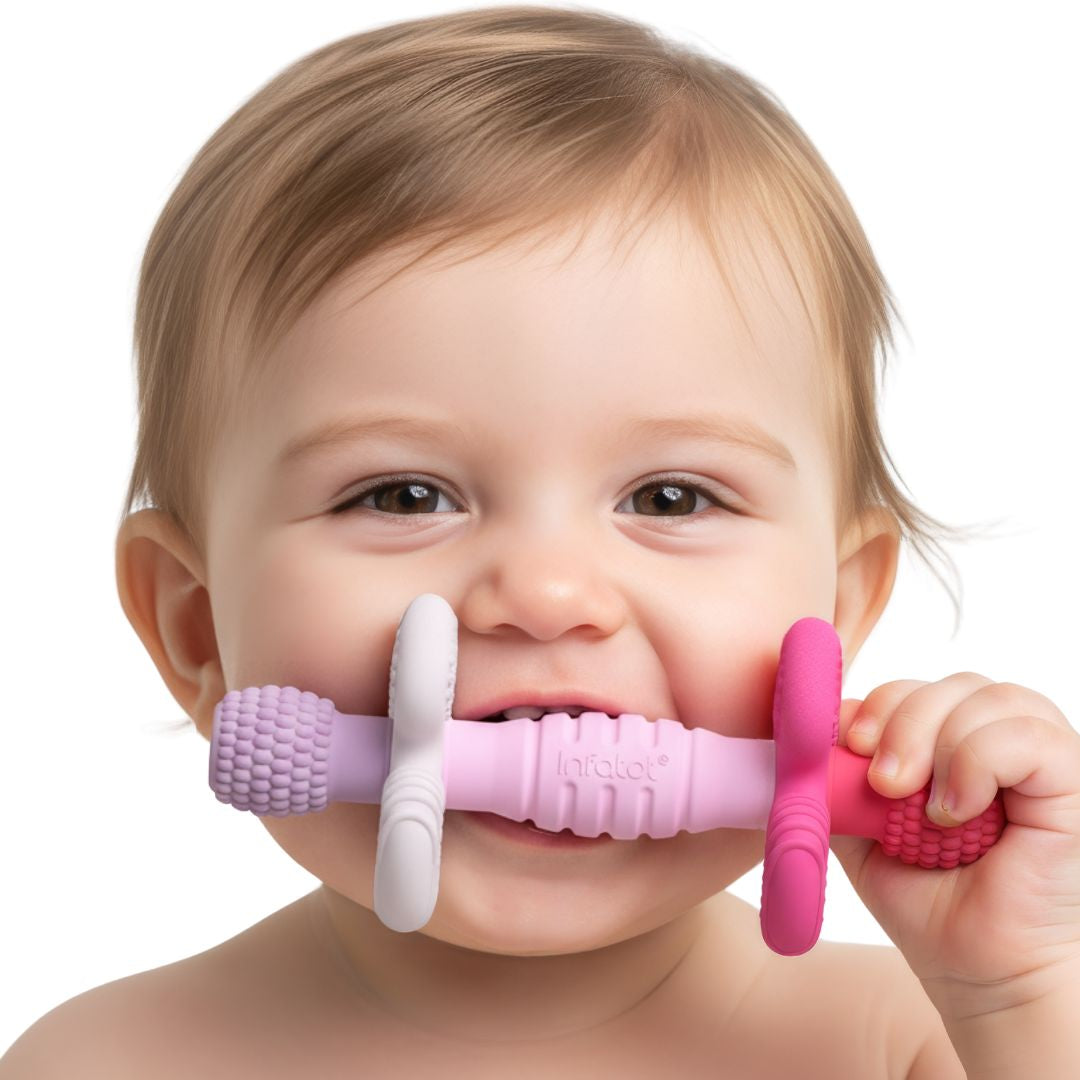
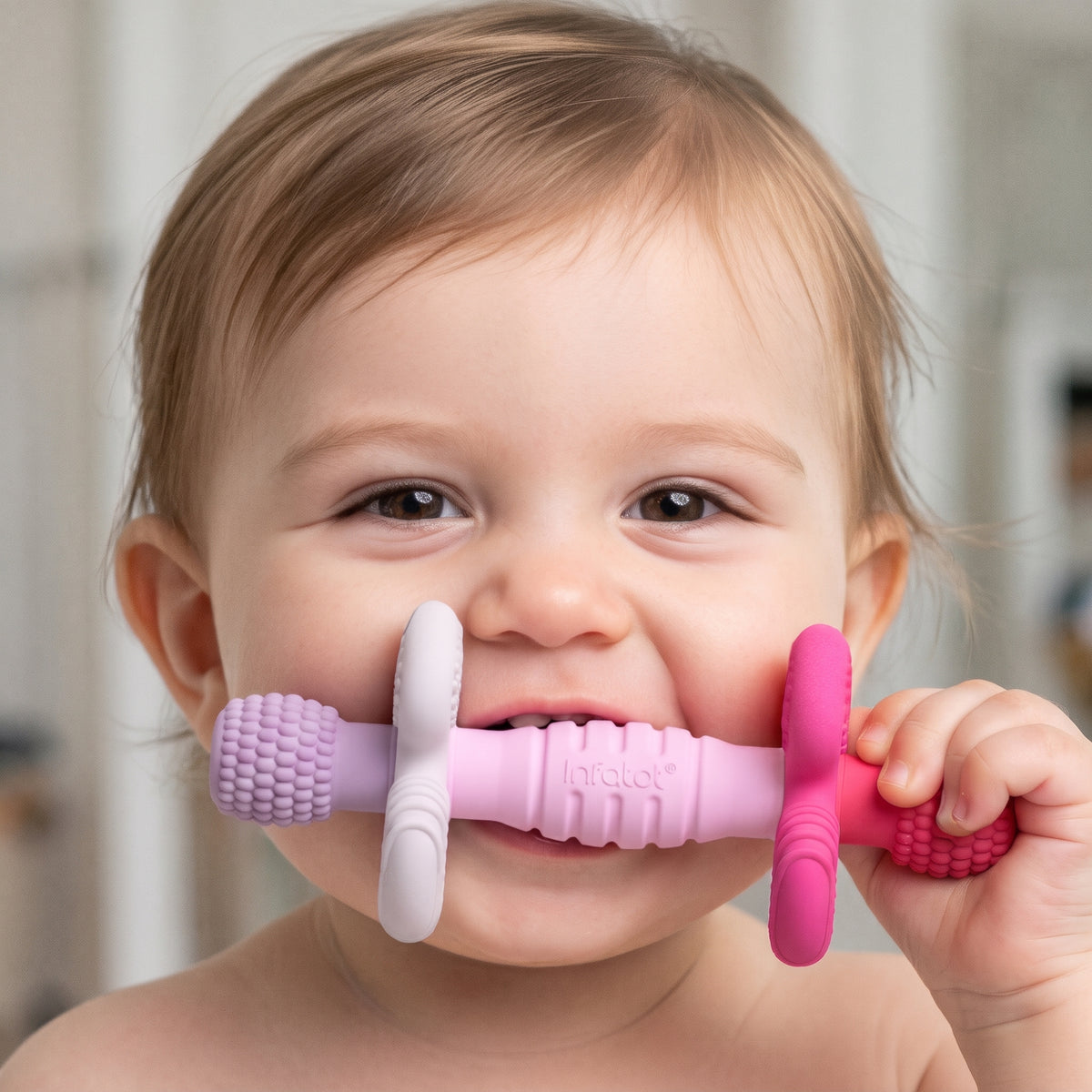
Most babies cut their first tooth at around six months, though some show signs from three months and a few arrive later. Early signs include more dribbling, chewing on fists and toys, flushed cheeks and rubbing the gums. A teether gives a safe outlet for that urge to chew.
What is the difference between a teething glove and a teether?
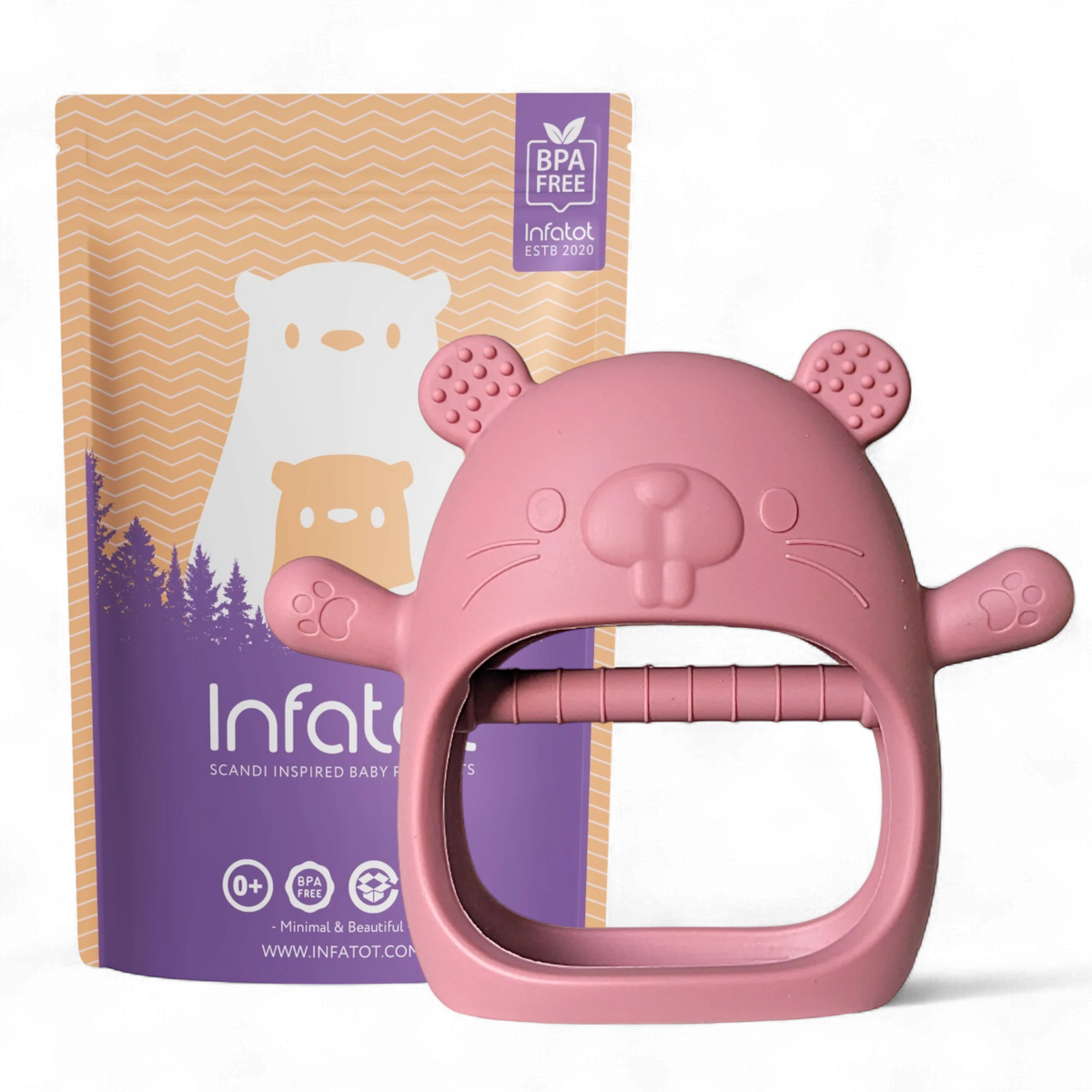
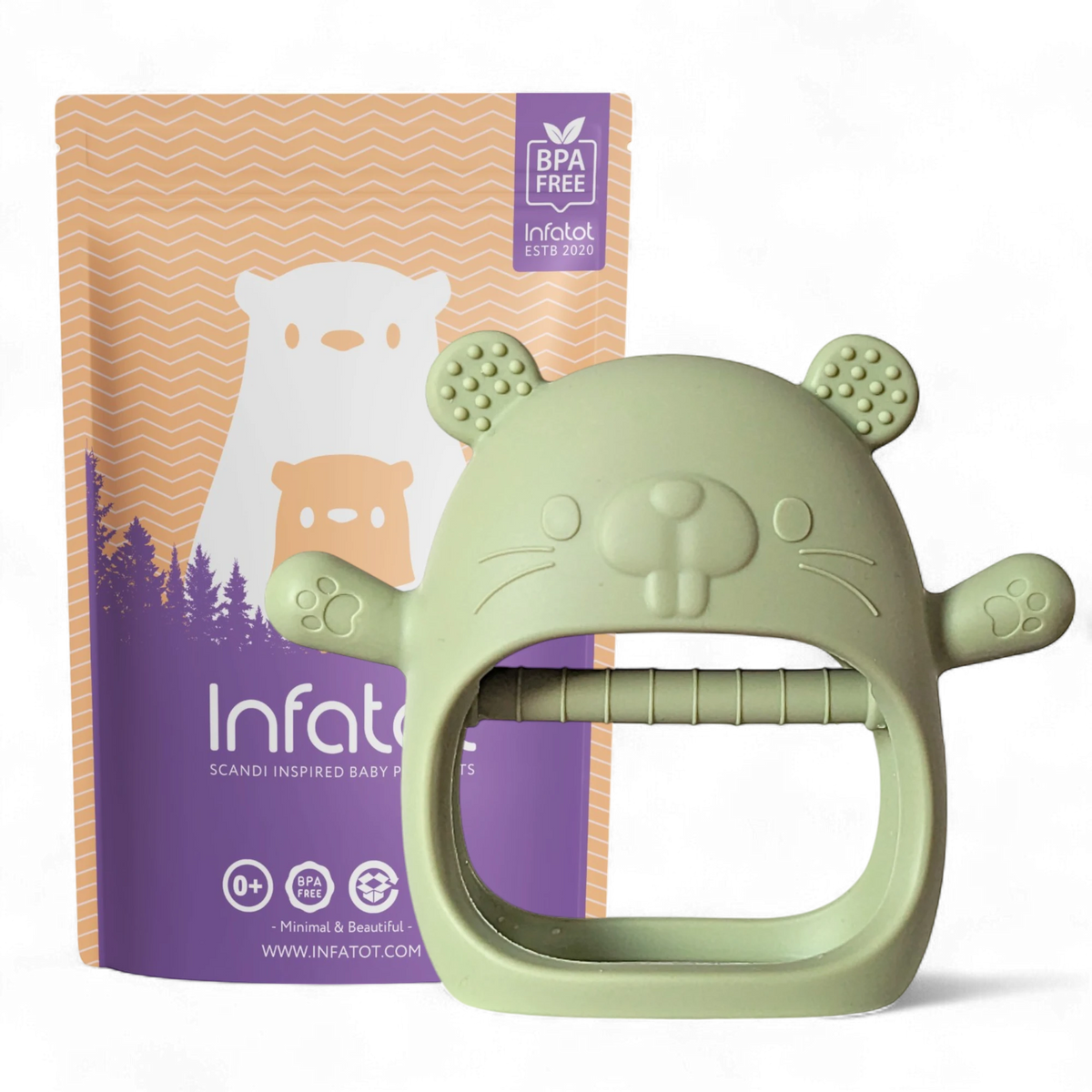
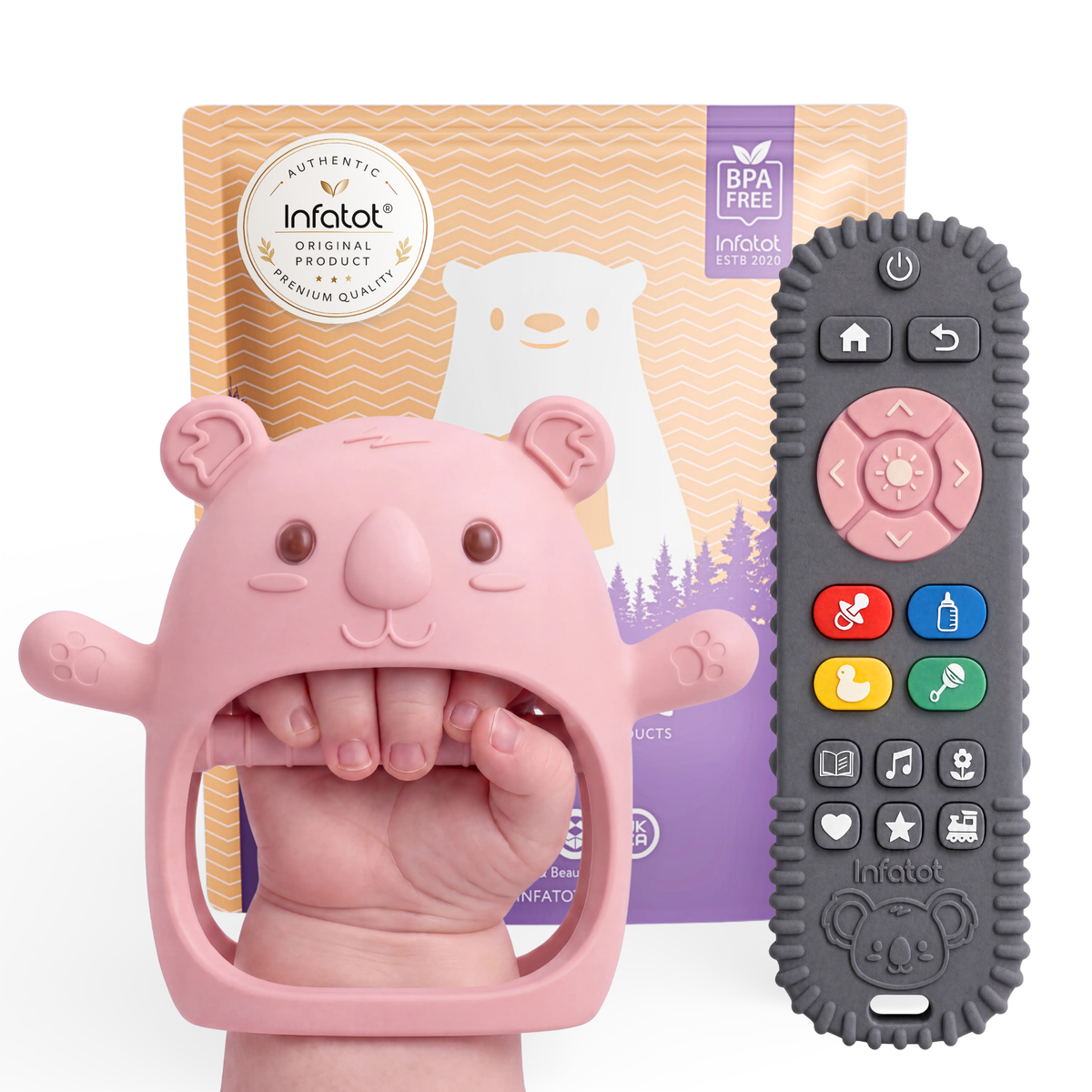
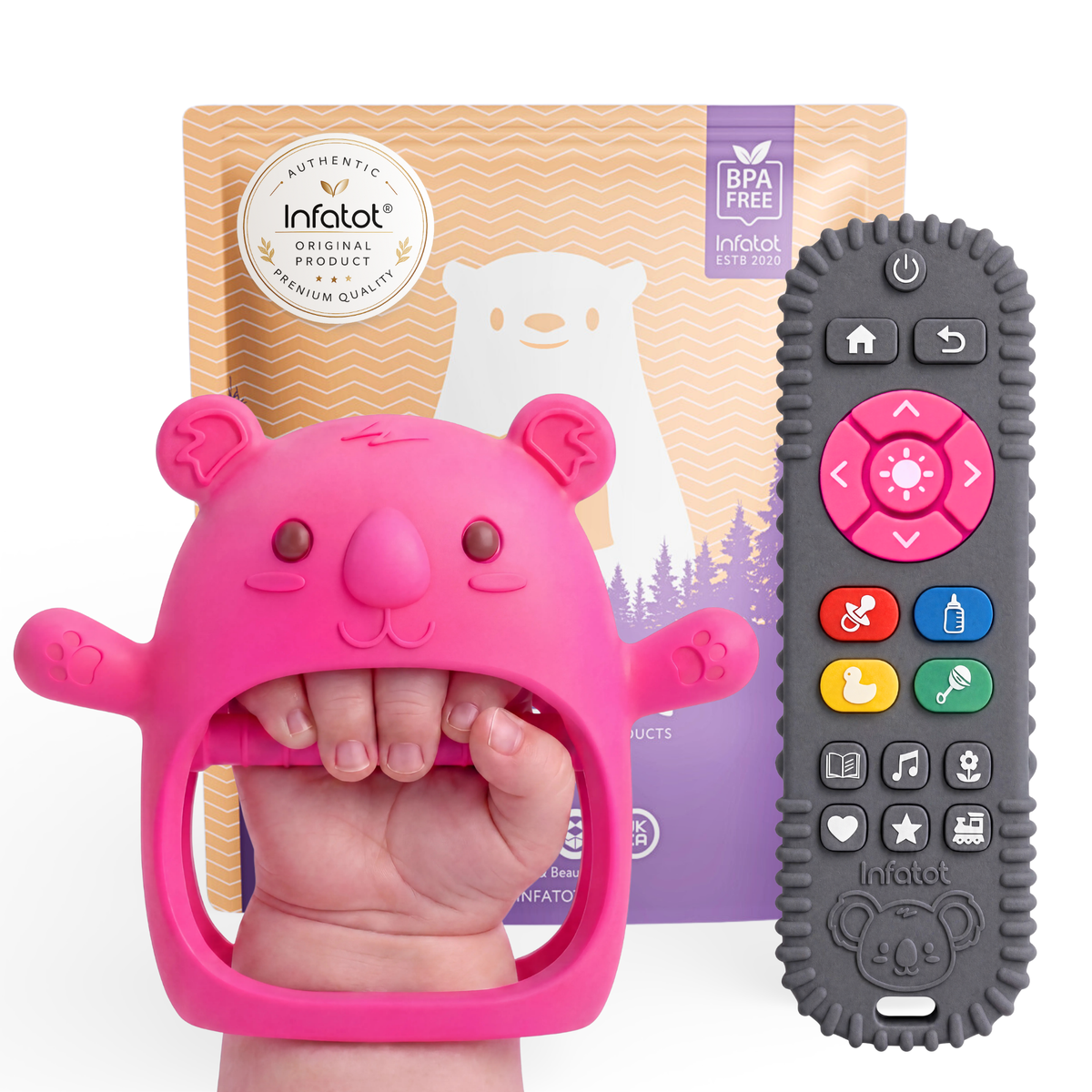
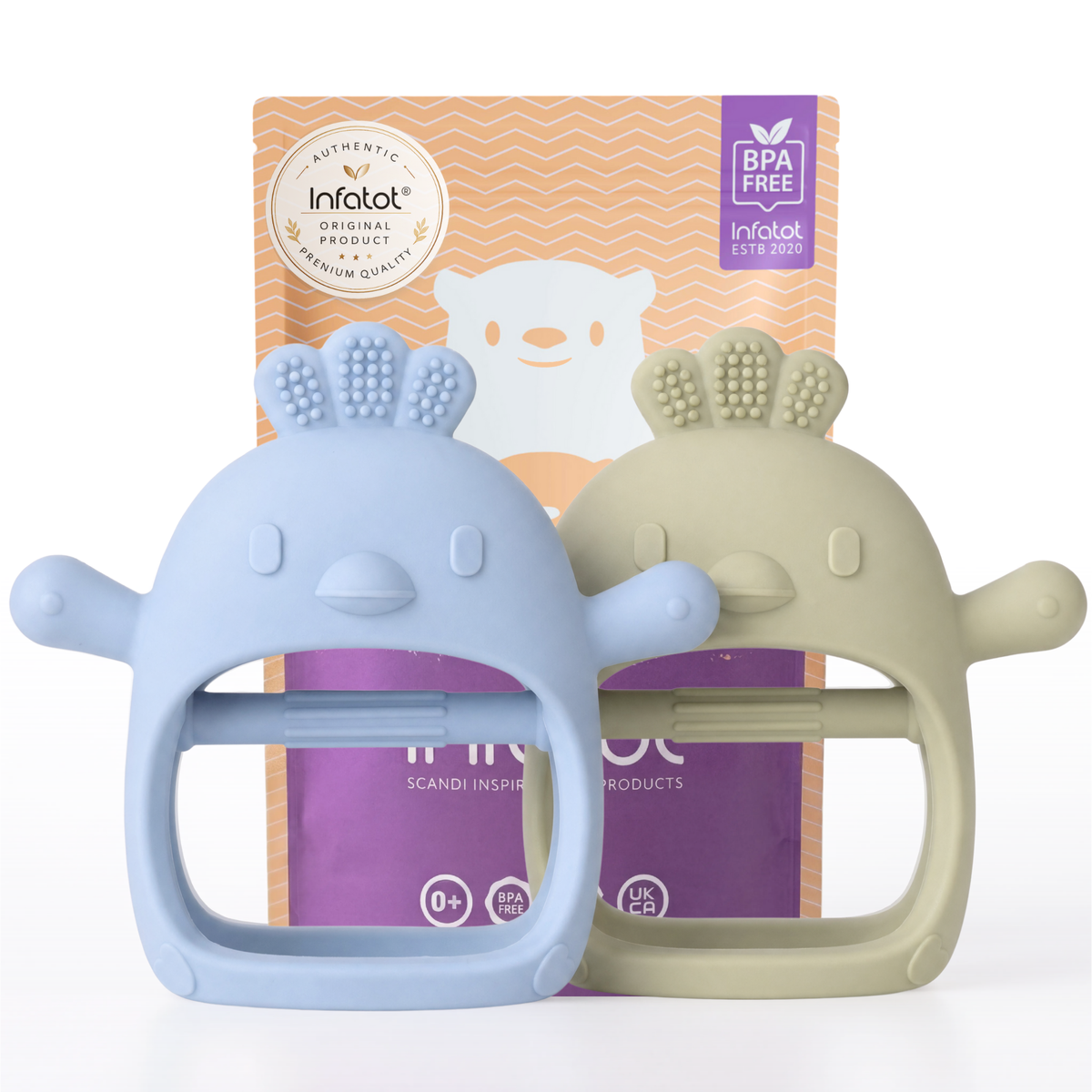
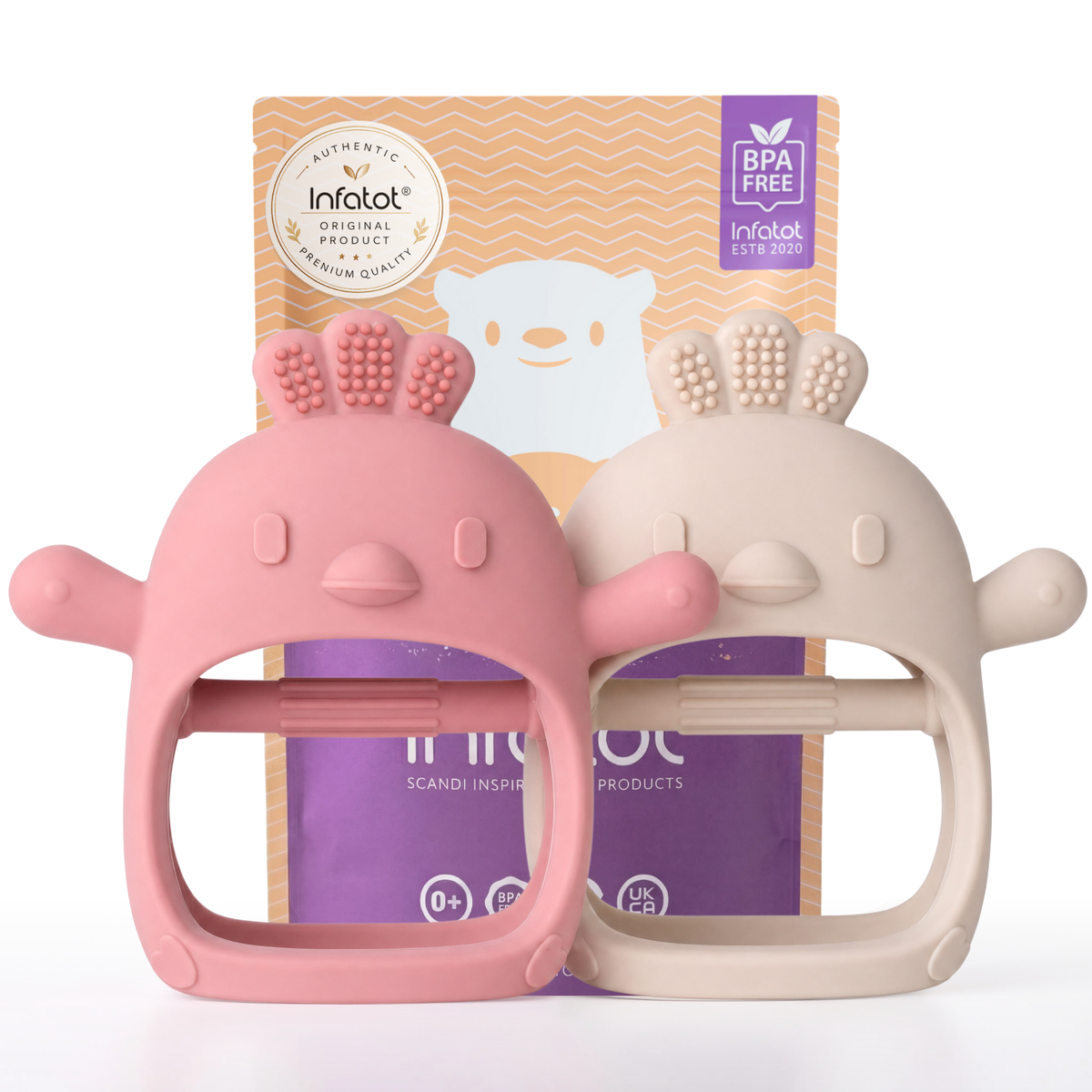
A teething glove fastens around the hand, so it stays put and lets a young baby chew on the silicone fingertips before they can grasp a toy. A handheld teether is for babies who can hold and direct an object themselves, usually from around five or six months.
Is LFGB-grade silicone safe for babies to chew?
Yes. LFGB testing checks that the material does not transfer taste, smell or unwanted substances into food or saliva, which is exactly what matters for something a baby mouths for hours.
How do I clean a silicone teether?
Follow the instructions supplied with your product. Cleaning methods differ between silicone, wood and fabric parts, so use a dishwasher, steriliser or boiling water only where the instructions for that exact item allow it. Inspect the teether before each use and stop using it if it is damaged.
Which Infatot teether won the Women's Health award?
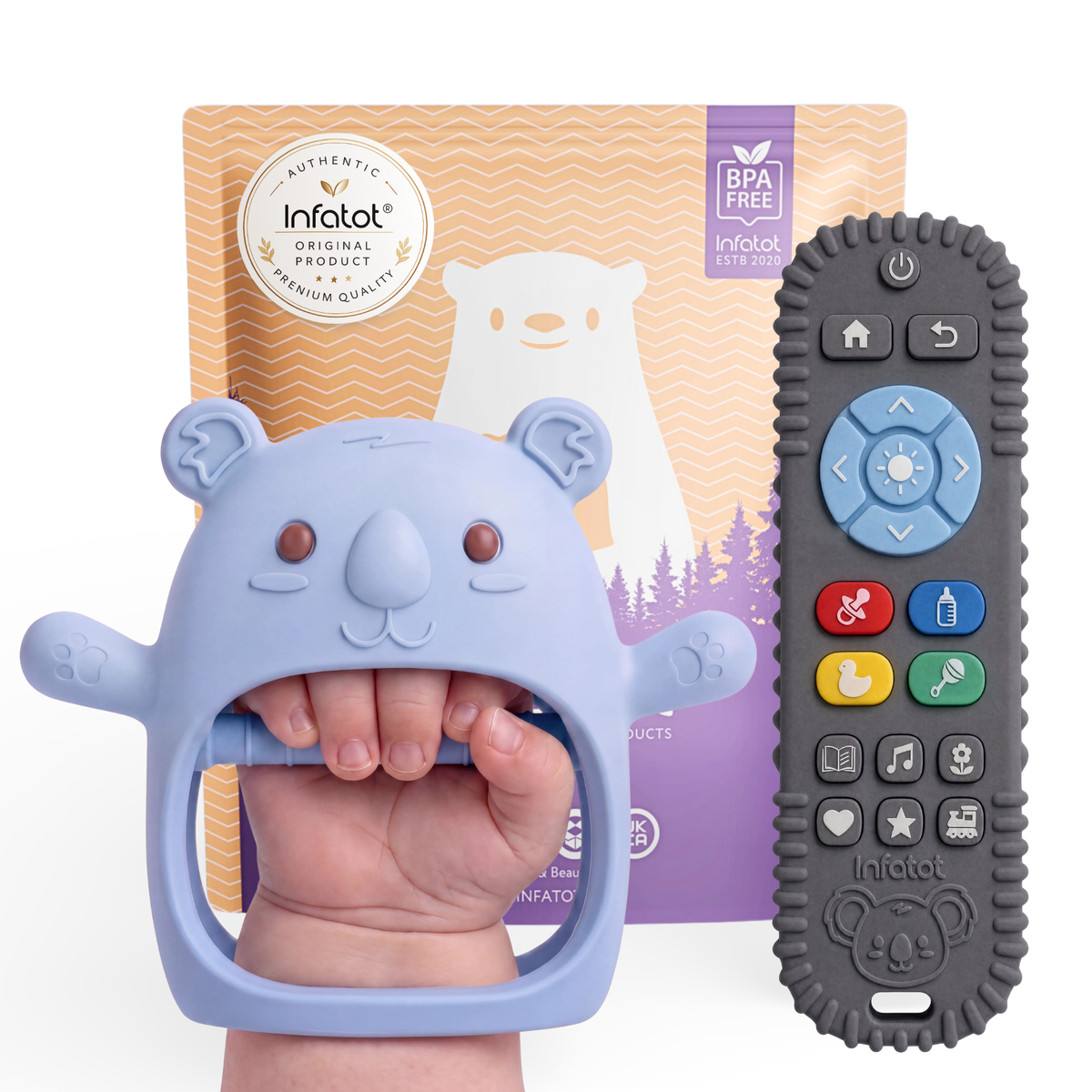
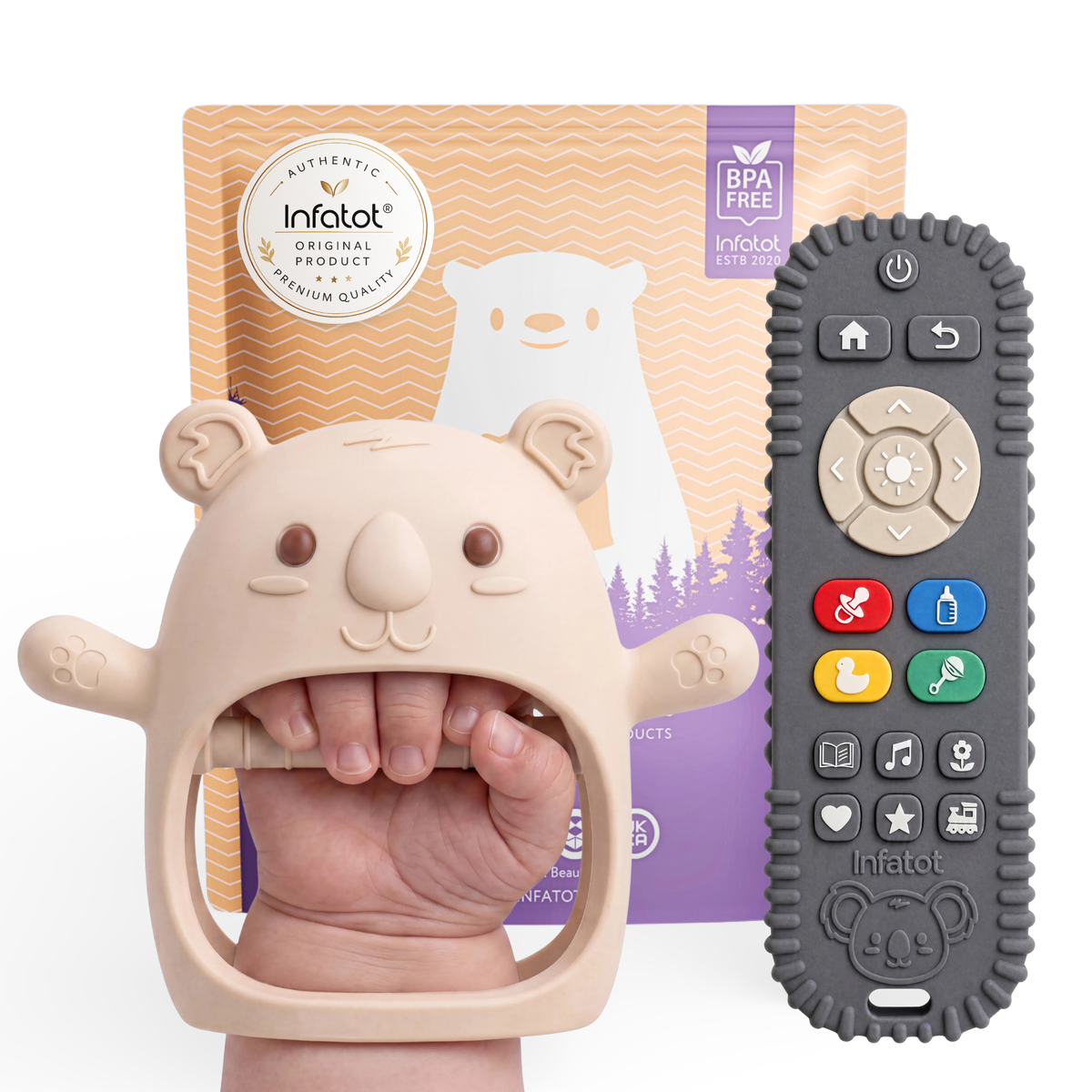
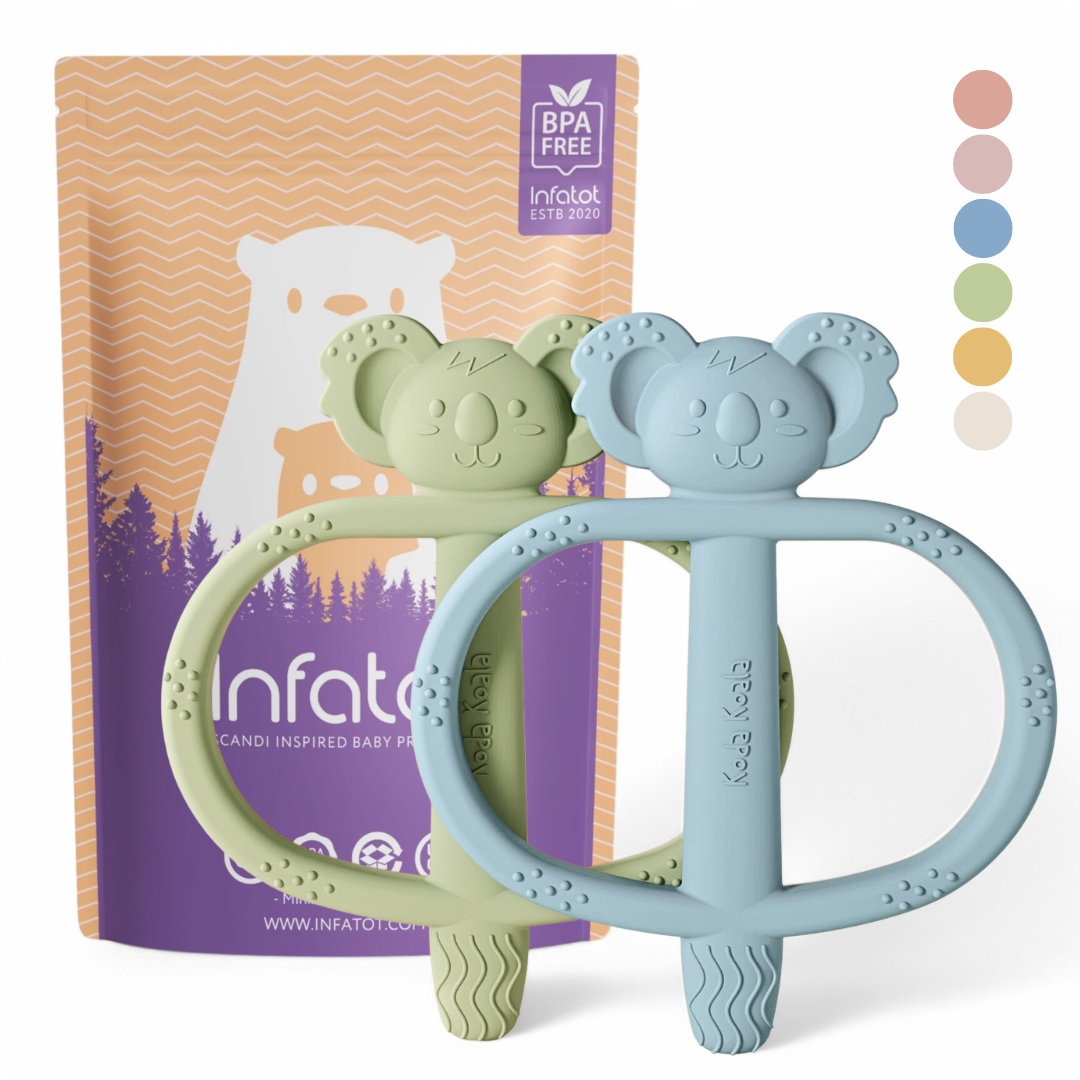
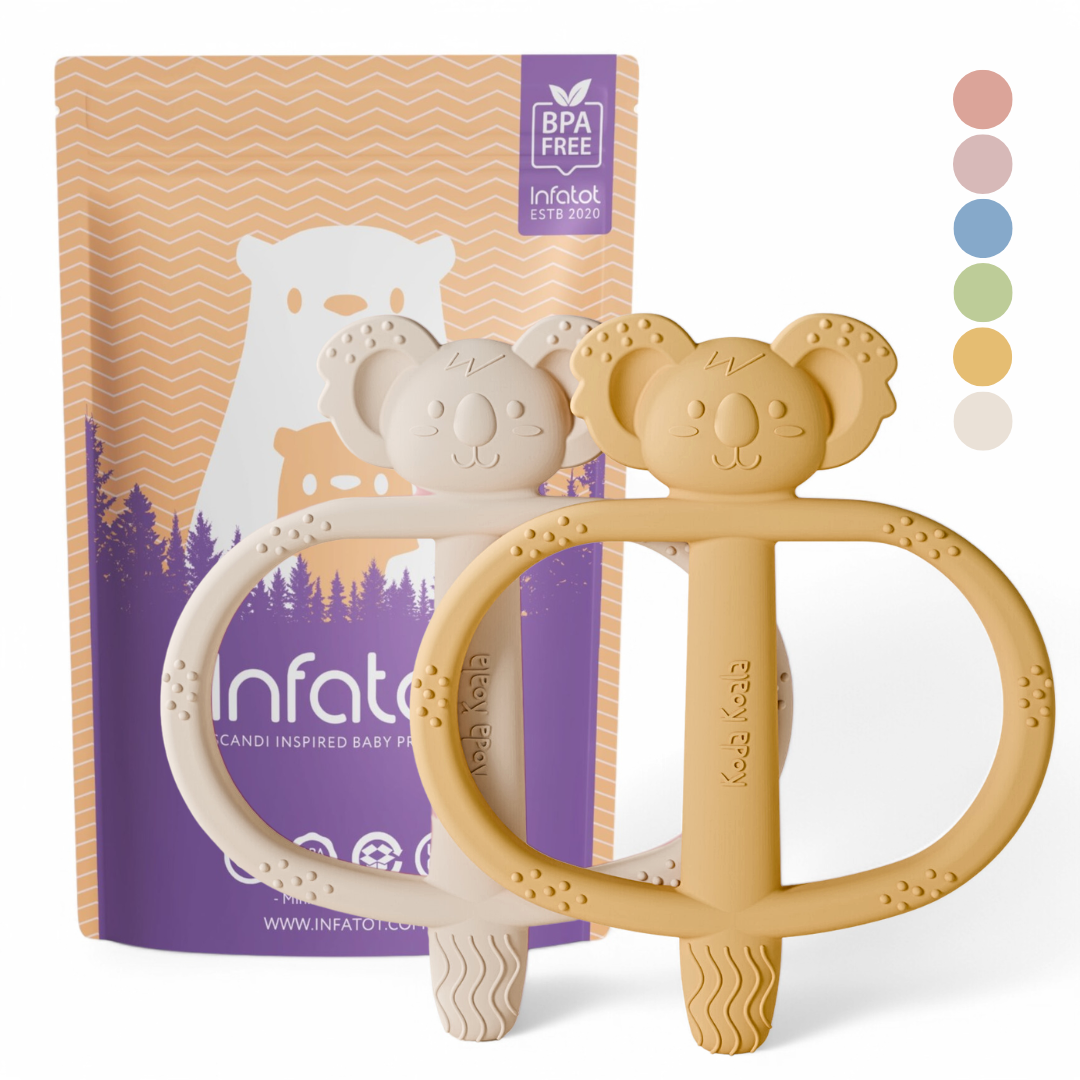
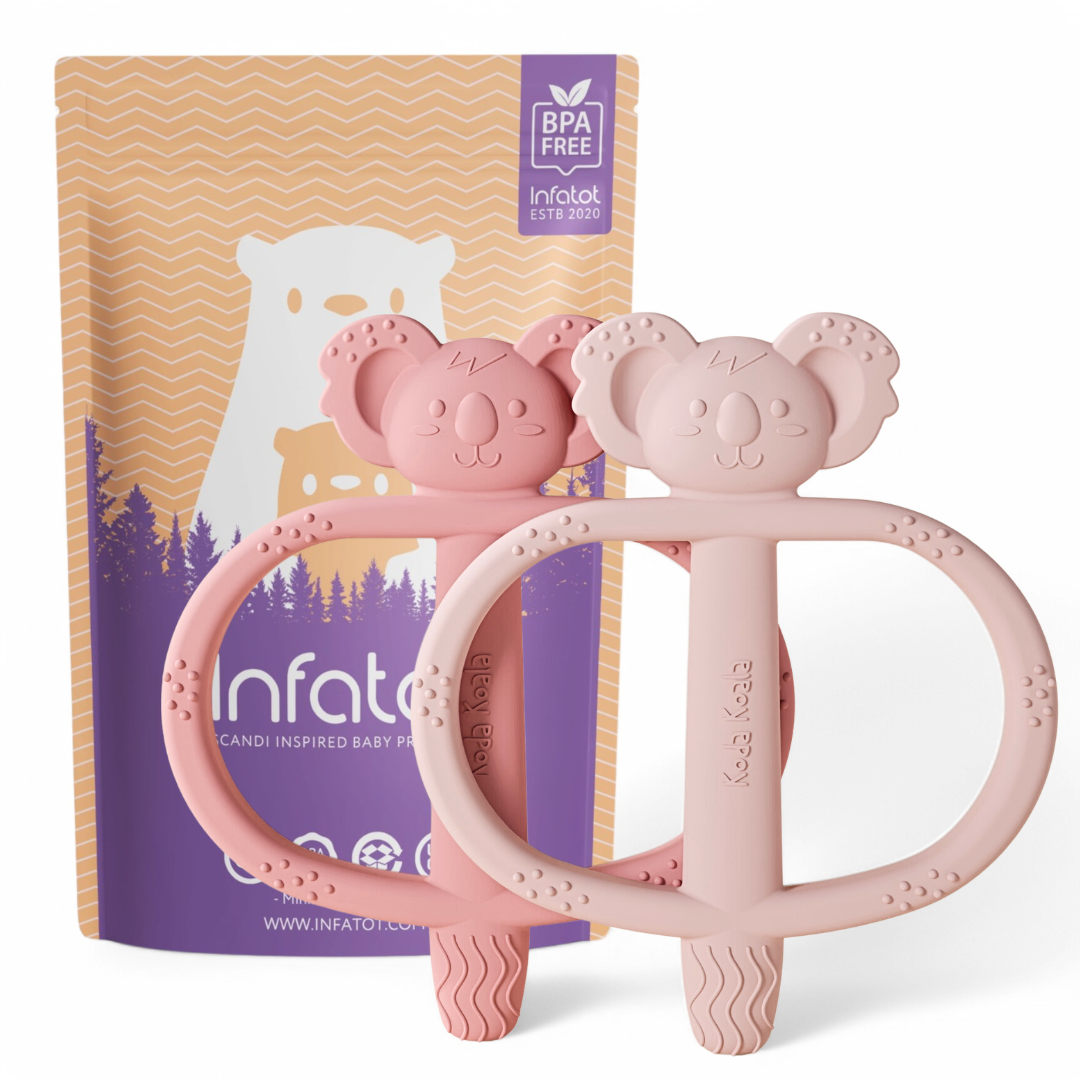
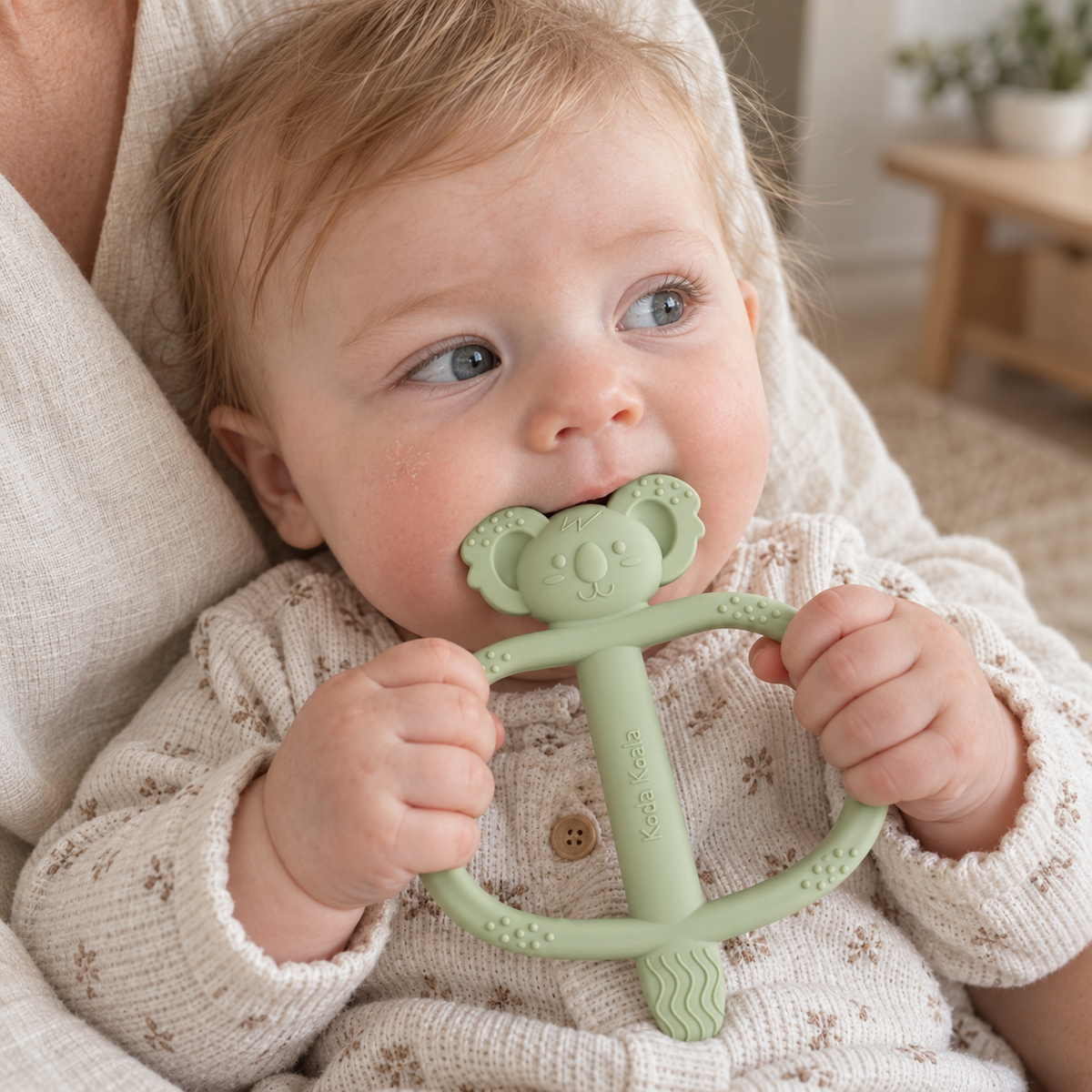
The Koda Koala Teething Pair, our koala teething mitten with a remote-shaped teether, was named Best Teething Mitten in the Women's Health UK 2025 awards.

Baby essentials, made for real life
From teething comfort to everyday feeding and play, Infatot products are thoughtfully designed to make little moments easier for babies and parents.