


- by Infatot
Molars at 12 to 18 months: helping a toddler with back-teeth teething
- by Infatot
Quick answer: First molars usually come through at around 12 months, canines at around 18 months and second molars at around 24 months. A teether (fridge-chilled only if its instructions allow, never frozen), a clean finger on the back gums and sugar-free paracetamol or ibuprofen at the right dose for their age can all ease soreness.
Of the back teeth, only the first molars usually come through between 12 and 18 months. Second molars follow at around 24 months. Molars can come through with no pain at all, or with mild symptoms that last a few days, the NHS says. When they do hurt, the signs are the same as they were with the front teeth. The useful clue is where the gum looks sore and red.
A toddler has more ways to get relief than a young baby. They can chew on suitable food and should already be seeing a dentist. They may also need a different dose of children's pain relief, so check the dose for their age. Bottom teeth often come through before the matching top teeth, so check the lower back gums first.
The NHS gives a rough order for milk teeth. Some children get each tooth earlier or later than the ages below.
The NHS lists a sore, red gum where the tooth is coming through, one flushed cheek, a rash on the face, ear rubbing, more dribbling, lots of gnawing and chewing, extra fretfulness and poor sleep. A teething temperature is slightly raised but stays below 38C.
None of these signs on its own points to molars. To find out which tooth is on its way, look at the gums behind the front teeth in good light. A swollen, red patch towards the back usually tells you.
There's no evidence that teething causes diarrhoea, and the Oral Health Foundation says there's no strong evidence that it causes a high fever. If your toddler has either, look for another cause. Teething vs illness: how to tell the difference goes through the overlap in more detail.

From Infatot
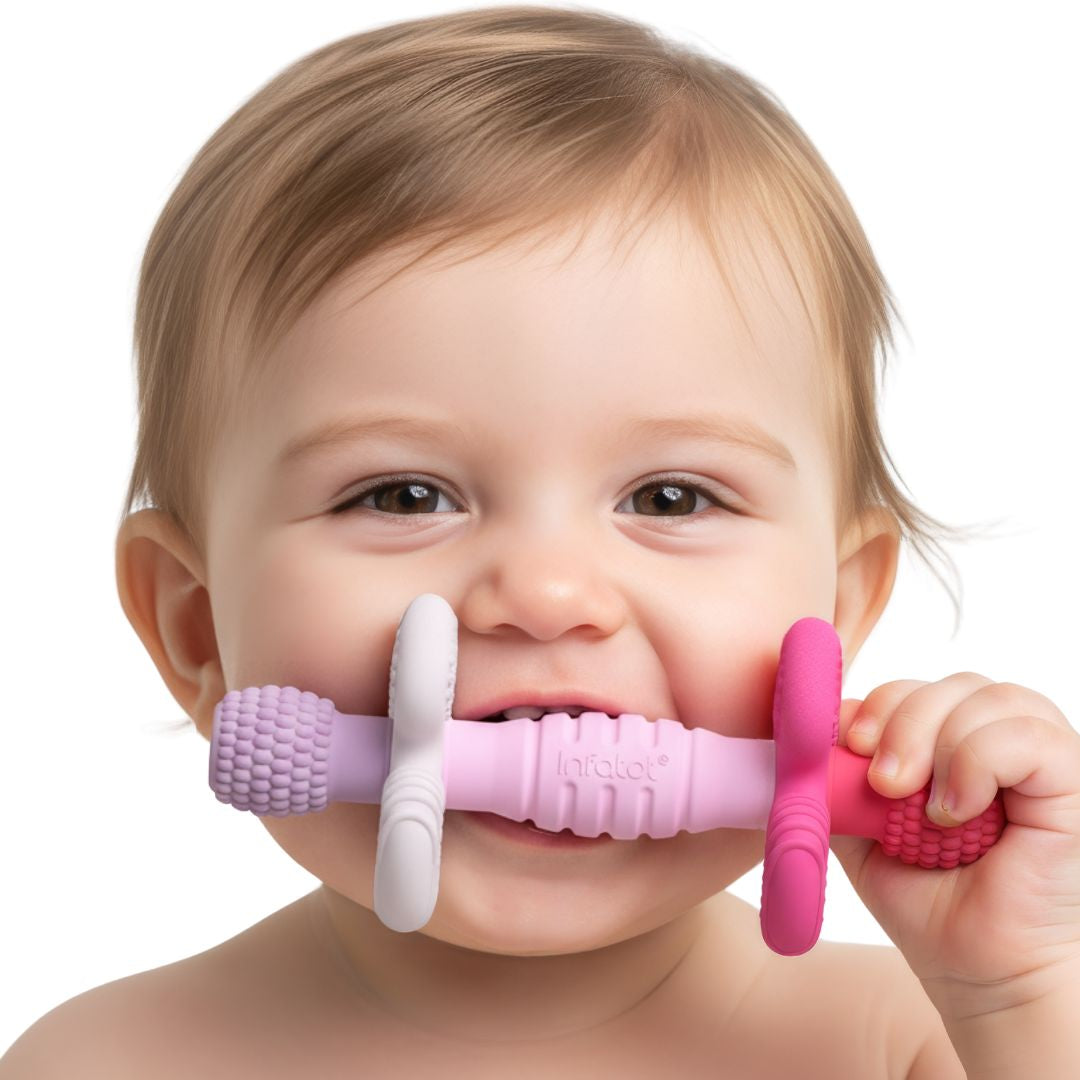
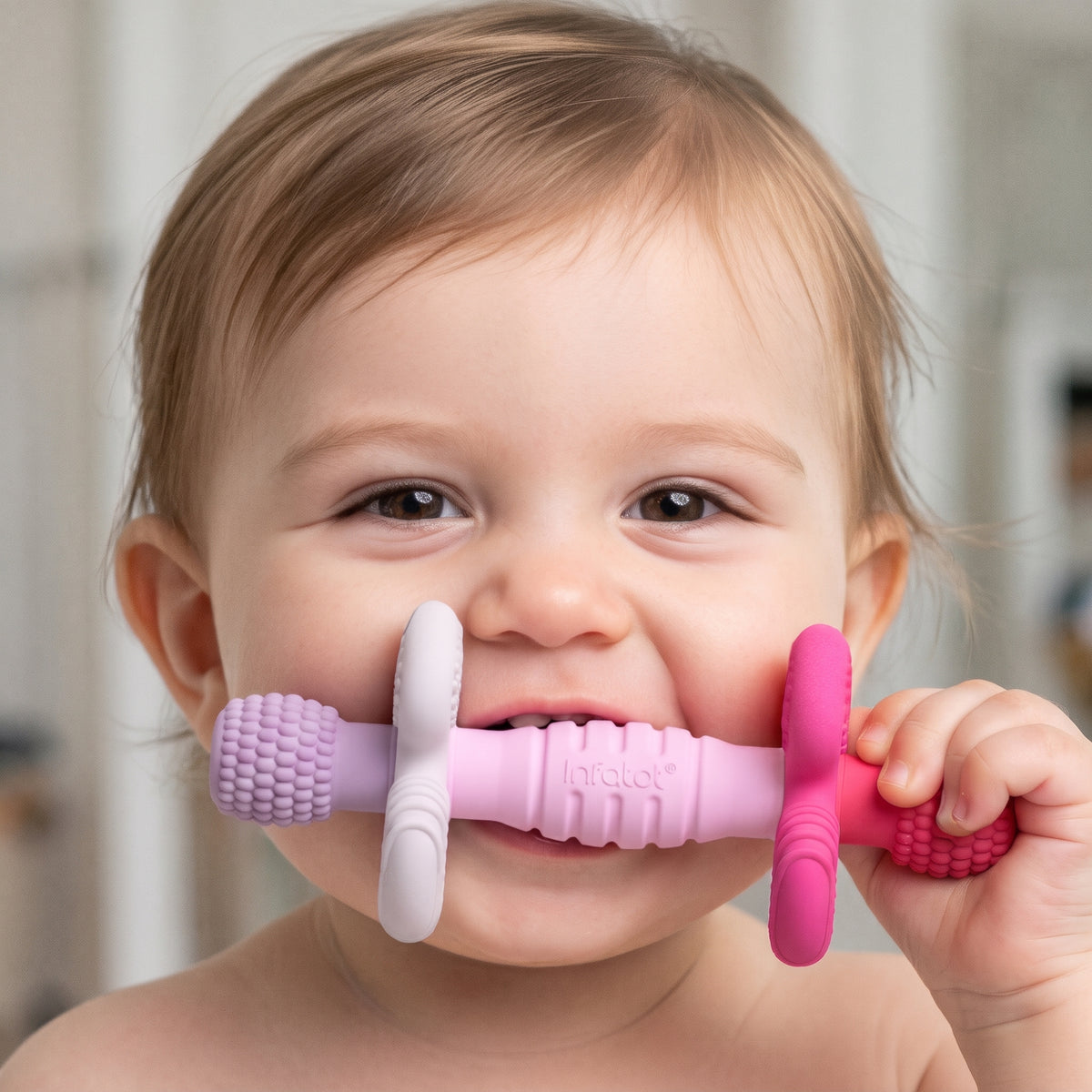
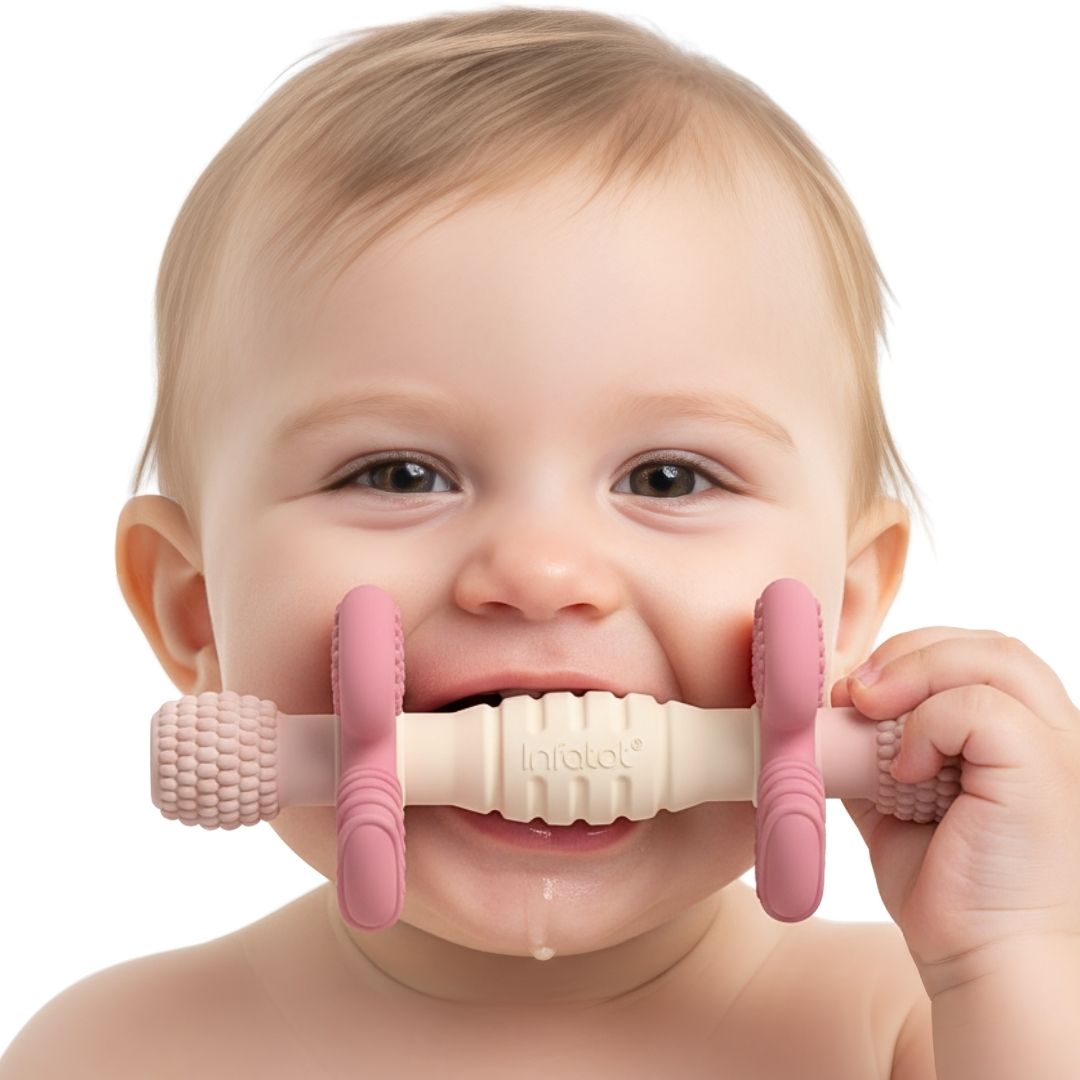
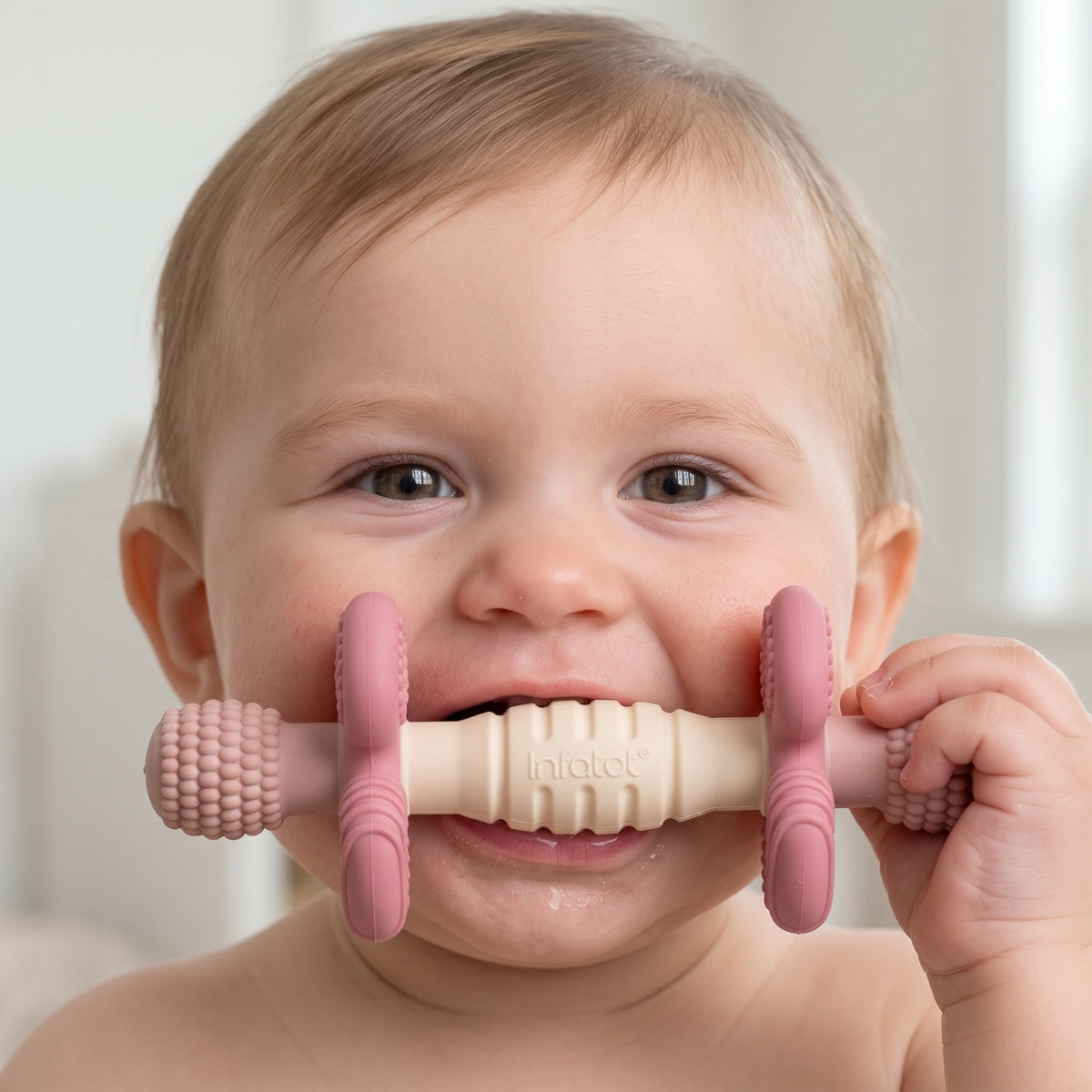
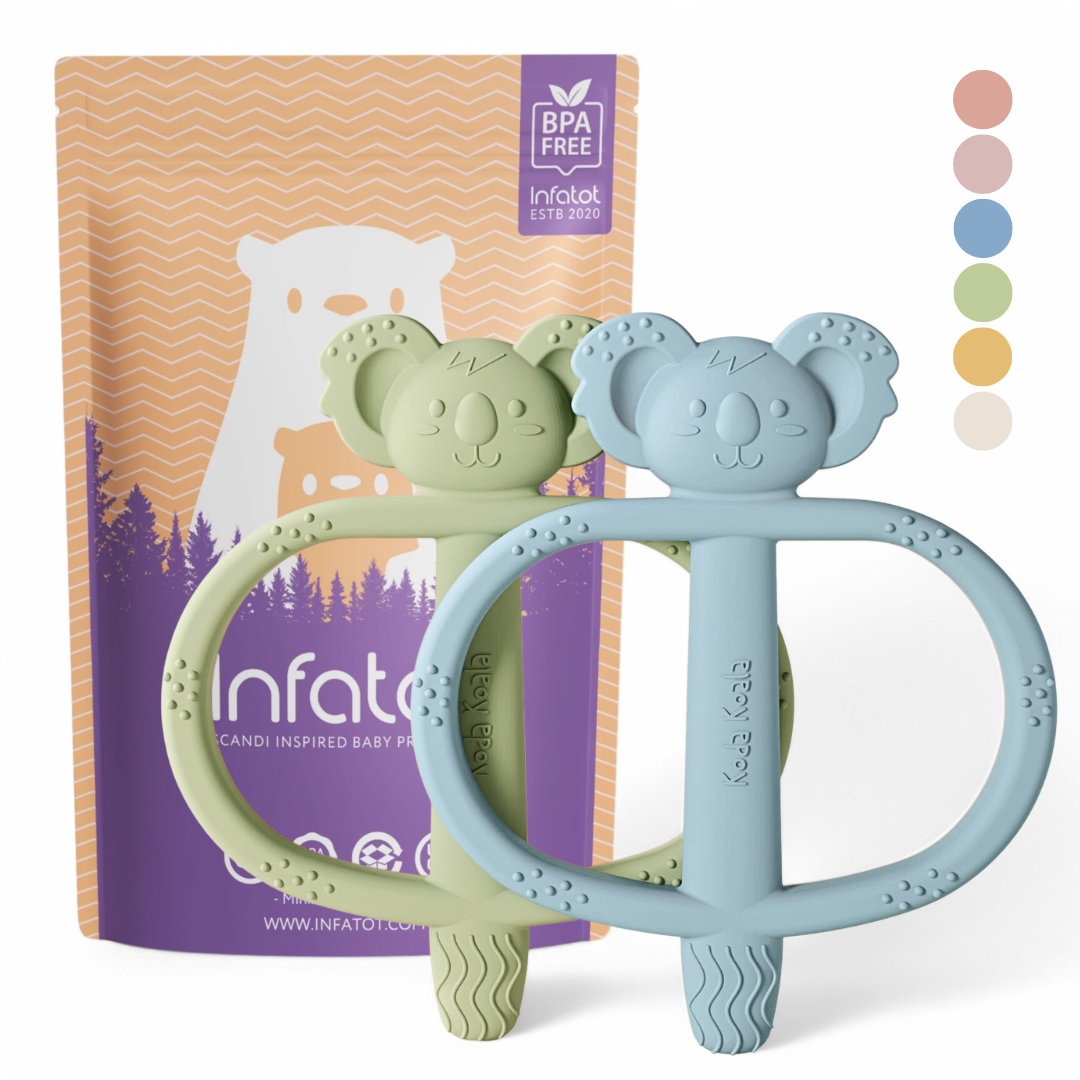
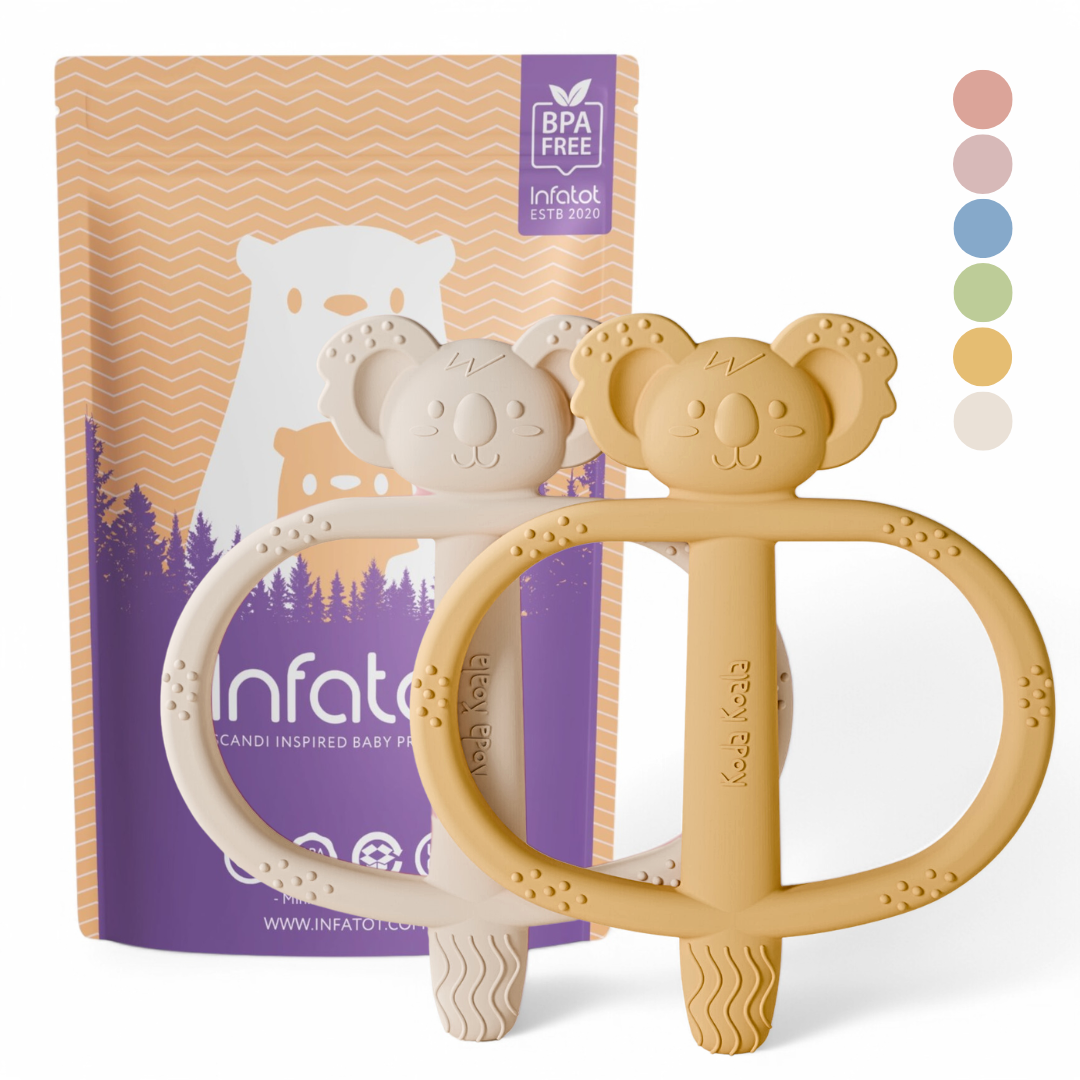
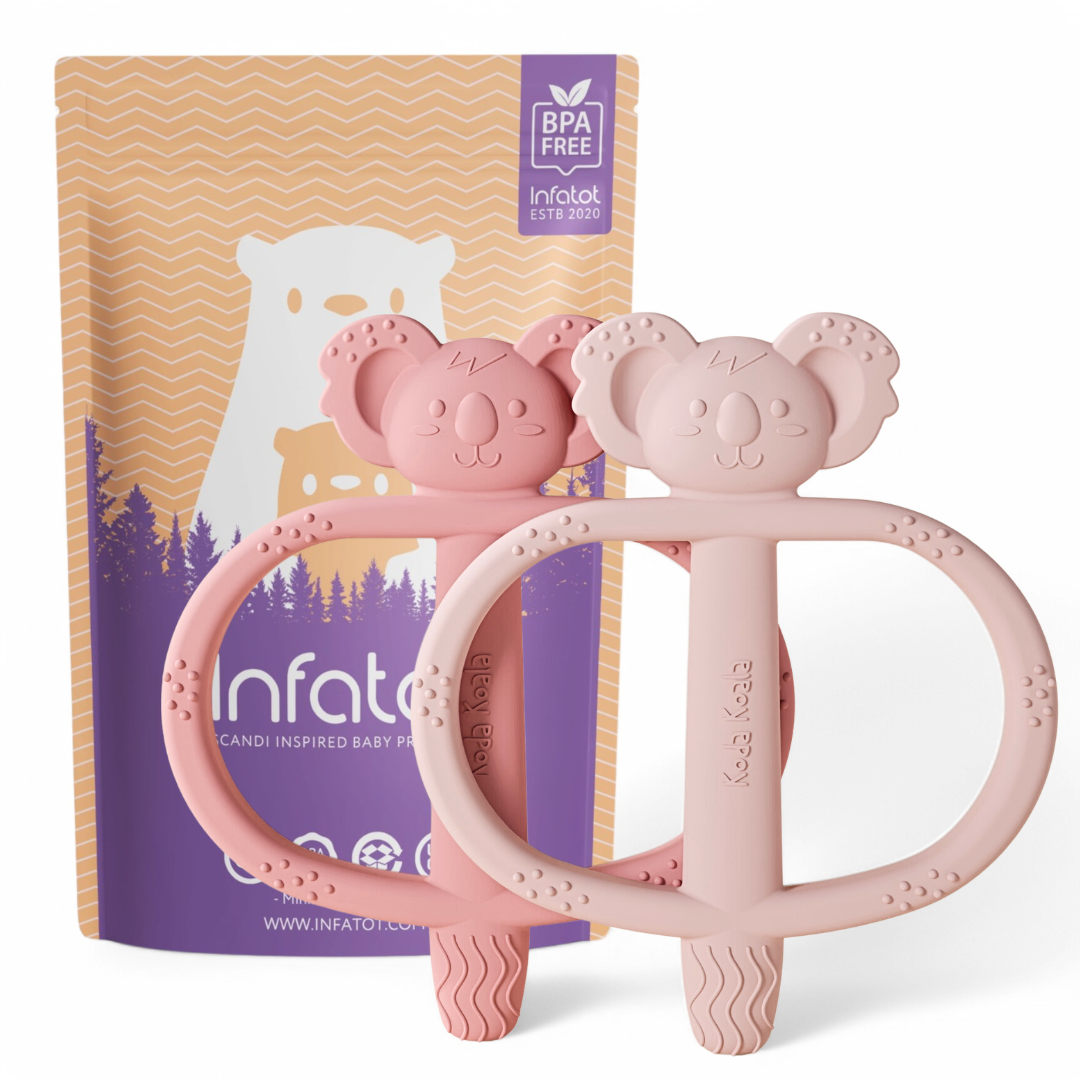
Barbell Buddy
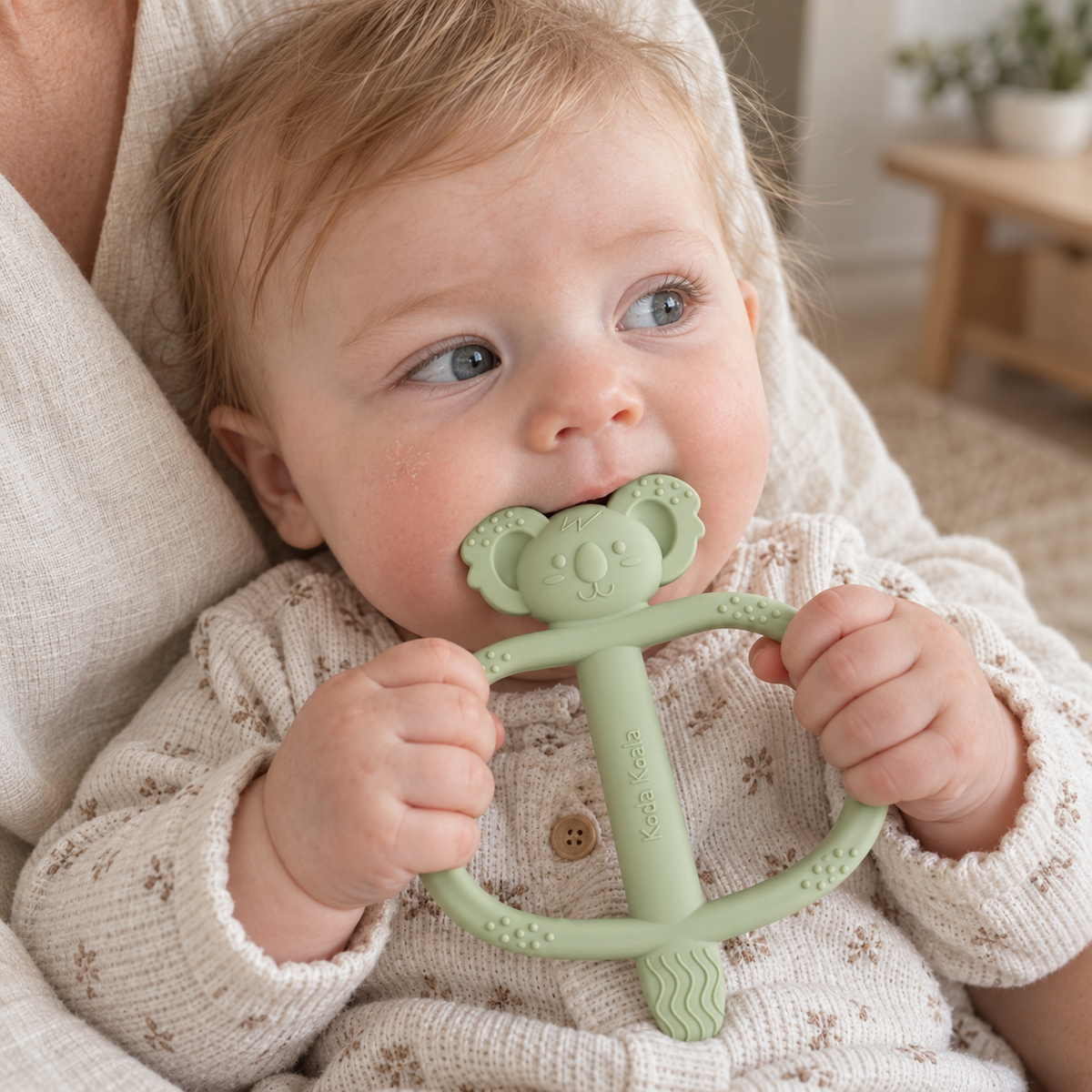
A soft silicone teether with smooth, textured tips, shaped so small hands can grab it from either end. Comes with a cleaning brush.
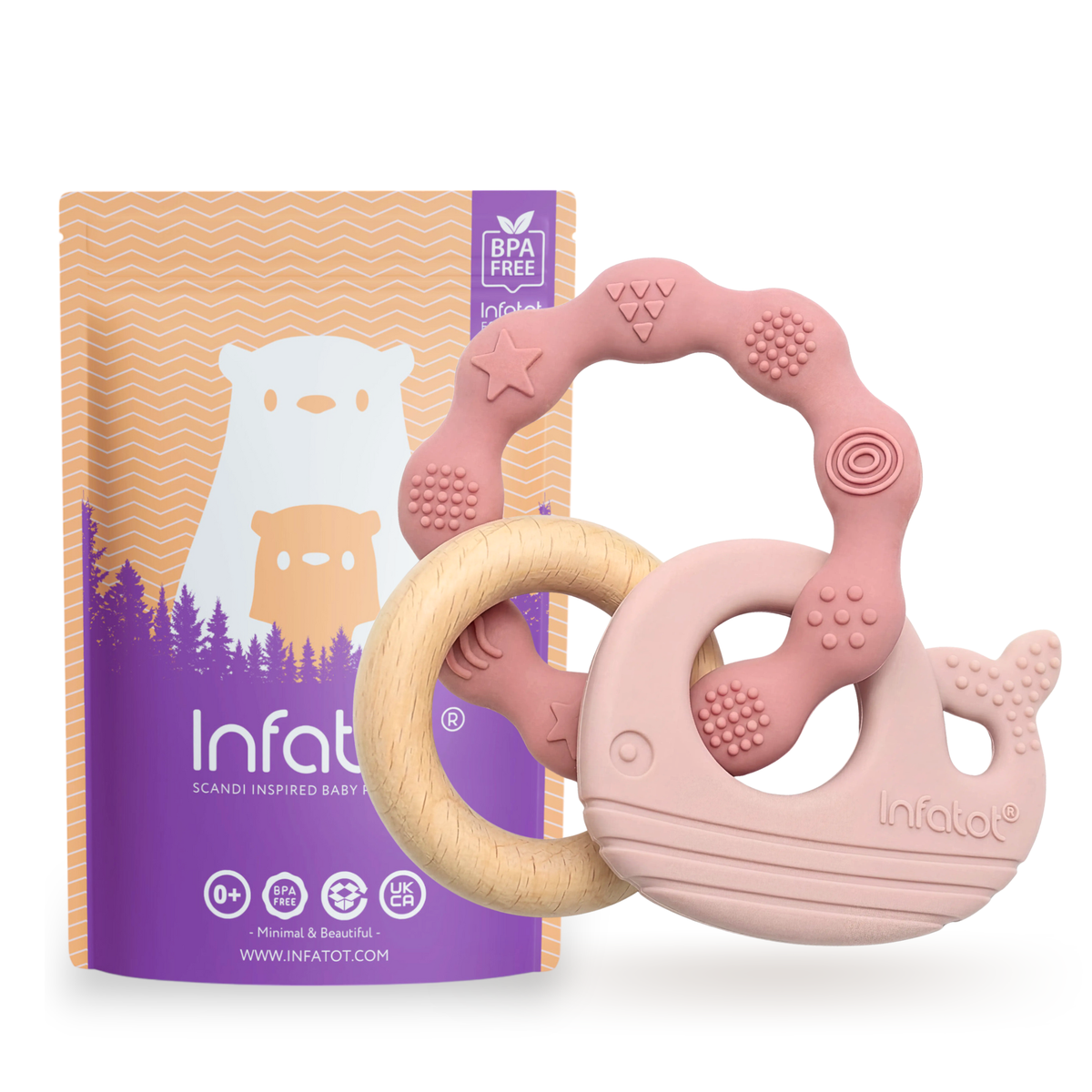
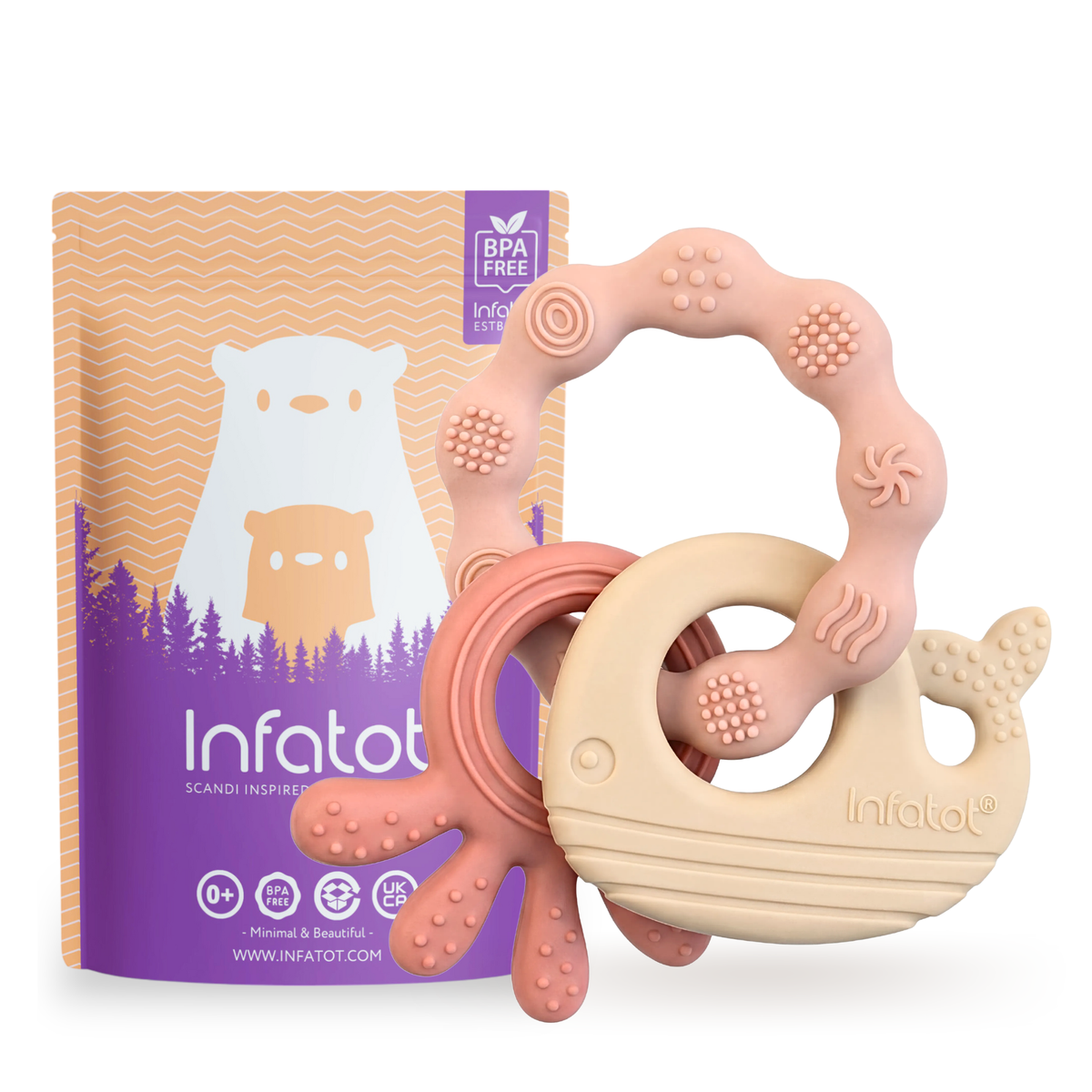
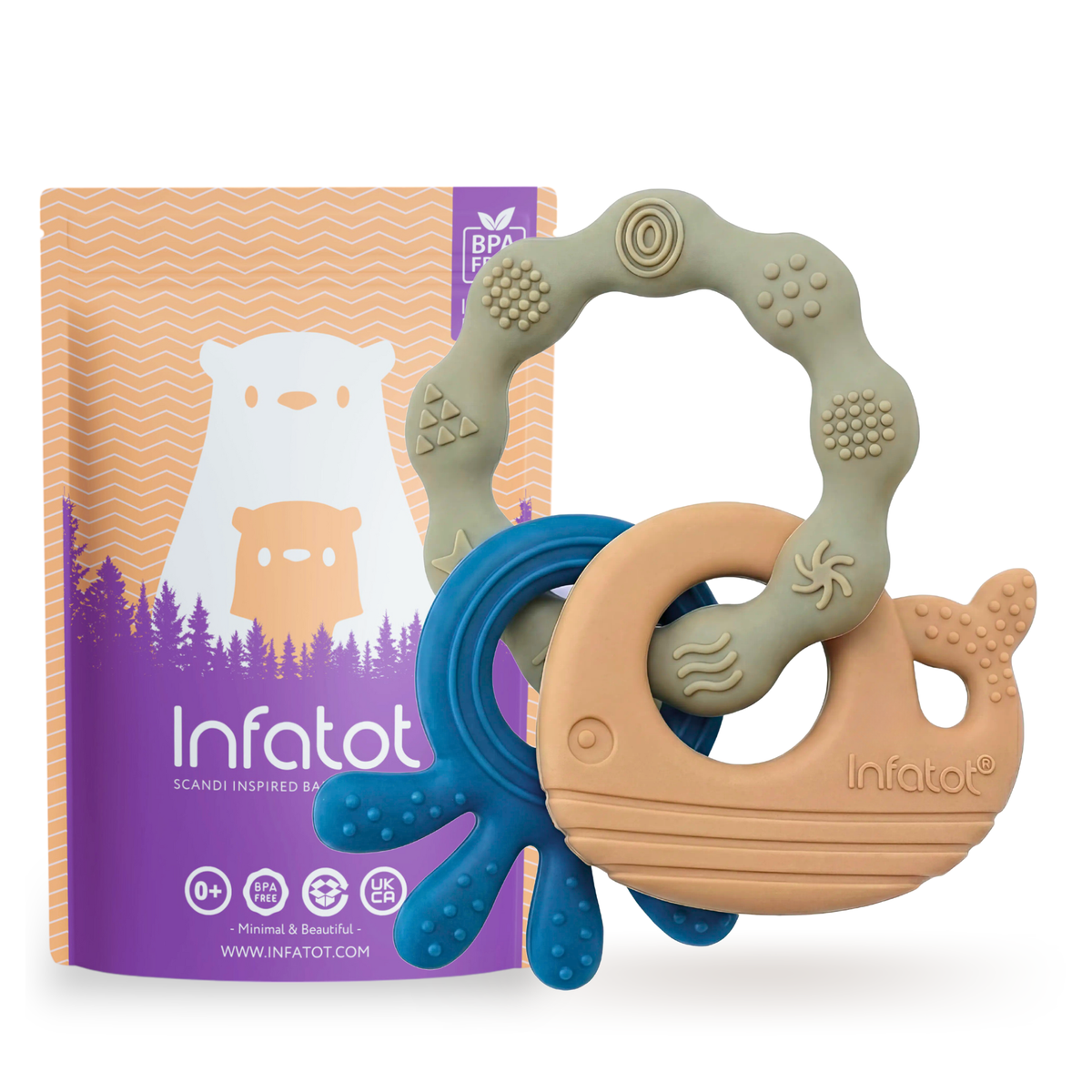
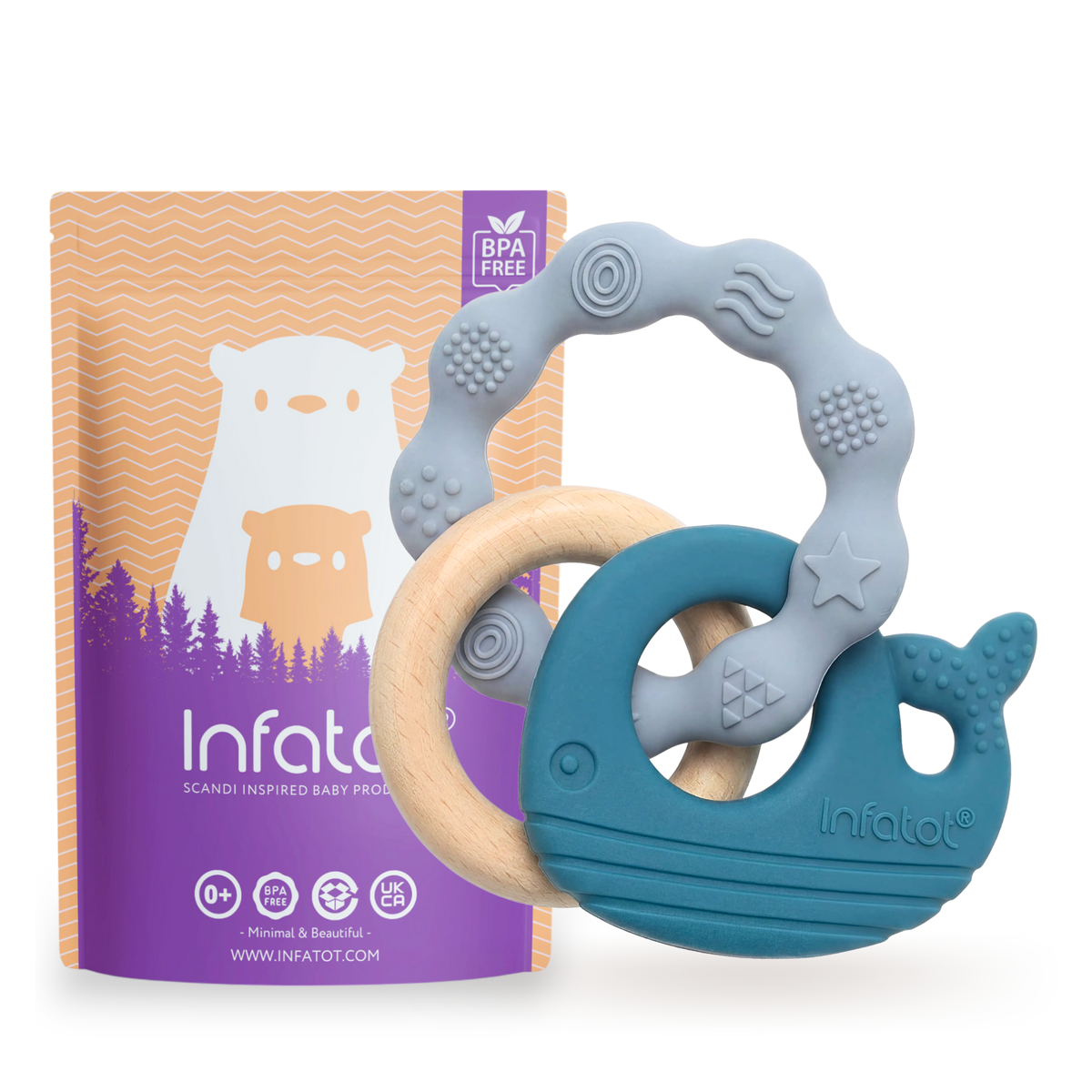
A teething ring gives your toddler something safe to chew. The NHS says some rings can be cooled in the fridge first, for as long as the instructions say. Never put one in the freezer, as a frozen ring can damage the gums. Never tie a teether around your child's neck, because it's a choking hazard.
The Infatot Barbell Buddy is soft silicone with smooth, textured tips, and it's shaped so small hands can grab it from either end. It comes with a cleaning brush.
Gently rubbing the gums with a clean finger may help. A finger can reach right to the back of the mouth, where the molars come through. Cuddles, play and distraction can also take your toddler's mind off the pain.
Once weaning has started, the NHS suggests healthy things to chew, such as raw fruit and vegetables. Soft fruit like melon can soothe gums. Always stay with your child while they eat in case they choke.
Avoid rusks, because nearly all brands contain some sugar. Avoid other sugary foods too, since sugar can cause tooth decay even when there are only a few teeth.
If your toddler is in pain, the NHS suggests a sugar-free children's painkiller. The amounts below are the NHS doses for infant liquids. Check that the strength on your bottle matches the one in the table, because age ranges and doses vary between products. Shake the bottle for at least 10 seconds and measure with the syringe or spoon that comes with it.
The NHS ibuprofen page says ibuprofen causes more side effects than paracetamol, so try paracetamol first if your child can take it. The NHS paracetamol page says paracetamol may not be suitable if your child has had an allergic reaction to it before or has a kidney or liver condition. Ibuprofen may not be suitable if your child has had an allergic reaction or serious side effect to ibuprofen or another NSAID before, or has asthma, a kidney or liver condition, or an infection such as chickenpox. Check the leaflet, or ask a pharmacist if you're not sure. Don't give either medicine for more than 3 days without speaking to a doctor or pharmacist. Children under 16 should never have aspirin.
| Medicine | 12 to 23 months | 2 to 3 years | How often |
|---|---|---|---|
| Paracetamol infant liquid 120mg/5ml | 5ml | 7.5ml | Up to 4 times in 24 hours, at least 4 hours apart |
| Ibuprofen infant liquid 100mg/5ml | 5ml | 5ml | Up to 3 times in 24 hours, every 6 to 8 hours |
Under 3, a parent or carer should do the brushing. Brush twice a day for about 2 minutes: last thing at night and at one other time. Use a smear of children's fluoride toothpaste with at least 1,000ppm fluoride, the NHS advises, and gently brush the gums and behind the teeth as well.
The NHS recommends taking your child to the dentist when their first milk teeth appear, or before they are 12 months old. If you haven't been yet, book now. NHS dental care is free for children, and the dentist can spot problems early and give advice on preventing decay.
If you're told to go to A&E, don't drive. Ask someone to drive you, or call 999 and ask for an ambulance. Take the medicine packet or leaflet with you.
Call 999 or go to A&E. After paracetamol or ibuprofen: a swollen throat or tongue, a raised itchy rash or difficulty breathing. After ibuprofen: bad stomach pain, vomiting blood, blood in poo, or black, sticky poo; signs of inflammation in the brain, such as a stiff neck with headache, high temperature, being sick or confusion.
Call 111 or contact your GP urgently. You've given more paracetamol or ibuprofen than the packet, leaflet or prescription says. Also call 111 if you think your child is having a serious side effect from paracetamol, such as yellowing skin or eyes, easy bruising or nosebleeds, or any other serious side effect from ibuprofen not listed under 999.
See your GP or health visitor. A temperature of 38C or higher, diarrhoea, or any symptom that worries you, since teething doesn't explain these (you can also call 111). Also speak to a GP or pharmacist if pain relief is still needed after 3 days.
Usually fine to care for at home. A sore, red gum, more dribbling, one flushed cheek, ear rubbing, chewing on everything, unsettled sleep, or a temperature that stays below 38C.
Don't give them at the same time. If one isn't helping, the NHS says you can switch to the other. Only alternate between them if a doctor or nurse tells you to, and write down the time of each dose so they stay evenly spaced.
The NHS says there's a lack of evidence that teething gels work, and suggests trying teething rings or sugar-free painkillers first. If you do use a gel, choose one made for young children from a pharmacy. General oral pain relief gels aren't suitable for children, and homeopathic teething products aren't recommended.
Under 3, use children's toothpaste with at least 1,000ppm fluoride unless a dentist advises a family toothpaste with 1,350ppm to 1,500ppm. Use only a smear, and don't let your child eat or lick toothpaste from the tube.
General information, not individual medical advice. Speak to your GP, midwife or health visitor about your baby’s needs.
Christmas food in pregnancy: what's fine on the festive table and what to skip
Read moreabout Christmas food in pregnancy: what's fine on the festive table and what to skip
Sickness bug in babies and toddlers: spotting dehydration early
Read moreabout Sickness bug in babies and toddlers: spotting dehydration early
Christmas visitors and a newborn: cold sores, kisses and coughs
Read moreabout Christmas visitors and a newborn: cold sores, kisses and coughs

Share:
Sickness bug in babies and toddlers: spotting dehydration early
Christmas food in pregnancy: what's fine on the festive table and what to skip