

Quick answer: Fewer wet nappies, a sunken soft spot, few or no tears and drowsiness are signs of dehydration, and the NHS says they can mean serious dehydration needing urgent treatment. If a child under 5 shows them, call 111 now. Call 999 if they're sleepy or hard to wake, have pale, blotchy or cold skin, or are breathing fast.
Fewer wet nappies than usual, a sunken soft spot, sunken eyes and few or no tears are signs of dehydration in a baby, and the NHS says they can mean serious dehydration that needs urgent treatment. Babies and young children are more at risk of dehydration, and the NHS advises calling 111 now if a child under 5 shows signs of it.
The vomiting tends to be over quickly. The NHS says vomiting usually stops in 1 or 2 days, but diarrhoea can carry on for 5 to 7 days. Keep their fluids up for that whole stretch, and call 111 if diarrhoea lasts more than 7 days or vomiting more than 2 days.
The NHS lists these signs of dehydration in babies. Most of them are things you can check during a nappy change or a feed.
Count wet nappies through the day and compare them with a normal day for your baby. Fewer wet nappies than usual is one of the signs on the NHS list.
The NHS says the most important thing is plenty of fluids to avoid dehydration. Most children can be looked after at home.
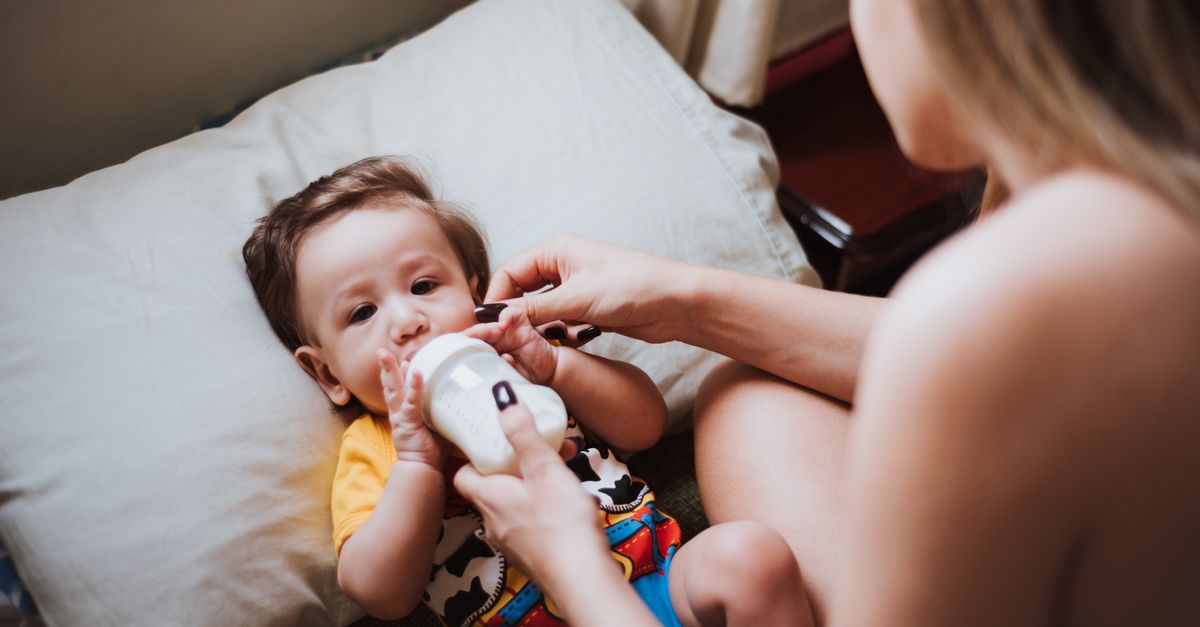
Carry on breastfeeding or bottle feeding. If your baby is being sick, give smaller feeds more often than usual. Make formula at its usual strength. The NHS advises never making it weaker.
Babies on formula or solid foods can also have small sips of water between feeds. If your baby is under 6 months, boil the water first and let it cool.
Call 111 now if your baby stops breast or bottle feeding while they're ill, or keeps being sick and can't keep fluid down. The NHS lists both as reasons to get urgent advice.
Offer regular small sips of water, and give small children their usual diet once they feel able to eat. Avoid fruit juice and fizzy drinks, because the NHS says they can make diarrhoea or vomiting worse.
Rehydration solutions come as powders that you mix with water. They replace the sugar, salts and minerals lost through vomiting and diarrhoea. Ask a pharmacist which one suits your child, then give it in regular small sips. If your child is under 5 and already shows signs of dehydration, or keeps being sick and can't keep fluid down, call 111 rather than waiting to see whether the sachets help. For a child aged 5 or over, the NHS advises calling 111 now if they still have signs of dehydration after using oral rehydration sachets.
You can give paracetamol for discomfort after checking the leaflet for your child's age. The NHS advises against giving children under 12 medicine to stop diarrhoea, and against giving aspirin to anyone under 16.

Norovirus spreads through poo and passes between people very easily. The NHS calls it the winter vomiting bug, although your child can catch it at any time of year.
Keep your child off nursery, childminders or school until they haven't been sick or had diarrhoea for at least 2 days (48 hours). This comes from the NHS and the UK Health Security Agency's exclusion guidance for childcare settings. Phone the nursery on the first day to tell them your child won't be in and why.
At home, wash clothes and bedding with poo or vomit on them separately, on a 60°C wash. Clean toilet seats, flush handles, taps and door handles. Don't share towels, flannels or cutlery, and try not to prepare food for anyone else while you're unwell.
Try this. Alcohol hand gel doesn't kill norovirus. Wash your hands with soap and water after every nappy change and before you prepare food.
Act on these signs straight away, at any time of day or night. They come from the NHS dehydration, norovirus and diarrhoea and vomiting pages.
Don't drive to A&E. Ask someone to drive you, or call 999 and ask for an ambulance.
The NHS advises waiting until at least 48 hours after the symptoms have stopped before using a swimming pool.
Wait until whoever has had it hasn't been sick or had diarrhoea for 2 days. The NHS says the same 2-day rule applies to visiting hospitals and care homes.
No. The NHS advises giving small children their usual diet. Let them eat when they feel able, and it may help to avoid fatty or spicy food for a while.
General information, not individual medical advice. Speak to your GP, midwife or health visitor about your baby’s needs.
Christmas food in pregnancy: what's fine on the festive table and what to skip
Read moreabout Christmas food in pregnancy: what's fine on the festive table and what to skip
Molars at 12 to 18 months: helping a toddler with back-teeth teething
Read moreabout Molars at 12 to 18 months: helping a toddler with back-teeth teething
Christmas visitors and a newborn: cold sores, kisses and coughs
Read moreabout Christmas visitors and a newborn: cold sores, kisses and coughs

Share:
Pram, pushchair or travel system: which to buy in the Black Friday sales
Molars at 12 to 18 months: helping a toddler with back-teeth teething