

Quick answer: Teething causes drooling, chewing, swollen tender gums, fussiness, mildly disrupted sleep, slightly red cheeks and at most a very slight rise in temperature. It does not cause a high fever of 38°C or above, diarrhoea, vomiting, body rashes, cold symptoms or refusal to feed — those need a GP or 111. A non-blanching rash with fever is a 999 emergency.
What parents need to know
"It must be teething" — those four words account for a huge number of delayed medical consultations. Teething is often used as a catch-all explanation for any baby symptom, when in fact the evidence suggests its effects are much more limited than widely believed.
Knowing the difference between what teething actually causes and what it doesn't can help you know when to ride it out — and when to call the GP.
When does teething start?
First teeth typically appear between 4 and 7 months, though it's perfectly normal for first teeth to appear earlier or later. Most children have all 20 primary teeth by age 3. The order is usually: lower front teeth first, then upper front teeth, then working outwards and backwards.
Many babies experience teething with very little fuss at all. Others are clearly uncomfortable. Both are normal.
What teething actually causes
Research and NHS guidance support these as true teething symptoms:
- Drooling: Significantly increased saliva production is a hallmark sign of teething.
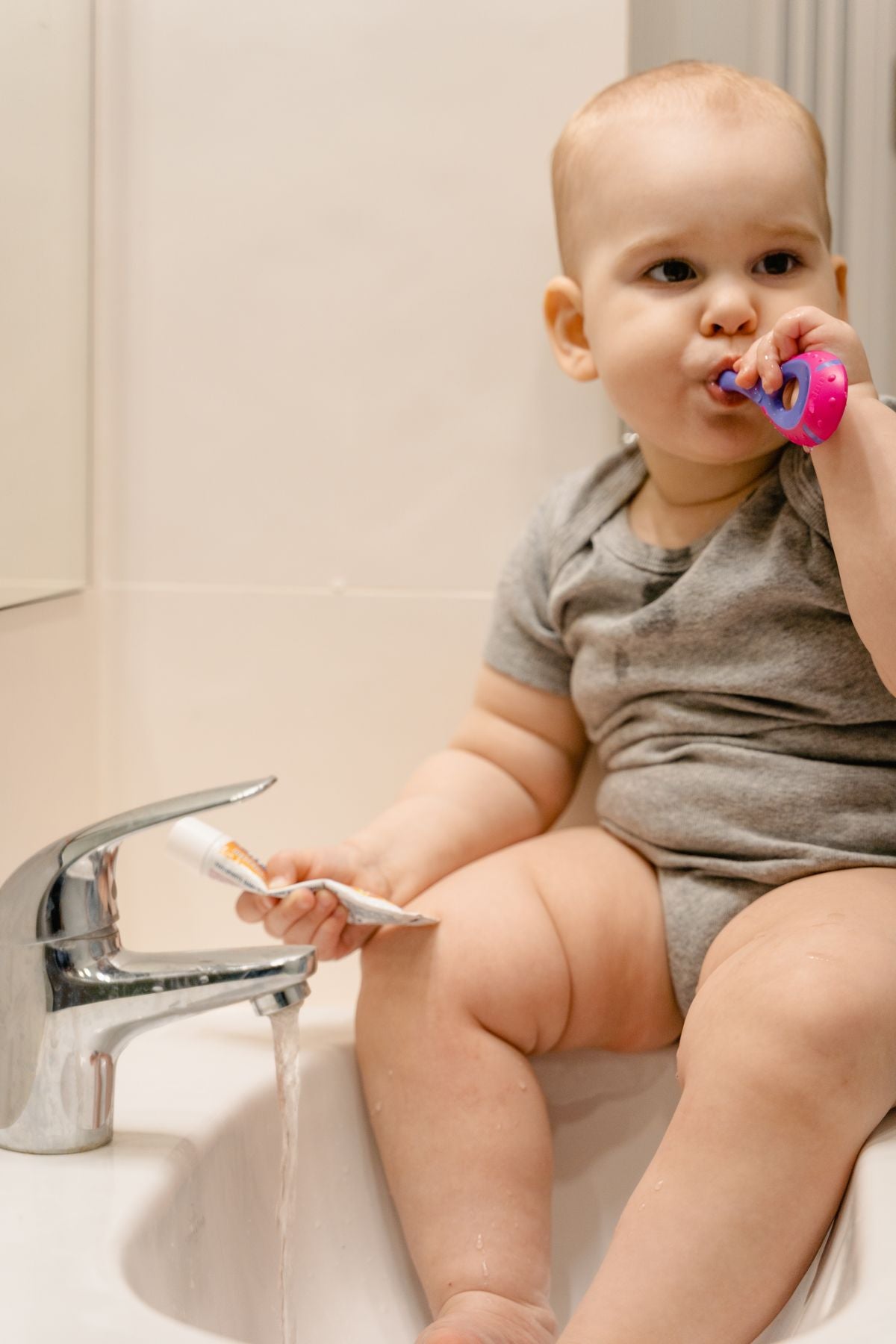
- Chewing and gnawing: Everything goes in the mouth. Counter-pressure on the gums provides some relief.
- Swollen, tender gums: You may be able to see or feel the tooth emerging.
- Fussiness and irritability: Particularly in the day or two before a tooth breaks through.
- Mildly disrupted sleep: Teething discomfort can cause extra night wakings.
- Slightly red cheeks: The drool and skin irritation can cause a mild rash around the mouth and chin.
- A very slight rise in temperature: Some studies show a very minor temperature elevation (but NOT a high fever).
What teething does NOT cause
This is where it's important to be clear:
- High fever (38°C or above): Teething does not cause a temperature of 38°C or above. A high fever in a baby is always worth investigating and is not "just teething."
- Diarrhoea: While some parents report loose stools during teething, there is no scientific evidence that teething causes diarrhoea. Loose stools alongside other symptoms warrant a GP call.
- Vomiting: Not a teething symptom.
- Rashes on the body: A rash on the trunk, limbs, or elsewhere is not caused by teething.
- Cold symptoms: Sneezing, congestion, and a runny nose are not teething symptoms.
- Loss of appetite or refusal to feed: While mild fussiness around feeding can occur, a baby who is refusing feeds should be assessed.
When to call the GP or 111
Always seek medical advice if your baby has:
- A temperature of 38°C or above (or 37.5°C in babies under 3 months)
- A rash anywhere on the body (especially if spreading or non-blanching — doesn't fade when pressed)
- Diarrhoea or vomiting alongside other symptoms
- Refused all feeds for more than a few hours
- Seemed unusually drowsy, pale, or unresponsive
- A high-pitched or unusual cry
A non-blanching rash in combination with a fever should be treated as an emergency — call 999.
Helping with teething discomfort
- Cold teething rings: Cooled in the fridge (not the freezer) can help. Avoid teethers that have been recalled — check the UK Government product safety register.
- Gentle gum massage: A clean finger pressed gently on the gum can relieve pressure.
- Teething gels: The NHS advises that sugar-free teething gels containing a mild anaesthetic can be used from 5 months. Avoid gels containing lidocaine for babies under 5 months.
- Paracetamol or ibuprofen: Age-appropriate infant paracetamol (from 2 months) or ibuprofen (from 3 months and 5kg) can be used for teething pain. Always follow dosage instructions and don't use to mask symptoms of illness.
- Comfort and cuddling: Sometimes the most effective remedy of all.
A note on amber teething necklaces
Amber teething necklaces have no scientific evidence supporting their effectiveness. More importantly, they present a serious strangulation and choking hazard. The NHS and leading paediatric bodies advise against their use.
Frequently asked questions
Can teething cause a fever?
No. Teething may cause a very slight rise in temperature, but it does not cause a temperature of 38°C or above. A high fever in a baby is always worth investigating and is not just teething.
Does teething cause diarrhoea?
There is no scientific evidence that teething causes diarrhoea, although some parents report loose stools. Loose stools alongside other symptoms warrant a GP call.
When do babies start teething?
First teeth typically appear between 4 and 7 months, though earlier or later is perfectly normal. Most children have all 20 primary teeth by age 3.
Are amber teething necklaces safe?
No. They have no scientific evidence supporting their effectiveness and present a serious strangulation and choking hazard. The NHS and leading paediatric bodies advise against their use.
Sources & further reading
- NHS — Teething symptoms and remedies
- NCT — Teething: what to expect
- NHS — Fever in babies and children
General information, not individual medical advice. Speak to your GP, midwife or health visitor about your baby’s needs.
Share:
Newborn Skin Care: A Simple Guide for UK Parents
How to Swaddle a Baby: A Step-by-Step Guide for UK Parents