

- by Infatot
Why babies grab everything, including the TV remote, and what to give them instead
- by Infatot
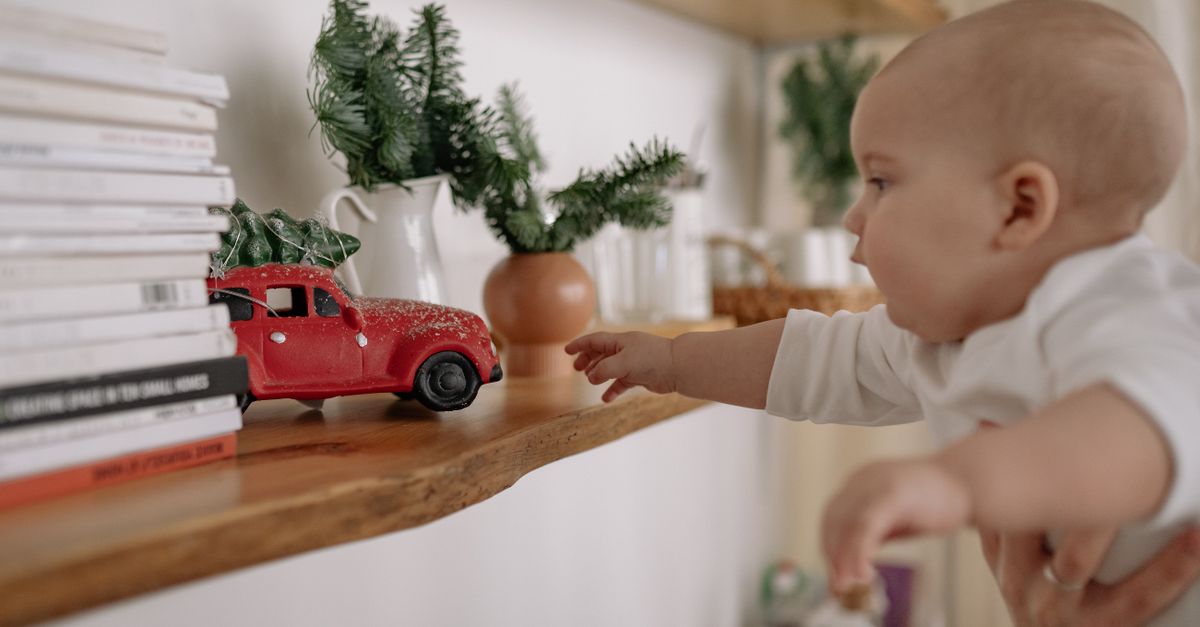
Quick answer: Babies start grabbing deliberately at around three months as hand-eye coordination develops, then mouth everything because that's how they explore. The remote is small, full of parts and usually in adult hands, so it wins. Give a teething ring, a baby book or an unbreakable household item instead.
Reaching starts with a few swipes at a toy, then a grab, and then everything goes straight to the mouth. Mouthing is learning: RoSPA says babies and toddlers examine things by putting them in their mouths, and the Child Accident Prevention Trust (CAPT) points out that young children have narrow airways and are still learning to chew, breathe and swallow in the right order.
Your job is less about stopping the grabbing and more about deciding what is close enough for your baby to grab. Keep small objects off low surfaces and stay close while they explore.
Grabbing begins at birth as a reflex, says the NCT. Around three months it becomes a skill your baby is keen to practise: hand-eye coordination improves as they discover their hands are part of their body and start to control them, and they begin to reach for objects.
By four months, many babies can get a thumb to their mouth and keep it there. The NCT says this is an important way for a baby to self-soothe and calm down, so it helps to leave your baby's hands free to grab and explore.
Keep hot drinks out of reach once reaching starts. Your baby will soon reach accurately and quickly, and with their whole body, not just their hands.
The remote is usually in your hands, it is small, and it has a row of buttons that invite exploring. The NHS says children learn more from you than from any toy. Your baby watches what you do, so the things you hold naturally draw their attention.
The issue is what a remote is made of. Buttons can work loose and become small parts, and any electrical item with a battery compartment may hold button batteries. The NHS warns that button batteries can cause severe internal burns if swallowed or lodged in the ear or nose, and can be a choking hazard, so keep them well away from your baby and make sure compartments are properly secured. If you think your child has swallowed a button battery, take them to A&E straight away or call 999.
Once grabbing starts, household things that used to sit on low tables need to move. RoSPA advises keeping surfaces clear of small toys and cleaning up after play. The NCT says to keep hot drinks out of reach.

Babies and toddlers examine things by putting them in their mouths, says RoSPA. It is how they learn what an object is by touch and taste.
Keep small objects out of little hands. RoSPA advises keeping surfaces clear of small toys like building bricks and marbles, cleaning up after play, especially when older children are around, and staying within arm's reach of a baby or young child. CAPT notes that young children have narrow airways and are still learning to chew, breathe and swallow in the right order.
For something safe to chew, the NHS recommends teething rings because they give your baby something to chew safely. Some can be cooled in the fridge first; follow the instructions that come with the ring. Never put one in the freezer, and never tie one around your baby's neck, as that is a choking hazard.
Give your baby things that are safe to hold and chew, and put them where they can reach. The NHS suggests putting toys near your baby so they can reach for them from around four months, and play does not need to be difficult or expensive: you can use things you already have around the house.
Try this. Look for the British Standard kitemark, lion mark or CE mark on toys: the NHS says these show a toy meets safety standards. Secondhand toys and toys from market stalls may not meet them, so check those carefully.
Gagging is noisy and normal: your baby may stick their tongue out and their eyes may water, and it is part of learning how much they can chew and swallow. Choking is silent, because the airway is blocked, so it needs immediate action.
Chewing on fingers, toys and other objects is one of the signs the NHS lists for teething. But babies also mouth things as a way of exploring from early on, so mouthing on its own does not tell you a tooth is on the way.
General information, not individual medical advice. Speak to your GP, midwife or health visitor about your baby’s needs.
Sleeping at Grandma's over Christmas: setting up a travel cot safely
Read moreabout Sleeping at Grandma's over Christmas: setting up a travel cot safely
Teether on the floor again: what to do when you're out with the pram
Read moreabout Teether on the floor again: what to do when you're out with the pram
Gagging or choking when your baby starts solids
Read moreabout Gagging or choking when your baby starts solids



Share:
Christmas food in pregnancy: what's fine on the festive table and what to skip
How to keep a baby entertained in the highchair before they can eat