

- by Infatot
How to keep a baby entertained in the highchair before they can eat
- by Infatot
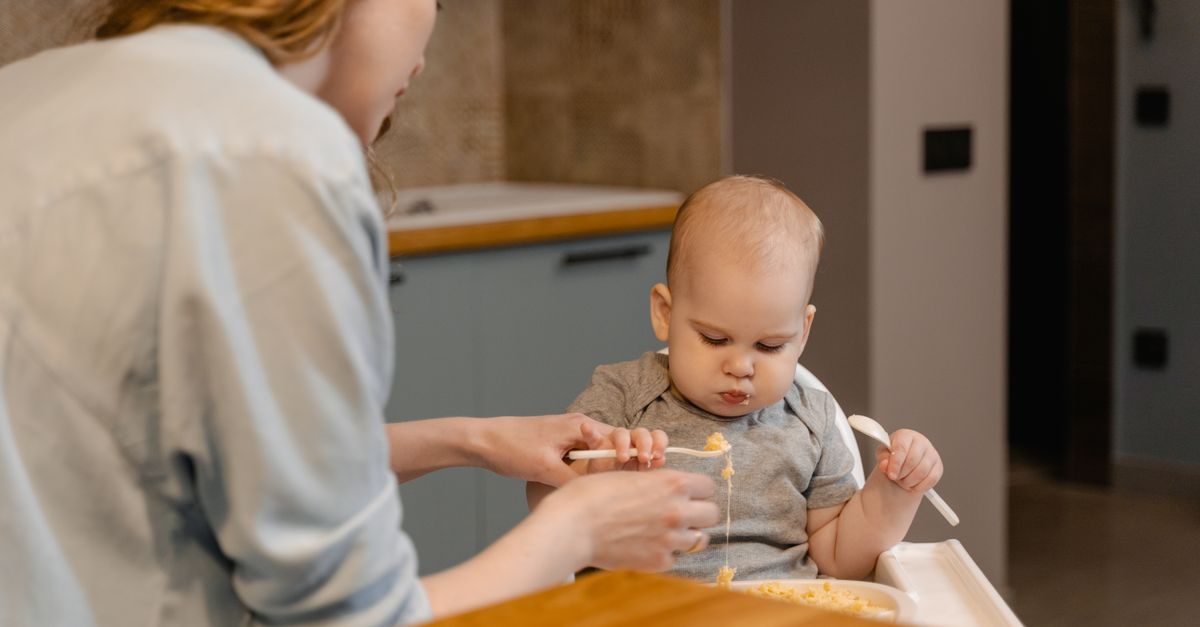
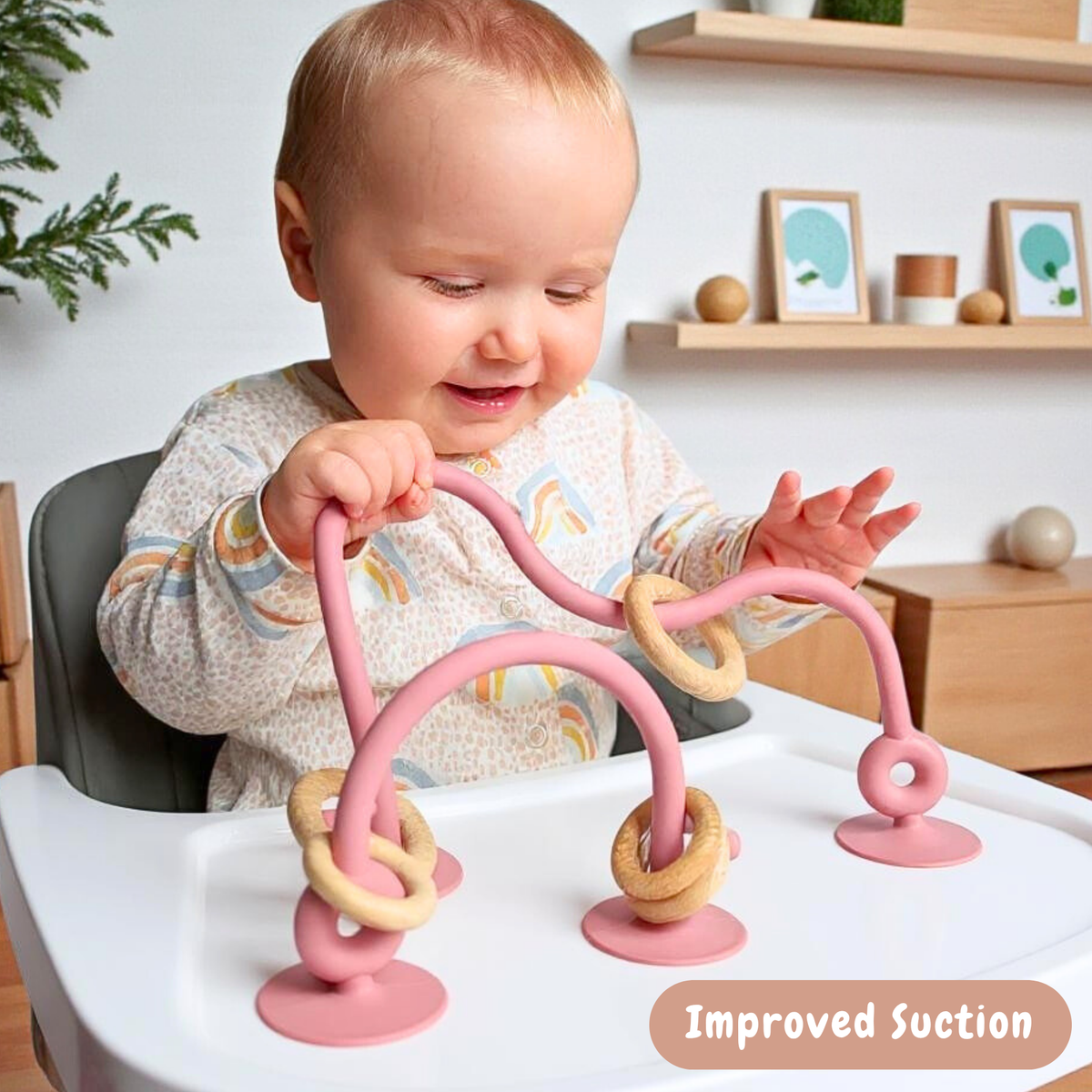
Quick answer: Strap your baby into the highchair with the 5-point harness, sit them facing the family rather than a screen, and give them one or two baby-safe toys on a clear tray. Watching you eat and hearing you talk keeps many babies busy. Wait to use the highchair until your baby can sit upright and hold their head steady.
The Child Accident Prevention Trust says doctors see a worrying number of toddlers who have fallen out of highchairs, and that the highchair is often in the kitchen on a hard floor. So the harness goes on every time, including when your baby is only there to play.
The table changes too once a baby is sitting at it. A family meal puts hot plates, mugs, cutlery and phones within reach of someone who, the NHS notes, will grab at anything brightly coloured.
Your baby needs to sit safely upright in a highchair. Staying in a sitting position and holding their head steady is one of the three signs the NHS lists as appearing together from around 6 months. If your baby still slumps to one side or their head wobbles, wait until they can sit upright and hold their head steady before using the highchair.
Until then, put your baby in a bouncer on the floor next to your chair so they can see and hear the meal. The NHS advises keeping bouncing cradles and car seats on the floor, never on a table or kitchen worktop, because a wriggling baby can tip them over the edge.

A couple of minutes spent setting up first means you can eat without getting up every few seconds.
1 of 6
Harness on every time
Use the 5-point harness every time, even if your baby isn't eating. The NHS and RoSPA both advise this so your baby can't wriggle down or fall out.
2 of 6
Away from the cooker
Place the highchair well away from the hob and kettle. RoSPA advises keeping children out of the kitchen while you cook, because oven doors and other hot surfaces can burn.
3 of 6
Clear the tray
Take buttons, coins, bottle tops and anything smaller than a 2p coin out of reach. CAPT says objects that size can choke a young child.
4 of 6
Mat underneath
A wipe-clean mat or newspaper under the chair catches whatever gets thrown and makes it quicker to pick up.
5 of 6
Face the family
Turn the chair so your baby can see the faces at the table rather than a TV or tablet.
6 of 6
One toy at a time
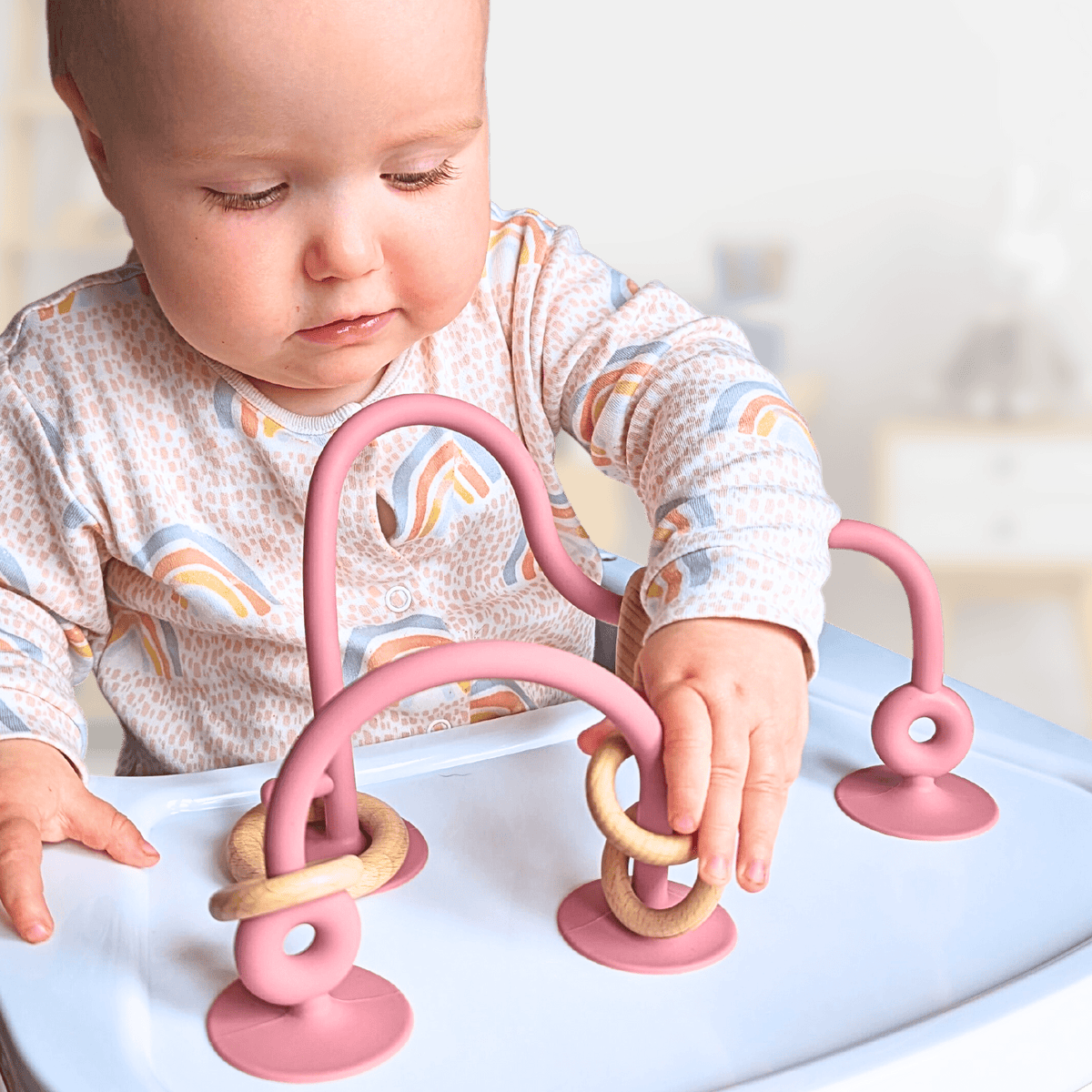
Start with one toy on the tray and keep a second one by your plate to swap in when the first stops holding their interest.
Swipe or scroll sideways for the next card.
The NHS advises keeping distractions to a minimum at mealtimes and not sitting your baby in front of the television, phone or tablet. It also says babies copy their parents and other children, so a baby who watches everyone eat is getting ready for their own first meals.
Try this. Before you lift your baby into the highchair, put your own mug of tea down on the far side of the table. The NHS points out that a hot drink can still scald 15 minutes after it was made.
Keep toys meant for older siblings away from the highchair, because the NHS warns they may have small parts. The same goes for magnetic toys with small pieces, which can stick together in a child's intestines if swallowed.
Button batteries cause severe internal burns if swallowed, so keep remotes, key fobs and anything else that holds one off the table. CAPT advises going straight to A&E if you think your child has swallowed one.
Stay at the table while your baby is in the highchair. The NHS says never to leave babies unattended on raised surfaces, and CAPT notes that parents are often caught out the first time a child pushes themselves up out of the seat. If you're worried about getting your baby out quickly if they start choking, CAPT says the straps can still be released fast.
No. The NHS advises starting solids at around 6 months, when your baby can sit up, pick food up and swallow it. Chewing fists, waking more at night and wanting extra milk are normal behaviours and aren't necessarily a sign that a baby is ready. If your baby was premature, ask your health visitor or GP when to start.
Gagging is noisy. Your baby's eyes may water, they may push their tongue forward or retch to bring food back up. Choking is silent because the airway is blocked. CAPT and the NHS both say gagging is a normal part of learning to eat.
General information, not individual medical advice. Speak to your GP, midwife or health visitor about your baby’s needs.
Crinkle, contrast and texture: what a newborn can actually see and hear
Read moreabout Crinkle, contrast and texture: what a newborn can actually see and hear
How to play with a 3-month-old when they're awake and alert
Read moreabout How to play with a 3-month-old when they're awake and alert
Fine motor play for a baby who has just learned to sit
Read moreabout Fine motor play for a baby who has just learned to sit





Share:
Why babies grab everything, including the TV remote, and what to give them instead
Why different teether textures matter for your baby's mouth and first foods