


- by Infatot
How to play with a 3-month-old when they're awake and alert
- by Infatot
Quick answer: Play with a 3-month-old in short bursts while they're fed, awake and alert. Try face-to-face chat and songs, bold black and white pictures, gentle sounds and textures, a toy within reach, and a few minutes of supervised floor or tummy time. Stop when their attention drifts and try again later.
You are your baby's favourite playmate, the NHS says. It also points out that play takes a lot of a baby's brain and muscle power. A few minutes of your face, your voice and something to look at is plenty for a baby this age.
It all counts as activity. NCT notes that the government recommends at least 30 minutes of physical activity a day for babies under 1. Kicking, grabbing, pushing, pulling and playing with you all count, so several short spells across the day add up.
By three months, babies begin to turn their head, kick their legs, make eye contact and smile, according to NCT. Colourful mobiles and bold black and white pictures usually catch their attention, and so do shaking rattles and the sound of voices. Above all, they like to watch your face as you sing, read or talk to them.
Sound is a big part of play at this age. From about a month old, babies pause and listen when a sound begins, and by four months they start to show excitement at sounds like music or singing. NCT reports research showing that singing holds a baby's attention for longer than talking alone.

Pick one or two of these for each awake spell rather than trying them all at once. Swipe through and choose whatever suits the moment.
1 of 8
Face time
Get close so your baby can see your face as you talk. See if they copy you when you stick out your tongue or blink. When they make a noise, answer it, for example "Wow, you can make loud noises". That back-and-forth is the start of conversation, the NHS says.
2 of 8
Songs and rhymes
Sing the same songs and rhymes over and over, with actions, such as "Row, row, row your boat". Babies need lots of repetition to learn words, so singing the same song every day is helping them.
3 of 8
Bold pictures and books
High-contrast books with lots of faces hold a young baby's attention well, NCT says. Describe the pictures, or tell your baby about the view from the window.
4 of 8
Sounds to listen to
Shake a rattle where your baby can see and hear it. NCT notes that babies love shiny, scrunchy paper, and that they'll enjoy shaking a rattle themselves once they start to grab.
5 of 8
Textures to feel
Let your baby touch different fabrics, or share a fabric book with different textures and talk about how each one feels.
6 of 8
Reaching and clapping
Put toys near your baby so they can reach for them. Take turns clapping your hands, then theirs, together. The NHS describes clapping as a milestone that needs muscle control and hand-eye coordination.
7 of 8
Mirror play
Hold a mirror in front of your baby, or lay them under a baby gym with a mirror and bells hanging from the arches. They won't know at first who's looking back.
8 of 8
A dance in your arms
Put some music on and sway with your baby held close. The NHS says most babies love the gentle rocking and being close to you.
Swipe or scroll sideways for the next card.
Try this. A black marker pen and a sheet of white paper make a high-contrast picture in seconds, as NCT suggests. Prop it to one side of your baby during floor play.
Tummy time can start on your chest, with you lying back and your baby tummy to tummy, face to face. The NHS advises doing this only when you're wide awake and unlikely to fall asleep. Once your baby seems happy there, NCT suggests moving to your knees and then to a few minutes on the floor.
If your baby finds it hard to lift their head, roll a towel into a C shape and lay them over it, with the towel under their armpits. Toys or books placed nearby give them a reason to reach out. Only do tummy time when your baby is well and awake, with an adult watching.
Time on their back counts too. The NHS says small babies love wriggling around on the floor, which is good for their muscles, and kicking their legs is part of their daily activity.
From Infatot
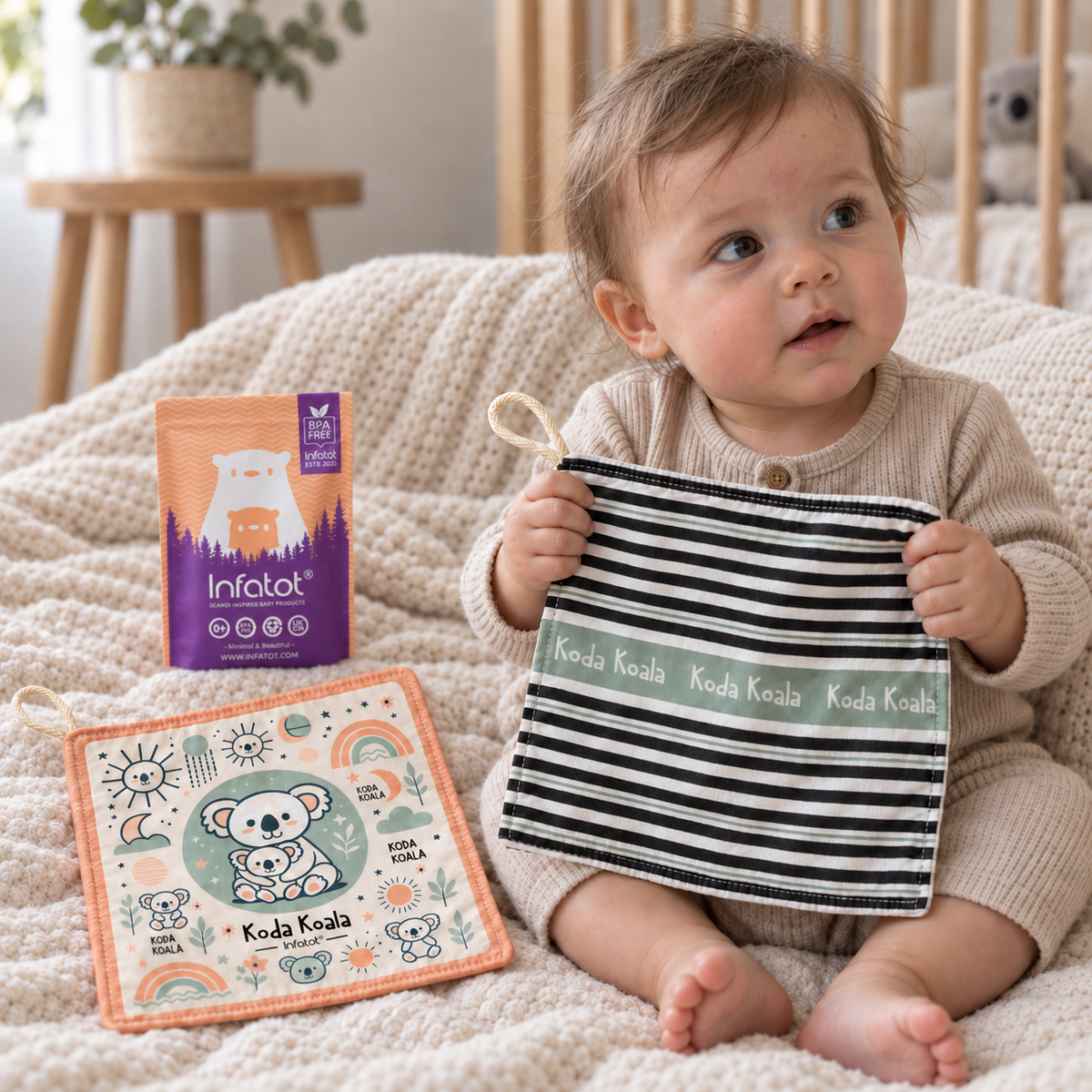
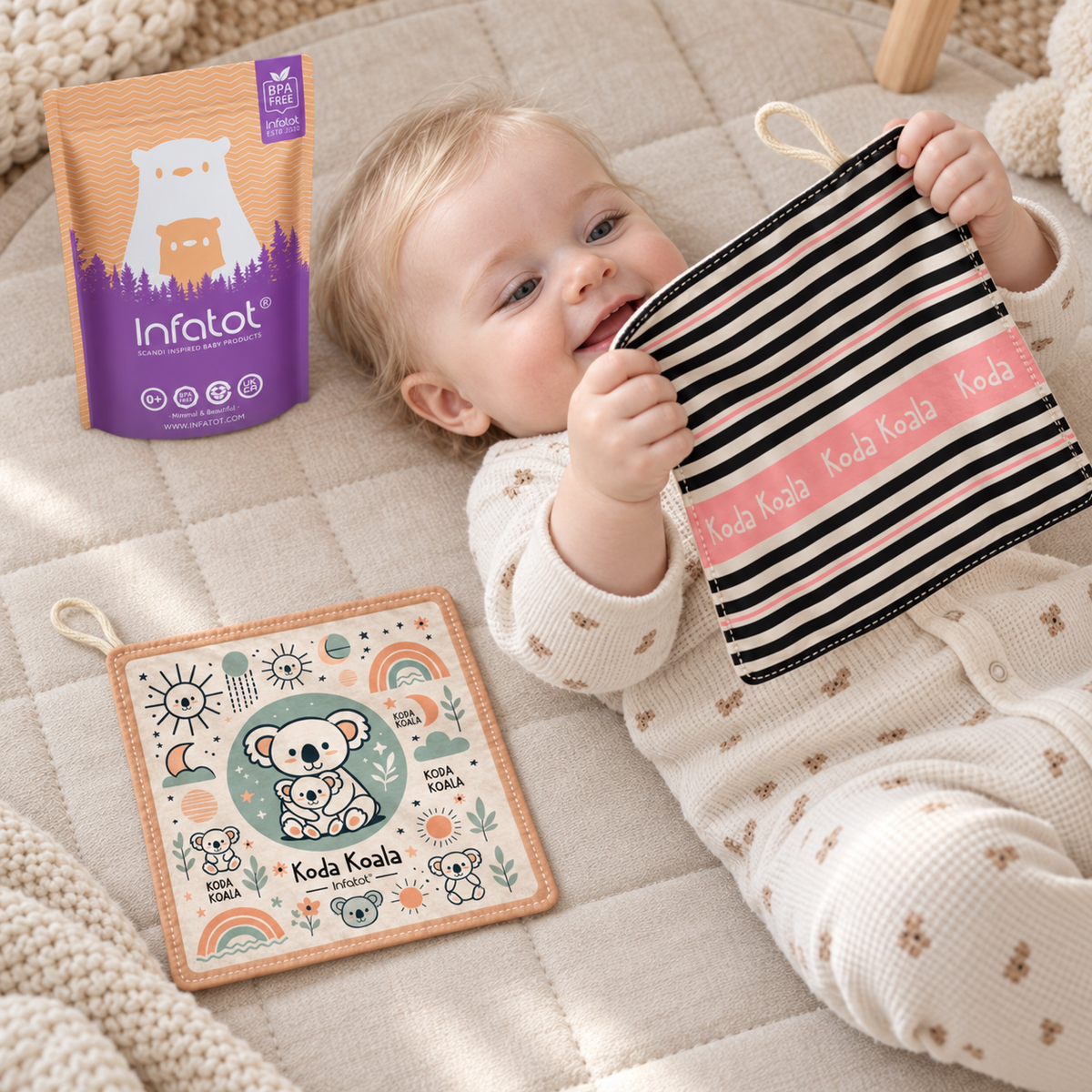
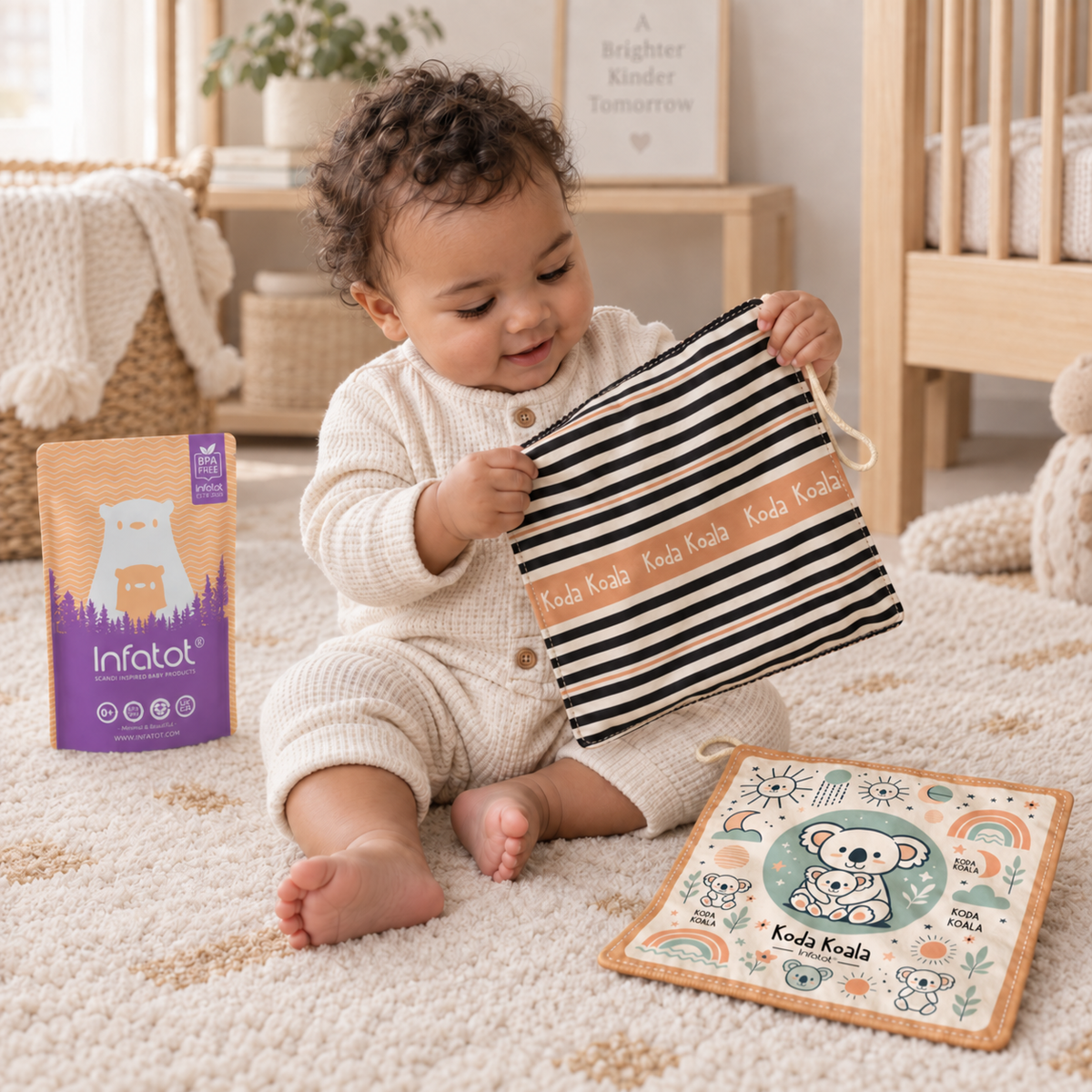
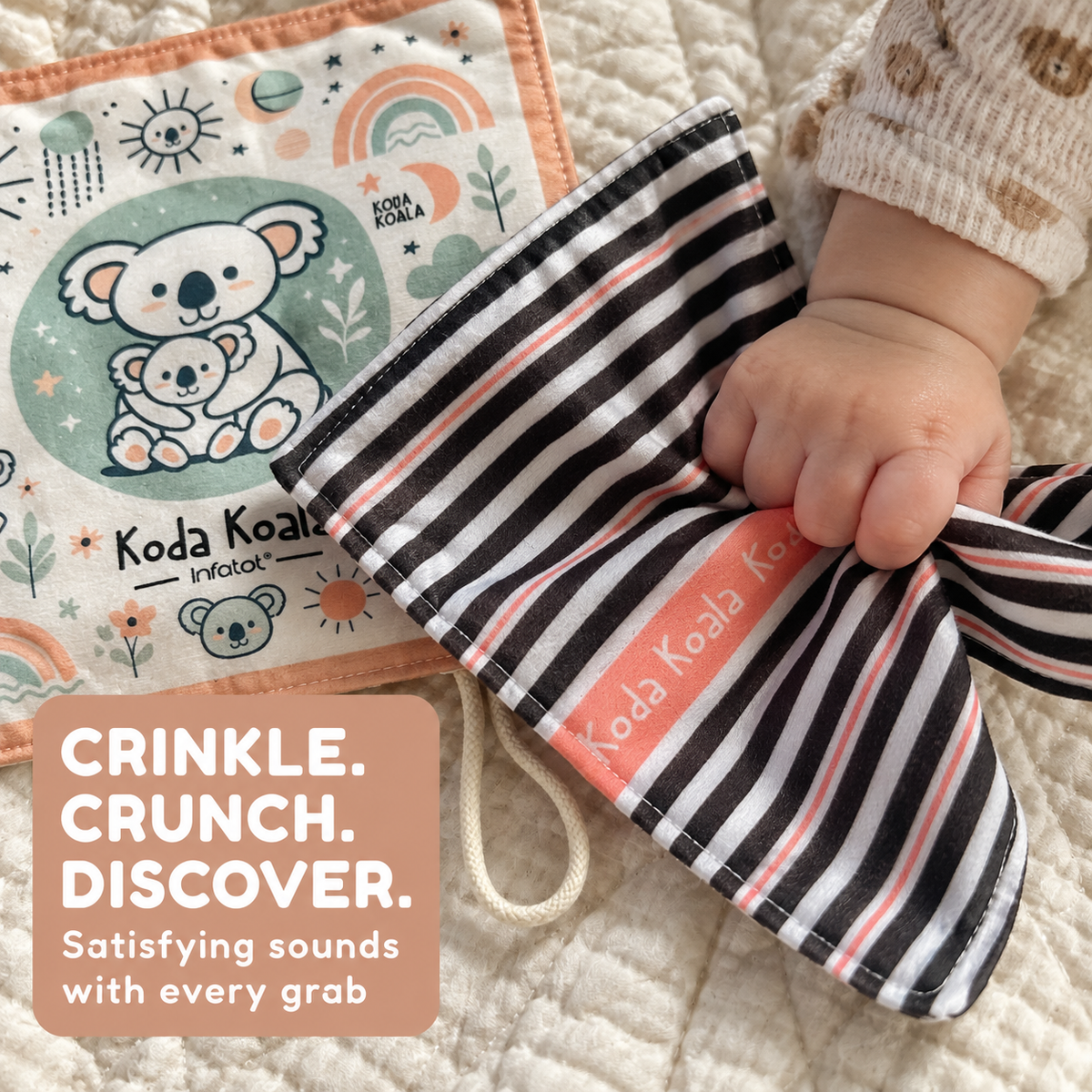
Koda Koala Crinkle Sheets
These lightweight squares combine rustling sounds, soft fabric and contrasting prints, and they're made for awake, supervised tummy time or play, when you want to give your baby something to reach for, feel and explore.
A baby this age won't focus for long, and their attention shifts quickly, the NHS says. Watch their face. They show interest with sounds and expressions, and when those fade it's time to switch to something else or stop.
With tummy time, NCT advises aiming for a few minutes at first and building up as your baby gets happier. If they dislike it, it's fine to stop, go back to your chest or knees, and try again another day. A short spell every day builds tolerance more gently than one long session.
If play ends in crying, NCT says hunger and tiredness are the usual reasons at this age, so a feed or a nap is often the next step.
A few habits now cover most of the risks during play at this age.
No. The NHS says play doesn't need to be difficult or expensive. You can use things you already have at home, and your baby will learn more from you than from any toy.
Yes. The NHS suggests talking and singing in a sing-song voice during feeds so your baby can watch your mouth. At nappy changes, describe what you're doing with the same short words each time, such as "socks off" or "legs up". The repetition helps them learn.
No. The NHS says babies love the sound of your voice however you sound. A made-up song works as well as a nursery rhyme.
Your health visitor. The NHS says the first visits are usually at around 10 to 14 days and again at 6 to 8 weeks, and you can contact your health visiting team for tips and advice whenever you need to.
General information, not individual medical advice. Speak to your GP, midwife or health visitor about your baby’s needs.
Fine motor play for a baby who has just learned to sit
Read moreabout Fine motor play for a baby who has just learned to sit
Why different teether textures matter for your baby's mouth and first foods
Read moreabout Why different teether textures matter for your baby's mouth and first foods
How to keep a baby entertained in the highchair before they can eat
Read moreabout How to keep a baby entertained in the highchair before they can eat

Share:
Fine motor play for a baby who has just learned to sit
Gagging or choking when your baby starts solids