

- by Infatot
Reading to Your Baby: When to Start and How to Make It Fun
- by Infatot
Quick answer: Start reading to your baby whenever you like, even in the newborn weeks. Your voice is the point, not the words. From around six months the NHS suggests looking at books together, talking about the pictures rather than reading every line.
Reading to a baby who can't talk, sit up or hold a page can feel a bit odd at first, and it's easy to wonder whether it's doing anything at all. It is. What your baby gets from it is your face, your voice and the rhythm of language, long before any of the words make sense.
This guide covers when to begin, what to expect at each stage in the first two years, how to make it enjoyable rather than another thing on the list, and what to do when your baby chews the book or squirms away after thirty seconds.
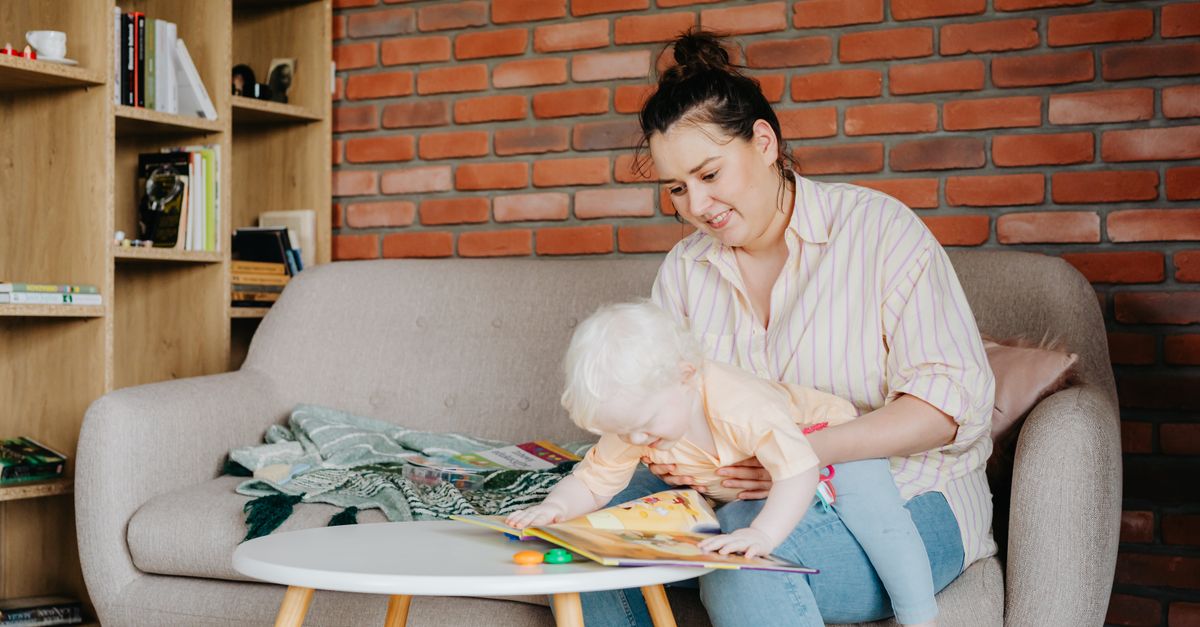
There is no minimum age. In the first six months your baby is already tuned in to your voice: the NHS suggests holding your baby close and looking at them as you talk, singing to them, and using an exaggerated sing-song voice, because this helps them follow the movements of your mouth and supports early speech development. A book is simply a prop for that — something to talk around when you have run out of things to say.
From around six months the advice becomes more book-specific. The NHS suggests starting to look at books with your baby at 6 to 12 months, and is explicit that you do not have to read the words on the page, just talk about what you can see. Books with different textures your baby can feel are particularly good at this stage, and waterproof ones can live by the bath.
Children learn to talk at different ages, so try not to measure your baby against anyone else's. If anything worries you, your health visitor is the person to ask.
Your baby's part in story time changes quickly. Knowing roughly what to expect stops it feeling like nothing is happening.
| Age | What your baby does | What helps |
|---|---|---|
| 0–6 months | Watches your face, makes cooing and burbling noises, enjoys the same rhymes over and over | Hold them close and face to face, sing, use a sing-song voice, repeat rhymes |
| 6–12 months | Listens more carefully, touches shapes and textures, babbles back, looks where you point | Very simple picture books, texture and fabric books, name and describe what you both see |
| 12–18 months | Enjoys looking at picture books with you, may say up to 20 words, copies what you do | Books that make a noise, nursery rhymes with actions, saying words back correctly |
| 18–24 months | Can concentrate on simple picture stories, asks "What's that?", copies sounds and words | Repetition, short simple sentences, naming body parts and objects in the book |
The National Literacy Trust's tips for sharing books with babies, published on the government's Education Hub blog, are refreshingly low-effort. A few make the biggest difference.
Babies chew books, bat them away, roll over and lose interest after a page. None of that is a failure. The National Literacy Trust advises against putting pressure on your child to name pictures or objects. Point to things and name them yourself, and if they respond, praise them and say the word again.
Repetition can be maddening for you and is exactly what your baby needs. Babies love hearing the same songs, rhymes and books over and over, and they need lots of repetition to learn words. Sharing a favourite book again and again helps them understand and remember the language they hear.
Books are also not the only route. If reading feels like a chore on a hard day, the NHS puts talking through nappy changes, naming food at mealtimes, singing in the bath and chatting about what you see on a walk in exactly the same category of language-building. Story time is one option among many, not a box to tick.
Libraries are a free way to access age-appropriate books, and the NHS points parents towards them directly. Some also run story time sessions for parents and their children, which are a gentle way to meet other parents. You can find your local library service on GOV.UK, and digital library services offer audiobooks and ebooks too.
Your local council may run learning activities as well, and in 75 local authorities in England Family Hubs offer support and information for families in one place, including guidance on issues such as feeding your baby or toddler, mental health and parenting support.
One thing the NHS is clear about: avoid screen time for babies and toddlers under two. If you do use screens, keep them for shared activities that encourage bonding and interaction. A paper book and your voice do the job better.
Children learn to talk at very different ages, so a baby who is not interested in books is not a concern on its own. Some communication signs are worth mentioning to your health visitor, GP or childcare provider.
Not the words, no. But your newborn recognises your voice and loves watching your face, and hearing the rhythm of language is an important early step towards talking. Reading aloud in the first months is about closeness and sound.
In the early months your baby is responding to your voice, your face and the rhythm of language rather than the content: the NHS suggests talking and singing in an exaggerated sing-song voice so your baby can follow the movements of your mouth. From around six months, simple picture books and texture books your baby can feel become more useful, because you can name and point to things together.
As long as your baby stays interested, which may be under a minute. Little and often works better than a long sitting, so a short daily session at bedtime or bath time is plenty.
Books are there to be handled, and there's no need to make it a battle. The NHS suggests playing together with fabric books that have different textures and talking about how the book feels, and keeping waterproof books near the bath, so those are the ones to let your baby hold freely. Keep paper books for times when you're holding them together.
The NHS advises avoiding screen time for babies and toddlers under two, and using screens only for shared activities that encourage bonding if you do. A physical book with your voice and face is the better option.
General information, not individual medical advice. Speak to your GP, midwife or health visitor about your baby’s needs.
When Do Babies Start Teething? A Month-by-Month Timeline
Read moreabout When Do Babies Start Teething? A Month-by-Month Timeline
Separation Anxiety in Babies: What's Normal and How to Help
Read moreabout Separation Anxiety in Babies: What's Normal and How to Help
When Do Babies Start Crawling? A Month-by-Month Guide for UK Parents
Read moreabout When Do Babies Start Crawling? A Month-by-Month Guide for UK Parents
Share:
Nursery Germs: Why Babies Get Ill So Often in Their First Term
How to Swaddle a Baby: A Step-by-Step Guide for UK Parents