

- by Infatot
Why different teether textures matter for your baby's mouth and first foods
- by Infatot
Quick answer: Different textures on a teether give sore gums several surfaces to bite and press on, and give small hands something to grip. Learning to manage food textures comes from food itself. From around 6 months, the NHS advises moving on to mashed, lumpy and finger foods as soon as your baby can manage them.
Teething and weaning often overlap. NCT says most babies start teething at around six months, but some get teeth before four months and others not until 12 months, so a baby may be gnawing on a teether in the same weeks they first sit in a highchair.
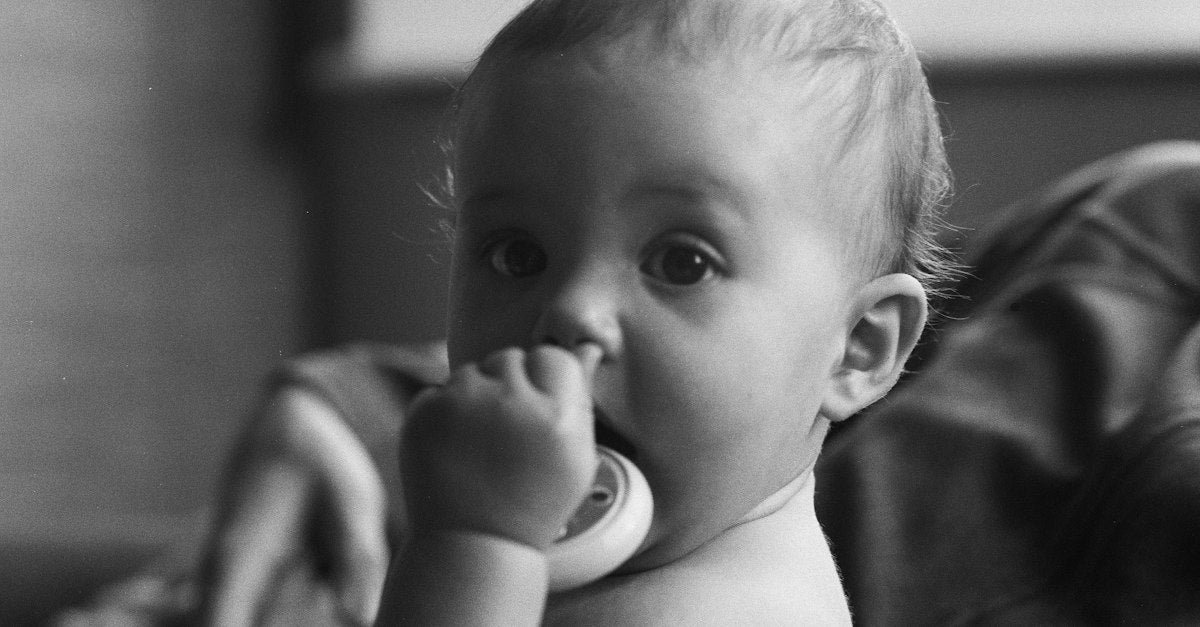
Chewing doesn't by itself mean a baby is ready for food. The NHS lists chewing fists as normal behaviour that parents often mistake for readiness. The real signs are sitting steadily with a steady head, picking food up and getting it to their mouth, and swallowing it rather than spitting it out.
The NHS says teething rings give your baby something to chew safely, which may ease their discomfort and take their mind off the pain. Some can be cooled in the fridge first, for as long as the instructions say. Never put one in the freezer, because a frozen ring can damage your baby's gums, and never tie one around your baby's neck, because of the choking risk.
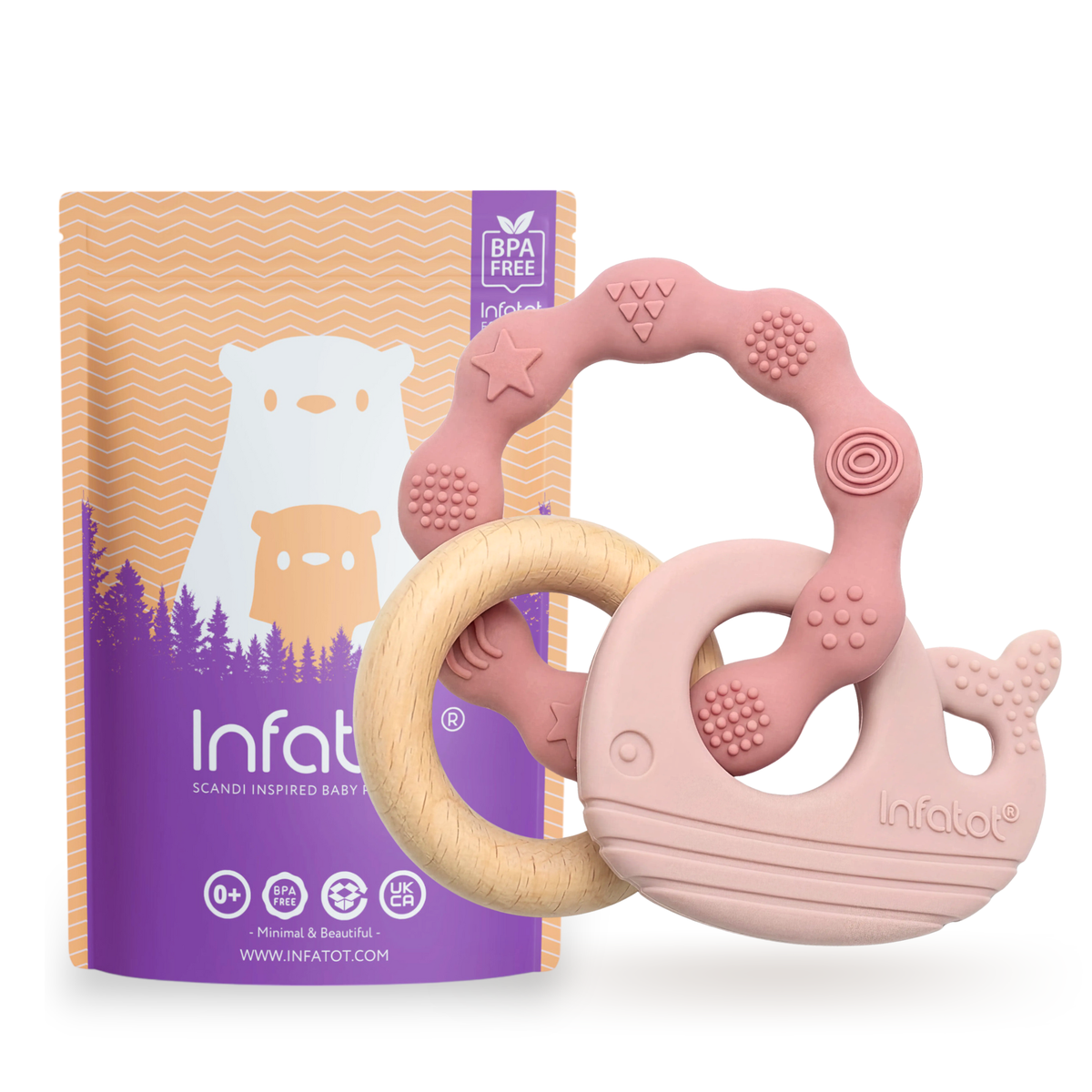
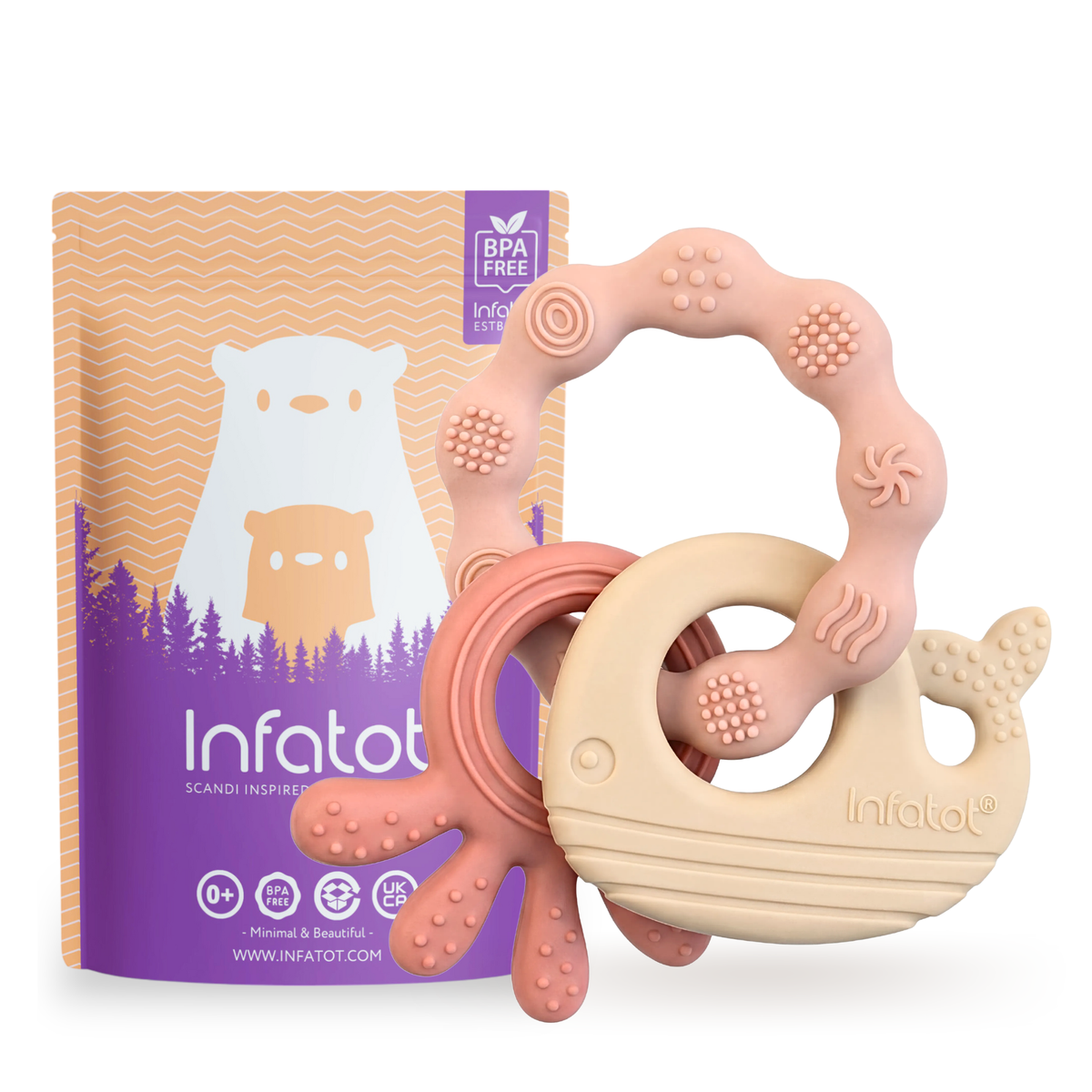
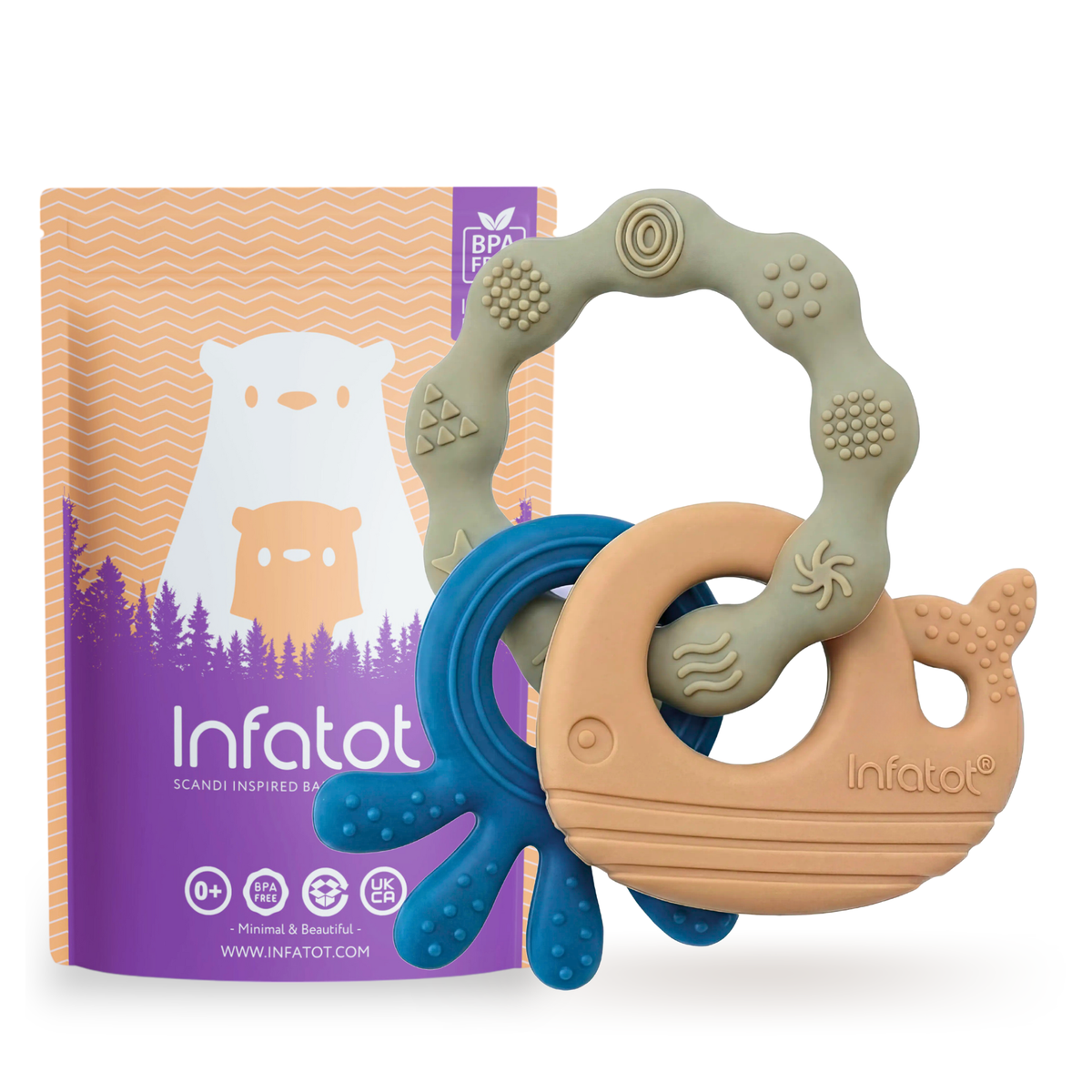
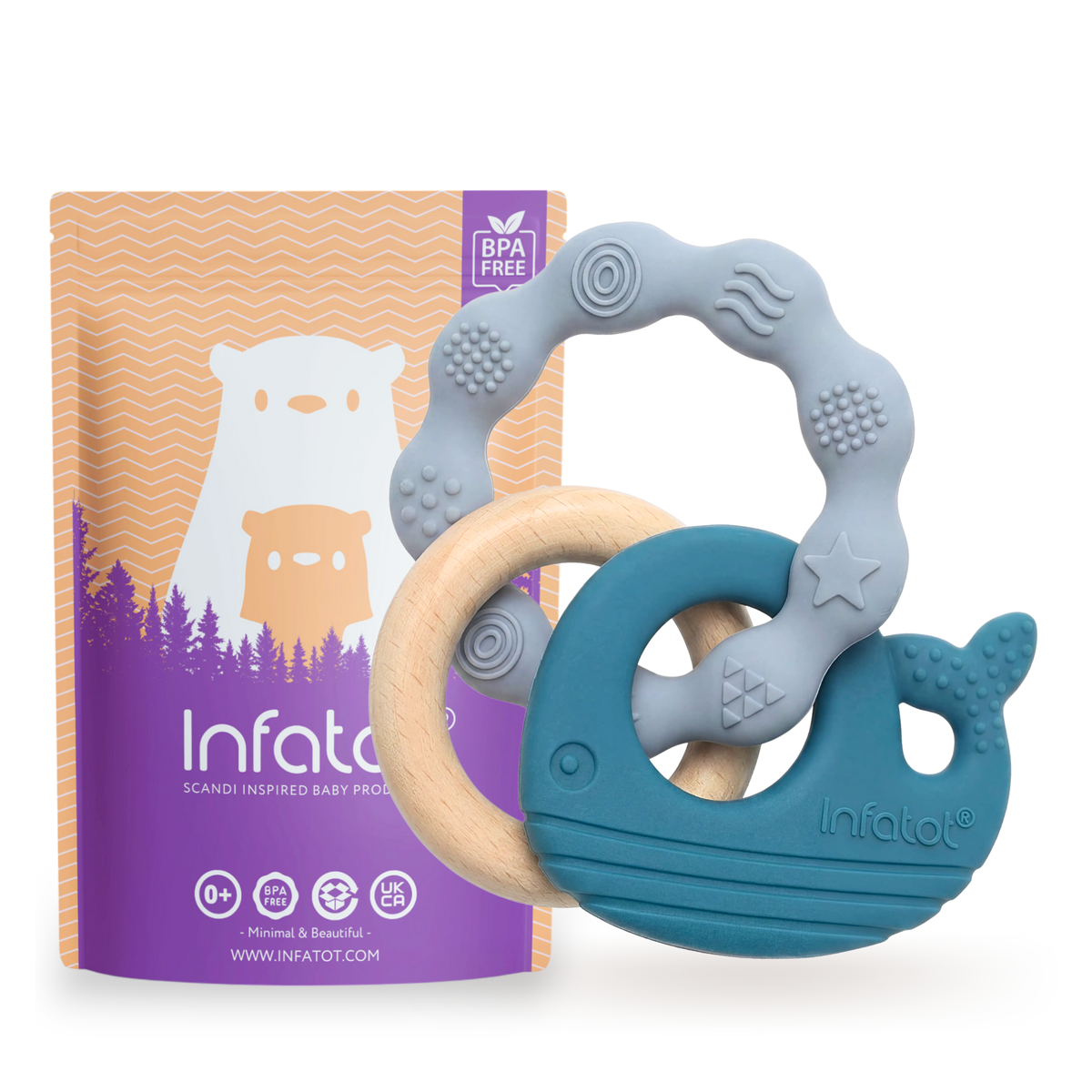
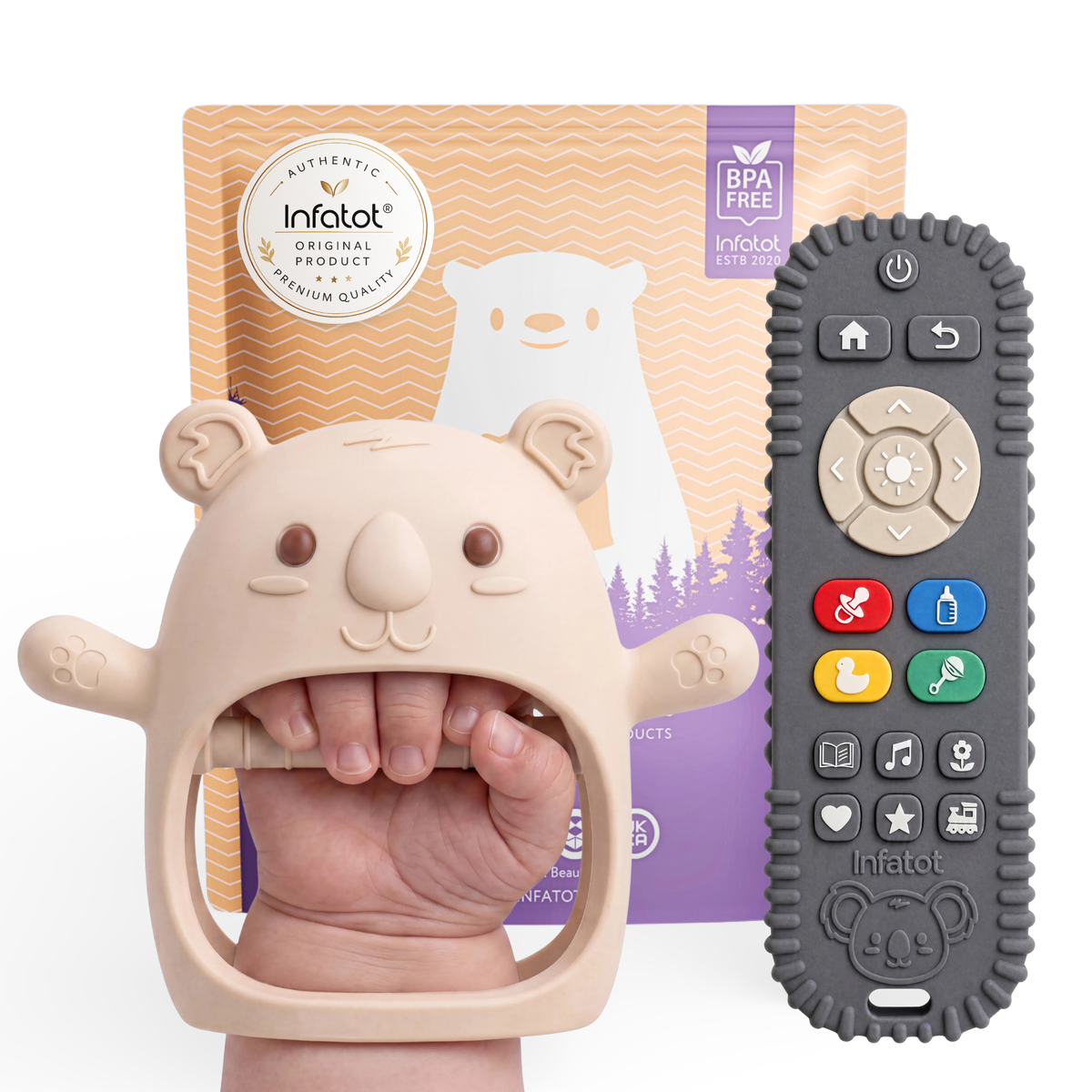
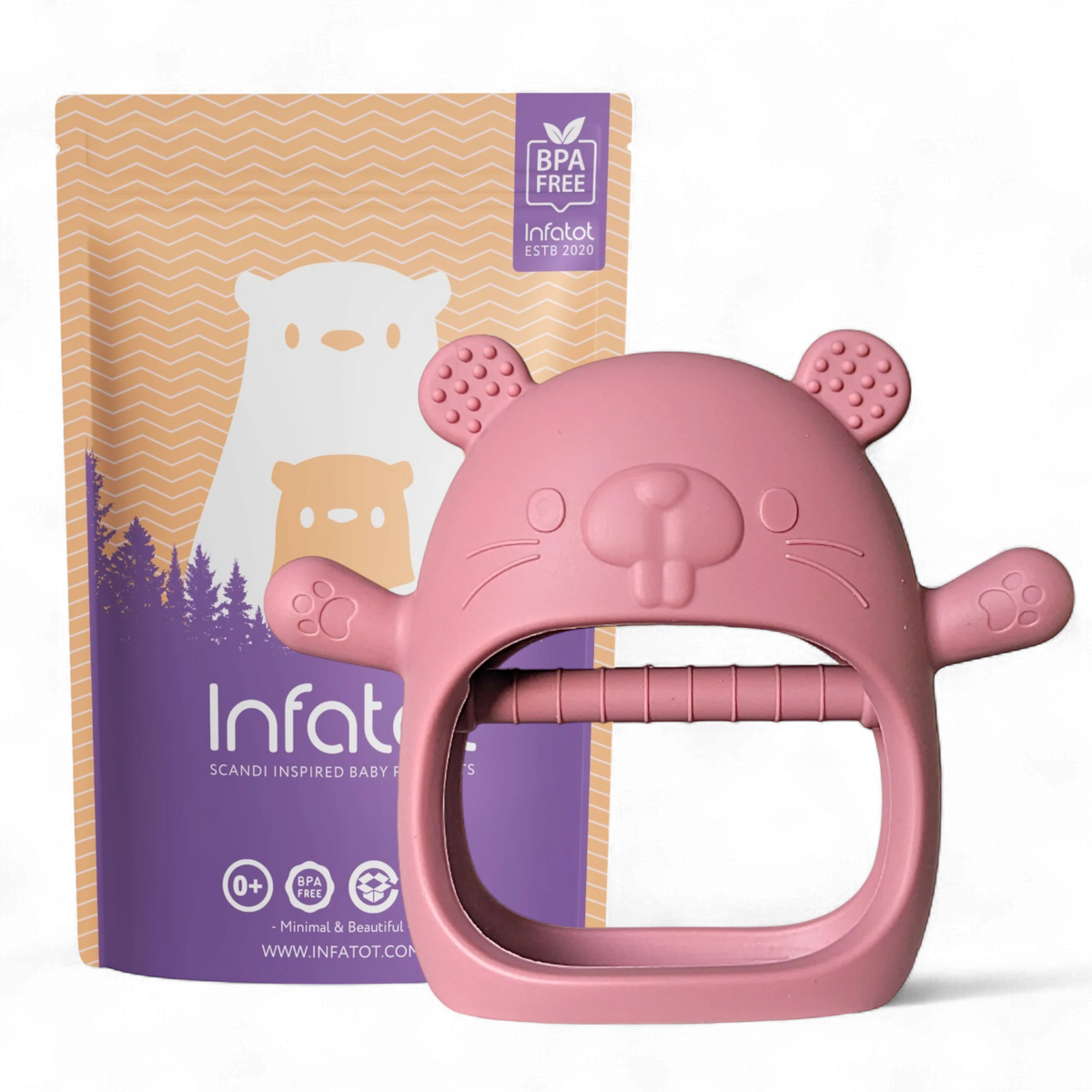
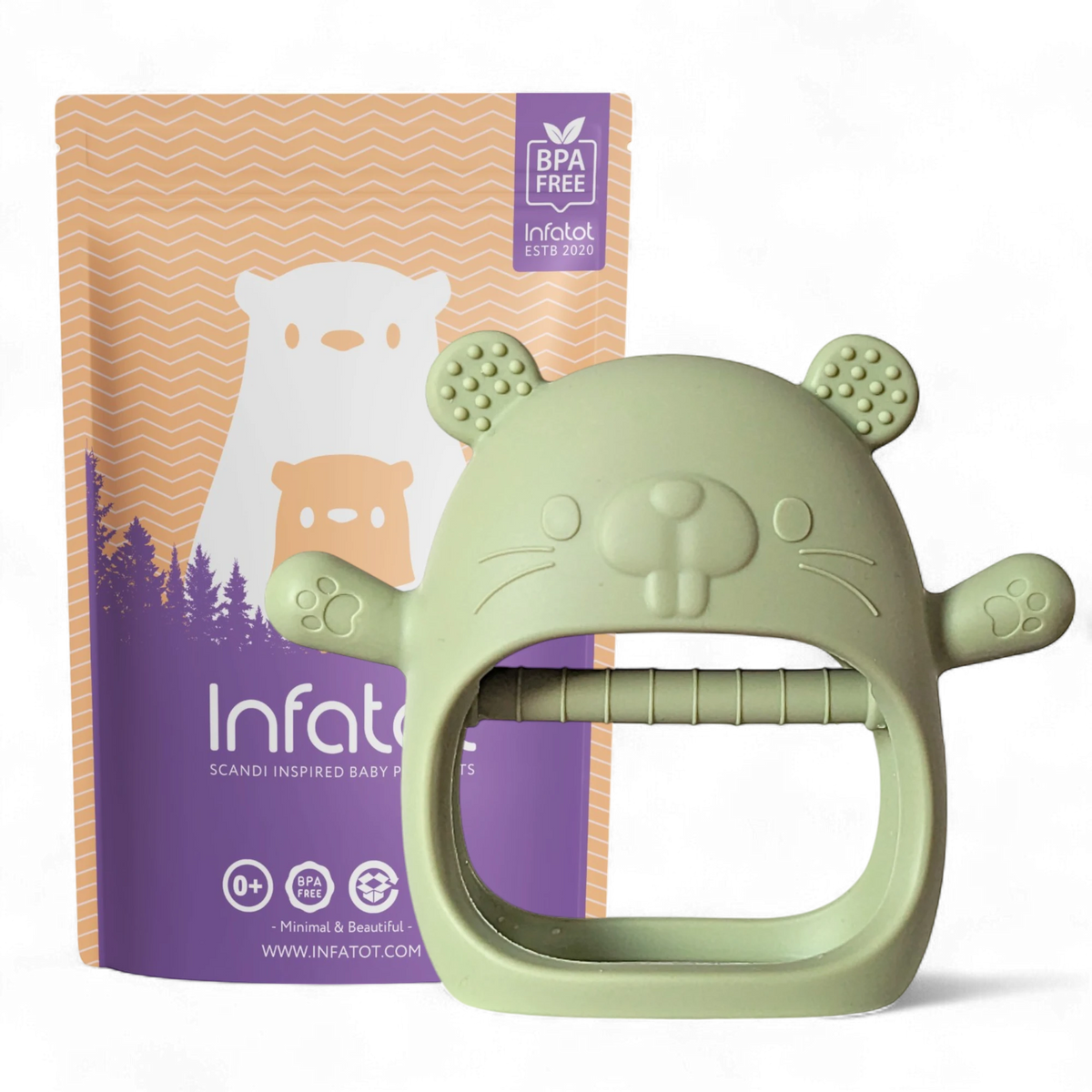
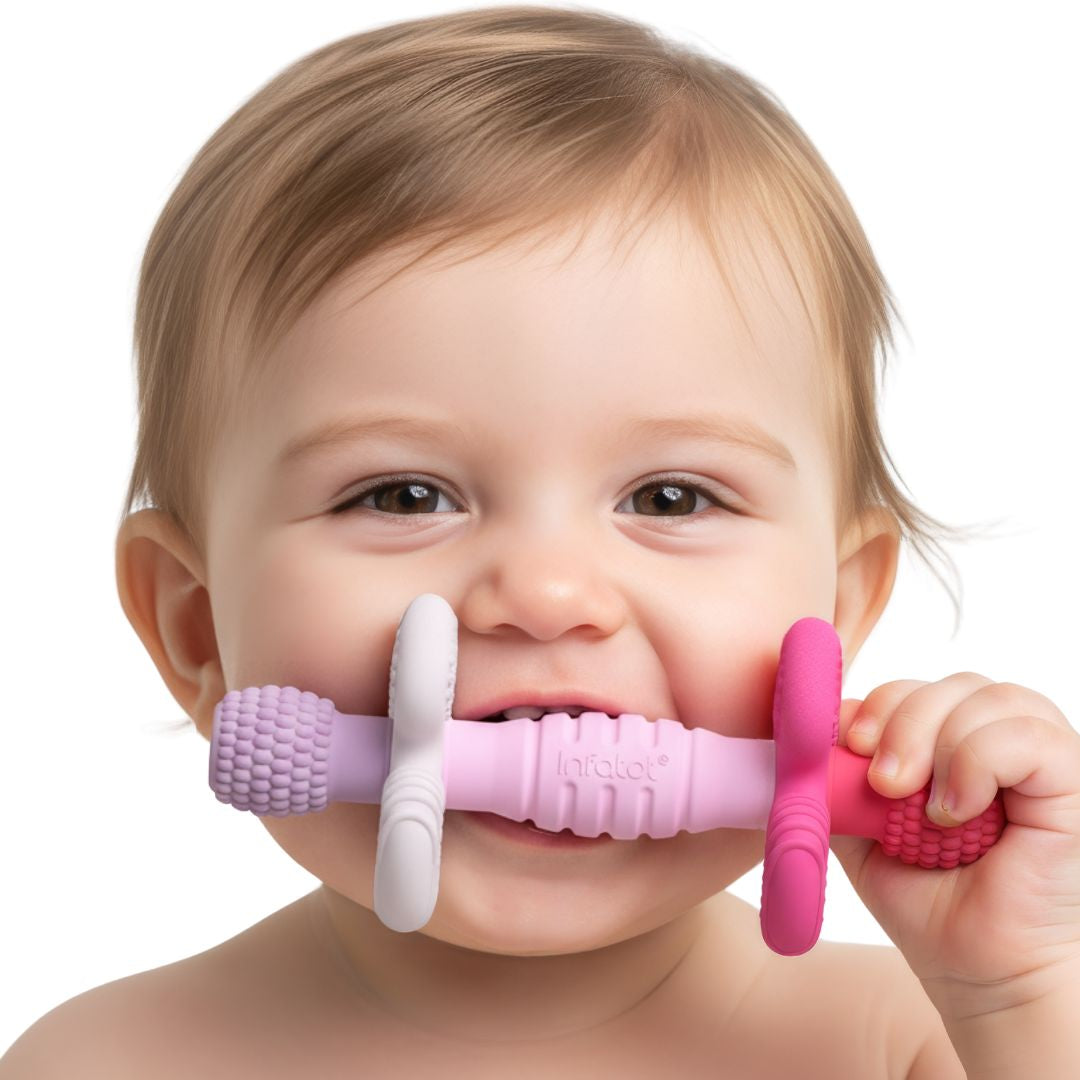
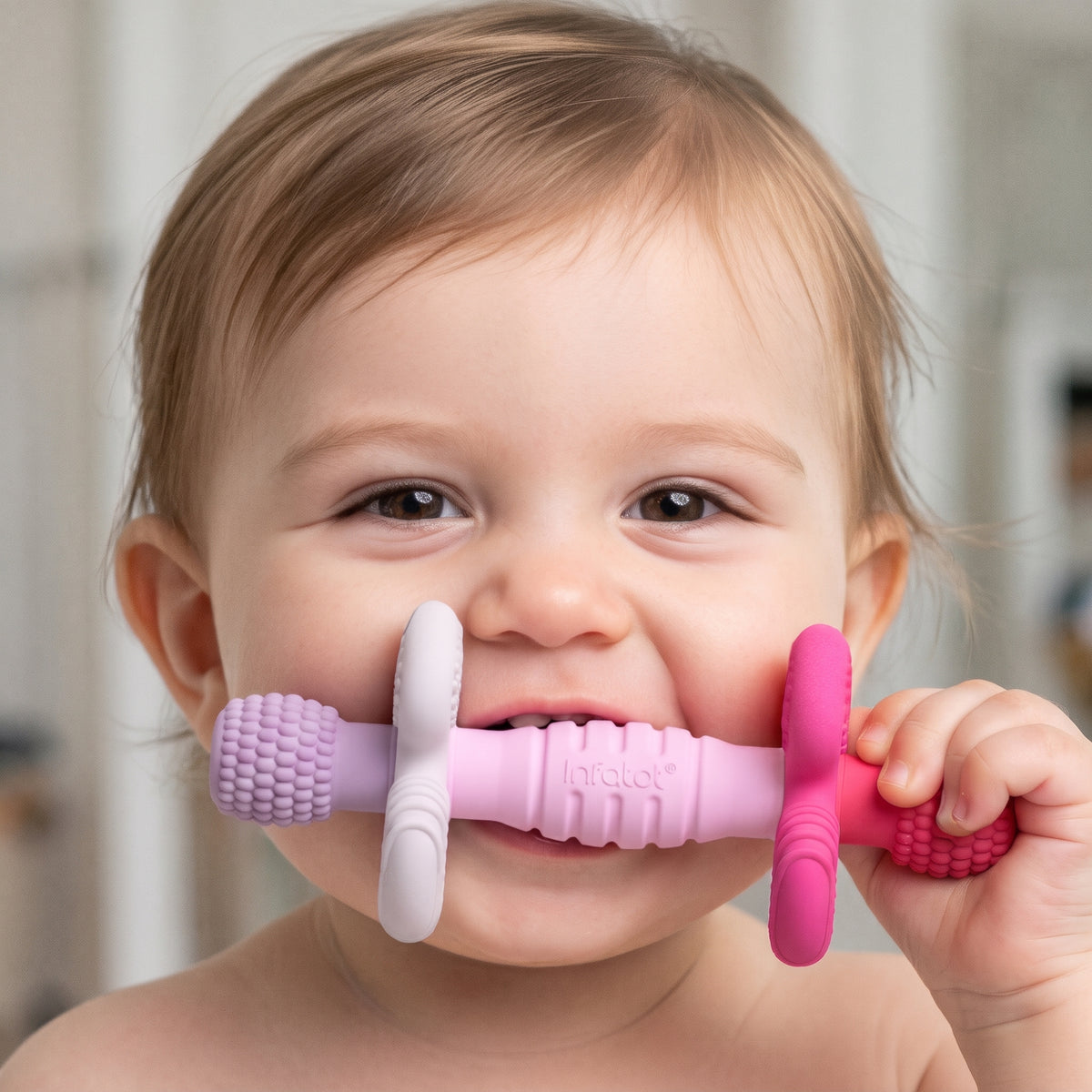
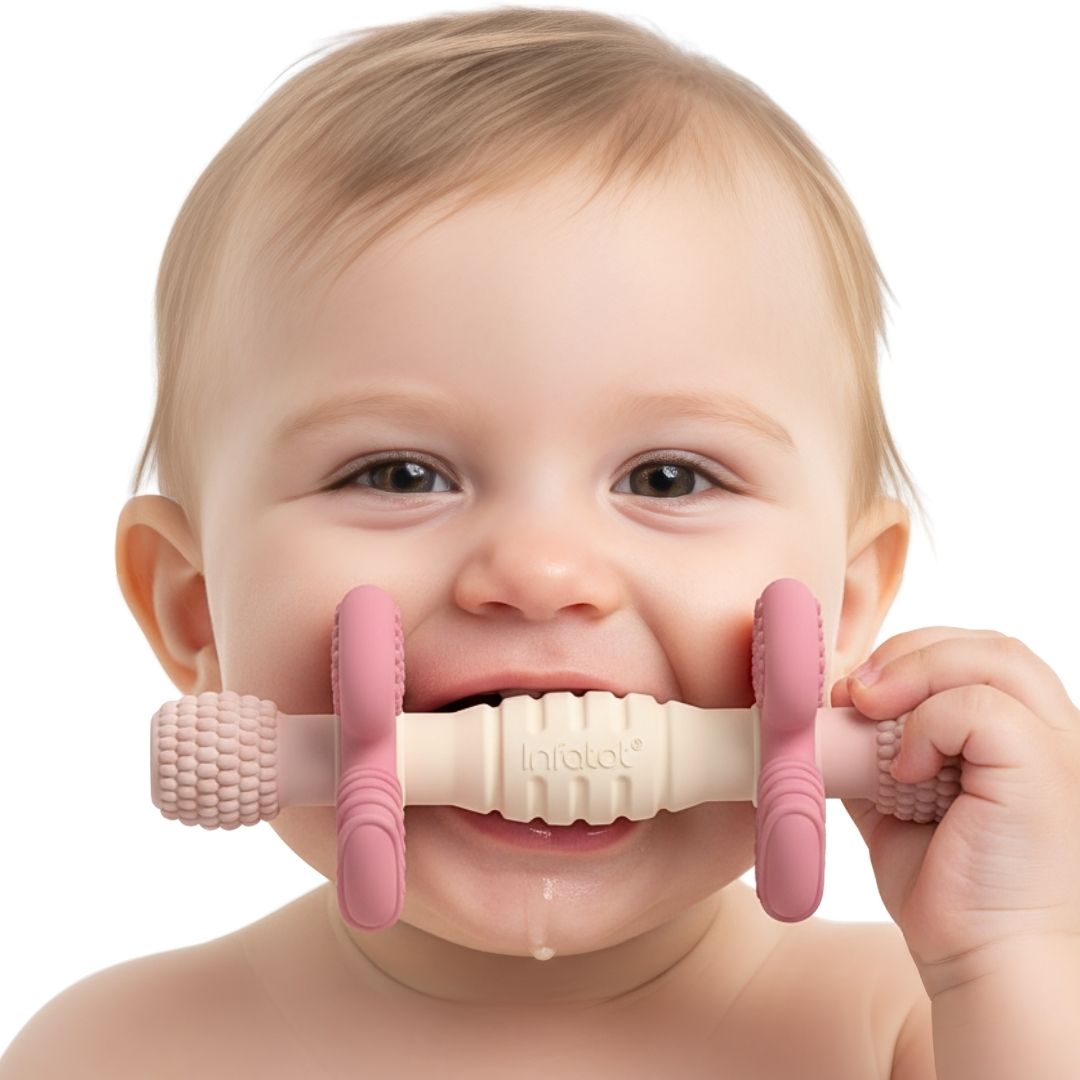
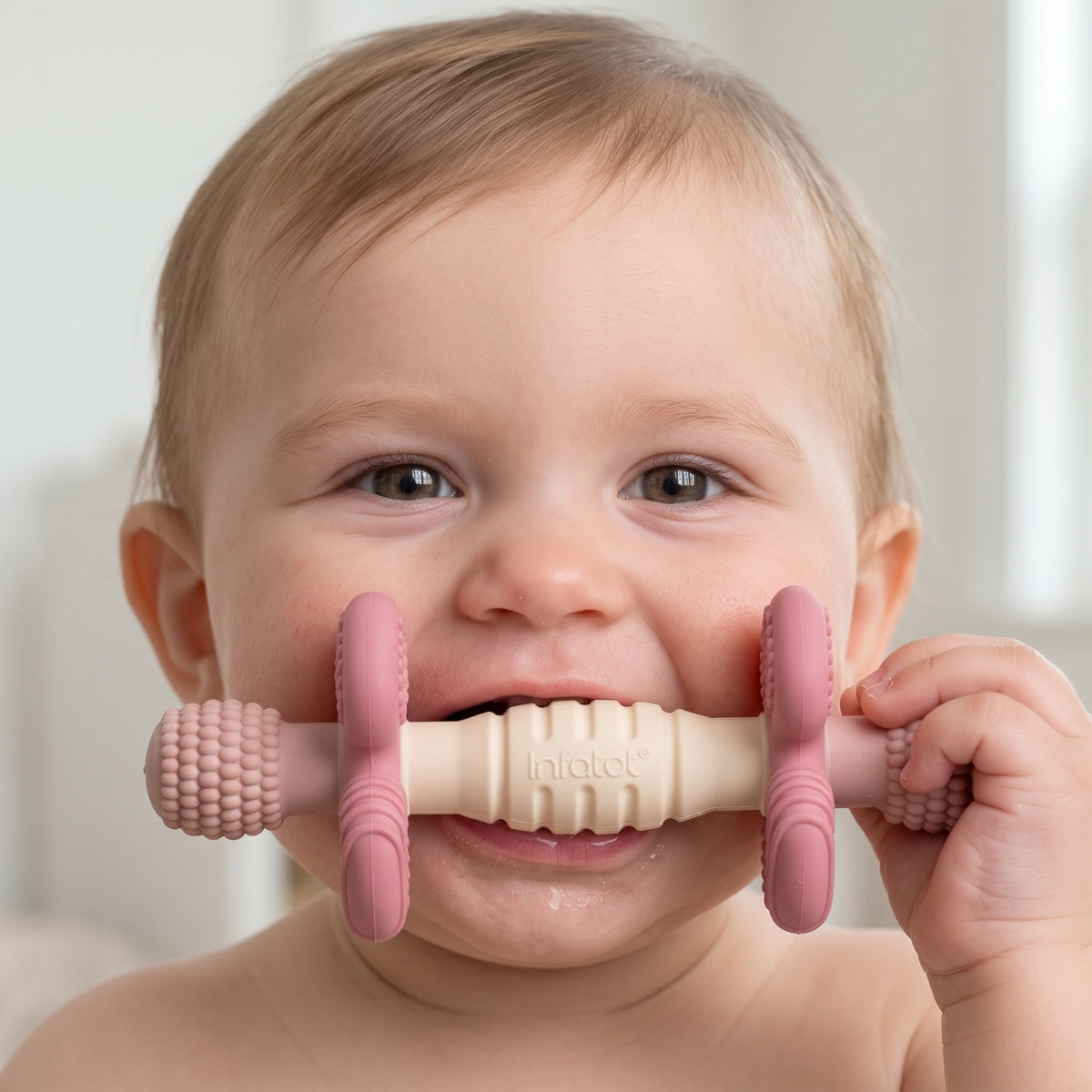
The MultiTexture Sea Teether has ten textures in silicone and smooth natural wood, and its listing says they're aimed at different areas of the gum. It is shaped for small hands to hold, and the listing says it's designed for babies aged 0 to 6 months.
Cuddles, play and gently rubbing the gums with a clean finger help too, NCT notes. Teething necklaces can be dangerous if they don't break open easily.
From Infatot
MultiTexture Sea Teether
The listing describes ten textures in silicone and smooth natural wood, aimed at different areas of the gum. Clean it following the product's care instructions.
Waiting until around 6 months gives your baby time to get better at moving food around their mouth, chewing and swallowing. The NHS says this may mean they move on to mashed, lumpy and finger foods more quickly, and some may not need smooth, blended foods at all.
Once solids have started, try to move from purées to lumpier textures as soon as your baby can manage them. Some babies take to lumps straight away. Others prefer smooth food on a spoon for a while, and keep getting used to lumps the more often they're offered. It may take 10 tries or more before a baby accepts a new food or texture.
NHS Best Start in Life points out that funny faces at a new texture don't mean your baby dislikes it. Finger foods at each meal help them learn to bite off, chew and swallow small pieces of soft food. Stay with them while they eat.

Gagging is common when new textures arrive, and it's different from choking. The NHS says it happens because your baby is learning how much food they can chew and swallow at once. When a baby gags, their eyes may water, they may push their tongue forward or out, and they may retch to bring food forward or be sick.
Hard foods such as whole nuts, raw carrot and raw apple raise the choking risk. Cut small round foods like grapes and cherry tomatoes into quarters, and take out hard pips, stones and bones. The NHS weaning guide links to advice on what to do if your baby is choking.
From 6 months, once your baby is weaning, soft food can help with sore gums. The NHS mentions soft fruit like melon, and the Oral Health Foundation suggests ripe banana or well-cooked vegetables cut into suitable pieces. Always watch your baby while they eat.
Skip rusks, because nearly all brands contain some sugar, and avoid sugary foods in general. Sugar can cause tooth decay even when there are only a few teeth.
Try this. The NHS notes that soft weaning spoons are gentler on your baby's gums.
The NHS says there's a lack of evidence that teething gels work, and suggests trying teething rings or sugar-free paracetamol (from 2 months) or ibuprofen (from 3 months, if your baby weighs more than 5kg) first. The 5kg weight condition for ibuprofen comes from the Oral Health Foundation. If you do use a gel, choose one made for young children, available from pharmacies. NCT says these should only be used by babies over five months.
No. Teething can cause a mild temperature below 38°C. NCT advises that if your baby has a temperature of 38°C or higher, seems very upset or is clearly unwell, you shouldn't assume it's teething and should get medical help straight away. If a baby under 3 months has a temperature of 38°C or higher, or a baby aged 3 to 6 months has a temperature of 39°C or higher, call 999 or go to A&E straight away rather than calling 111 or waiting for a GP.
Start brushing with fluoride toothpaste as soon as the first milk tooth breaks through, and register your baby with a dentist once teeth start coming through, the NHS says.
General information, not individual medical advice. Speak to your GP, midwife or health visitor about your baby’s needs.
Gagging or choking when your baby starts solids
Read moreabout Gagging or choking when your baby starts solids
How much should a baby eat at 6 months? Portion sizes for the first weeks of solids
Read moreabout How much should a baby eat at 6 months? Portion sizes for the first weeks of solids
Norovirus in babies and toddlers: how to keep them hydrated
Read moreabout Norovirus in babies and toddlers: how to keep them hydrated



Share:
How to keep a baby entertained in the highchair before they can eat
How much should a baby eat at 6 months? Portion sizes for the first weeks of solids