
- by Infatot
When Do Babies Start Talking? A Guide to Speech Development
- by Infatot
Quick answer: Most babies say their first recognisable words by around 12 months, though this varies, and most have 1–10 words by 15 months. Before that they coo from birth, babble from 3–6 months, and use gestures like waving and pointing from 9–12 months. Speak to your GP or health visitor if there are no words at all by 18 months.
Hearing your baby say their first word is one of the most magical moments of parenthood. But long before that first "mama" or "dada," your baby is communicating in all sorts of ways, and you can start supporting their language development from the very beginning.
| First words | Typically by 12 months, though this varies |
|---|---|
| By 15 months | Most babies have 1–10 words |
| Babbling begins | 3–6 months, simple sounds like "ooh" and "aah" |
| Gestures | Waving, clapping, pointing from 9–12 months |
| Screen time | Avoid for under 2s |
Speech and language development is a gradual process that starts at birth and continues well into childhood. Here's a general guide to what's typical at each stage.
A first word doesn't have to sound like the adult version. A baby who consistently uses "ba" to mean their bottle, or "woo-woo" for dog, is using words. What matters is consistency and intention: using the same sound to mean the same thing.
Narrate your day. Tell them what you're doing, what you can see, what's coming next. Even when they can't respond, they're absorbing every word. Research shows that the sheer volume of language a baby hears in their first years has a profound impact on their development.
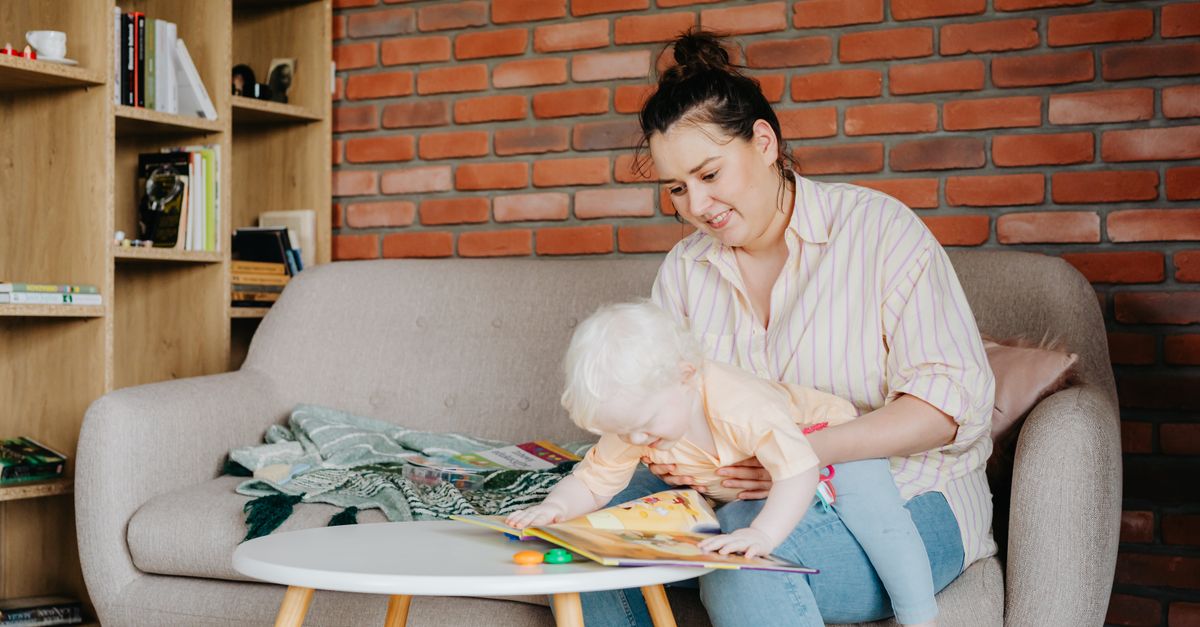
Reading aloud to your baby from birth is one of the most powerful things you can do for their language development. Board books with simple pictures and repetitive text are ideal for young babies.
Nursery rhymes and songs help babies tune into the rhythm and patterns of language. The repetition is beneficial, not just entertaining.
When your baby babbles, respond as if they've said something meaningful. Look at them, smile, reply. These "serve and return" interactions are fundamental to brain and language development.
The NHS advises avoiding screen time for babies and toddlers under 2. If you do use screens, use them for shared activities that encourage bonding and interaction. Passive screen exposure doesn't support language development the same way live interaction does.
Speak to your GP or health visitor if your baby:
Early referral to a speech and language therapist (SALT) can make a significant difference. Don't wait and see if you have concerns.
Babies may say their first recognisable words typically by 12 months, though this varies. Most have between one and ten words by 15 months, after which vocabulary begins to expand rapidly.
It doesn't have to sound like the adult version. A baby who consistently uses "ba" for their bottle, or "woo-woo" for dog, is using words. What matters is consistency and intention.
Speak to your GP or health visitor if your baby has no words at all by 18 months, isn't pointing or responding to their name by 12 months, or loses speech skills they previously had.
Narrate your day, read aloud from birth, sing nursery rhymes, and respond to babbling as if meaningful. The NHS advises avoiding screen time for babies and toddlers under 2.
General information, not individual medical advice. Speak to your GP, midwife or health visitor about your baby’s needs.
Reading to Your Baby: When to Start and How to Make It Fun
Read moreabout Reading to Your Baby: When to Start and How to Make It Fun
When Do Babies Start Teething? A Month-by-Month Timeline
Read moreabout When Do Babies Start Teething? A Month-by-Month Timeline
Separation Anxiety in Babies: What's Normal and How to Help
Read moreabout Separation Anxiety in Babies: What's Normal and How to Help
Share:
Introducing Allergens to Babies: UK Guidance and What to Know
Sleep Regressions Explained: What They Are and How to Survive Them