

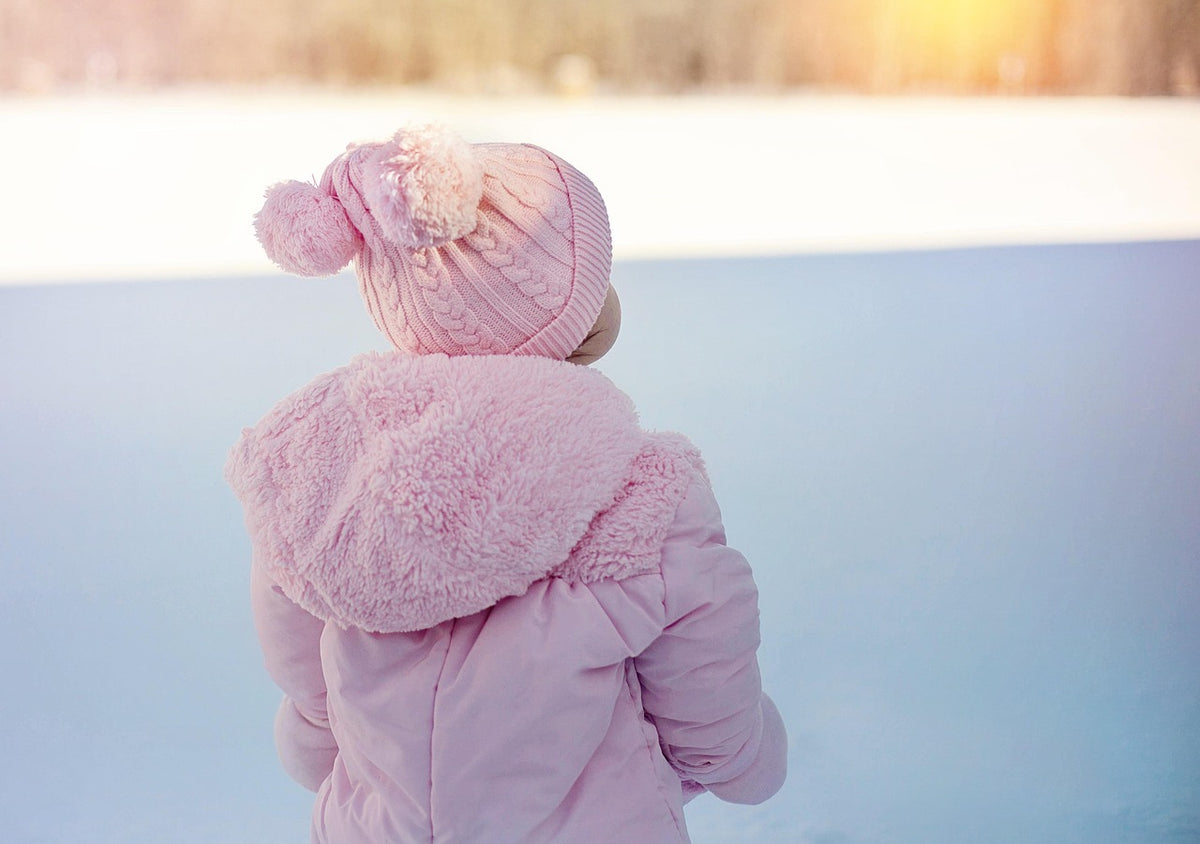
Quick answer: Dress your baby in one more layer than you're wearing. For a pram walk, put a coat, snowsuit or blanket, a hat, mittens and bootees over their indoor clothes. Feel their chest or the back of their neck to check their temperature, and take the outer layers off once you're somewhere warm.
Pushing a pram warms you up, but your baby is sitting still. The NCT points out that on a brisk walk you'll probably get warmer than your baby, so they may need more layers than you'd guess from how you feel.
Getting too hot is a risk too. The NHS says small babies aren't good at controlling their own temperature, and that babies are better off a little cool than too hot.
Start with what you're wearing indoors and add one layer. The NHS gives an example: if you're in a t-shirt and jumper, your baby might wear a vest, a sleepsuit and a cardigan or jumper. Before you head out, the NCT suggests adding a coat, snowsuit or blanket, plus a hat, mittens and bootees.
Lightweight blankets are easy to add or take away as the temperature changes. Keep in mind that a folded blanket counts as two.
| You're wearing | Baby indoors | Add for the pram |
|---|---|---|
| T-shirt and jumper | Vest, sleepsuit, cardigan or jumper | Coat, snowsuit or blanket, plus hat, mittens and bootees |
| Trousers, long-sleeved top, jumper | Vest, all-in-one, cardigan | Coat, snowsuit or blanket, plus hat, mittens and bootees |
Babies' hands and feet often feel cool, and the NHS says that's normal. Check their chest or the back of their neck instead, which is what the NCT recommends.
The NHS advises taking off hats and extra clothing as soon as you're indoors or in a warm car, bus or train, even if it wakes your baby. So when you get on the bus or walk into a café, take off their hat and the coat, snowsuit or blanket.
The same goes for a baby who is poorly. The NHS says most babies who are unwell or feverish don't need extra clothes.
The NCT says snowsuits shouldn't be worn in a car seat, because thick padding makes the safety straps less effective.
A baby who is cold to the touch, floppy, or unusually quiet and sleepy may have hypothermia. The NCT advises calling 999 or going to A&E straight away. Get immediate medical help as well if your baby shows signs of heatstroke.
Yes. The NCT includes a hat, mittens and bootees in its list for going out in cold weather. Take the hat off once you're indoors.
No. The NHS says to use a sleepsuit with a sleeping bag or lightweight cellular blankets, and to avoid thick, fleecy or padded blankets. A room temperature of 16 to 20C is comfortable for sleeping babies.
General information, not individual medical advice. Speak to your GP, midwife or health visitor about your baby’s needs.
Halloween with a baby or toddler: costumes, face paint and sweets
Read moreabout Halloween with a baby or toddler: costumes, face paint and sweets
Fireworks and babies: protecting sleep and hearing around Bonfire Night
Read moreabout Fireworks and babies: protecting sleep and hearing around Bonfire Night
What temperature should your baby's room be once the heating goes on?
Read moreabout What temperature should your baby's room be once the heating goes on?
Share:
The clocks go back on 25 October: how to shift your baby's sleep
Vitamin D drops for babies: who needs them from October