

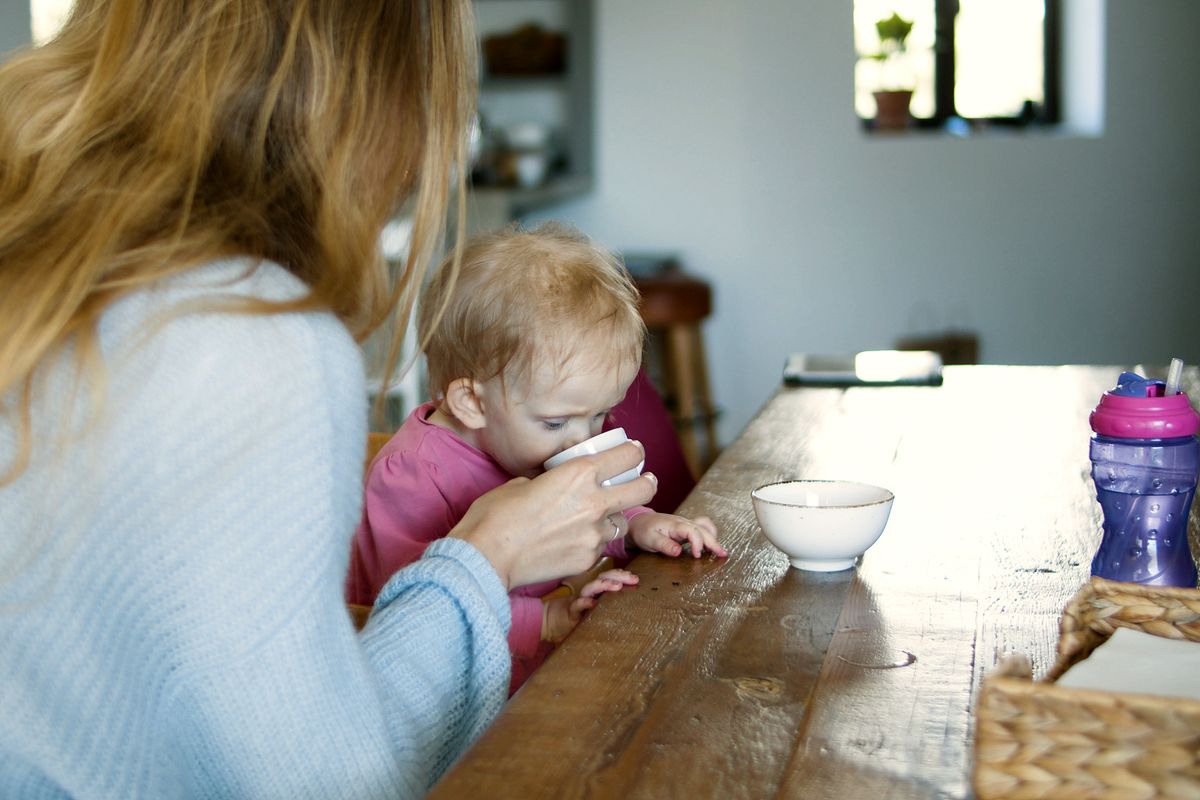
Quick answer: From around six months, when solid foods start, offer small sips of tap water with meals in a free-flow or open cup. It doesn't need to be boiled. Under six months, fully breastfed babies need no water, even in hot weather (they may breastfeed more). Formula-fed babies under six months may need small sips of cooled boiled water in hot weather, as well as their usual milk.
It's one of the most common questions new parents ask: when can my baby start drinking water? The answer depends on your baby's age and how they're being fed. Here's everything UK parents need to know.
Usually not. Fully breastfed babies don't need any water until they've started eating solid foods, even in hot weather, although they may want to breastfeed more than usual. Formula-fed babies under six months may need small sips of cooled boiled water during hot weather, as well as their usual milk feeds. Otherwise, water isn't needed before six months because:
The NHS says breast milk is the only food or drink babies need in the first six months, and that formula-fed babies under six months may need small sips of cooled boiled water in hot weather, as well as their usual milk feeds.
Formula-fed babies under six months may need small sips of cooled boiled water during hot weather, as well as their usual milk feeds. For babies under six months, boil the water first and let it cool. Signs of dehydration in a baby may include a sunken soft spot (fontanelle) on top of their head, sunken eyes, few or no tears when they cry, fewer wet nappies than usual, dark yellow pee, and being drowsy or irritable. Ask for an urgent GP appointment or call NHS 111 if your baby seems drowsy, has fewer wet nappies or dark yellow pee, is breathing quickly or has a fast heart rate, has few or no tears when they cry, or has a soft spot on their head that sinks inwards. Call 999 or go to A&E if your baby has signs of dehydration and has blue, grey, pale or blotchy skin, lips or tongue (on brown or black skin this may be easier to see on the palms of the hands or soles of the feet), skin that feels cold, difficulty breathing or lots of quick breaths, or is sleepier than normal or difficult to wake.
From six months, once you begin introducing solid foods, you can offer small amounts of tap water in a free-flow cup (without a valve) or open cup. Drinking water for babies over six months doesn't need to be boiled first. This helps keep your baby hydrated as their diet diversifies, protects developing teeth (unlike juice), and gets them used to drinking from a cup, a useful skill ahead of weaning off the bottle.
You don't need to offer large amounts. A few sips with meals is enough to begin with.
The NHS advises against giving fruit juices, squash, fizzy drinks or flavoured waters to babies and toddlers. Even 100% fruit juice is high in sugar and acid, which damages developing teeth. If you do introduce juice after 12 months, heavily dilute it (one part juice to ten parts water) and offer it only at mealtimes — never in a bottle.
Fully breastfed babies under six months do not need water, even in hot weather, but they may want to breastfeed more than usual. Formula-fed babies under six months may need small sips of cooled boiled water in hot weather, as well as their usual milk feeds. From around six months, offer sips of water with meals. If you think your baby is dehydrated, ask for an urgent GP appointment or call NHS 111.
Tap water is preferred in the UK. For babies over 6 months it does not need to be boiled first. Bottled mineral water is not recommended because it can contain high levels of sodium and sulphate.
From six to twelve months, sips with meals are enough, with no specific daily target. From twelve months, aim for around six to eight cups of fluid a day, including milk.
The NHS advises against fruit juice, squash, fizzy drinks and flavoured waters for babies and toddlers. After twelve months, dilute juice heavily (one part juice to ten parts water) and offer it only at mealtimes.
General information, not individual medical advice. Speak to your GP, midwife or health visitor about your baby’s needs.
Blocked nose in babies: how to help them feed and sleep
Read moreabout Blocked nose in babies: how to help them feed and sleep
Vitamin D drops for babies: who needs them from October
Read moreabout Vitamin D drops for babies: who needs them from October
Breastfeeding Tips for New Mums: A Practical UK Guide
Read moreabout Breastfeeding Tips for New Mums: A Practical UK Guide
Share:
How to Soothe a Crying Baby: Understanding Your Baby's Cues
Can Babies Get Hay Fever? Symptoms UK Parents May Notice in Pollen Season