


- by Infatot
Screen-Free Baby Play: Why Sensory Toys Are Essential for Your Baby's Brain Development
- by Infatot
Quick answer: Sensory toys matter because babies' brains are built for hands-on exploration, not screens: touching, squeezing and shaking builds the neural pathways behind language, problem-solving and emotional regulation. The World Health Organisation recommends zero screen time under 2. Choose simple, safe, multi-sensory toys with varied textures, high-contrast colours, gentle sounds, food-grade silicone, natural wood or organic cotton, and no small parts.
Screens are everywhere, and it's easy to wonder how much they matter for a baby who isn't yet talking, especially when so much of the advice you hear feels vague or contradictory.
This piece looks at what sensory play actually is, how touching, squeezing and shaking supports your baby's cognitive, motor, language and emotional development, and what to look for in a toy: textures, colours, sounds, materials and size. It also covers a few Infatot toys, simple ways to get more from play at home, and answers to the questions parents ask most.
We're living in the most screen-saturated era in history, and parents today are increasingly aware of its effects on young children. The World Health Organisation recommends zero screen time for children under 2, and the science behind this is straightforward: babies' brains are built for active, hands-on interaction with the physical world — not passive viewing of a flat screen.
But screen-free play isn't just about avoiding something harmful. It's about replacing it with something brilliant. Sensory play is one of the most powerful tools available to support your baby's cognitive, emotional, and physical development in the first year of life.
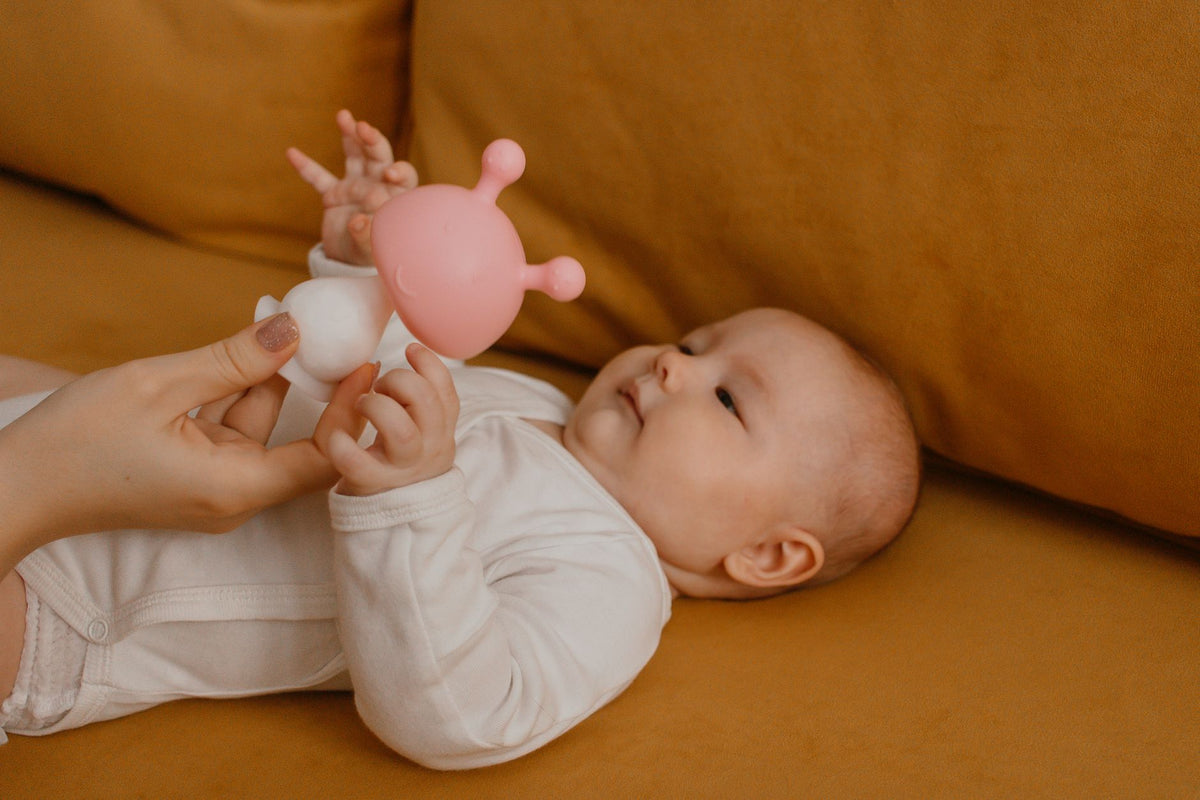
Sensory play is any activity that stimulates one or more of your baby's senses: touch, sight, hearing, taste, and smell. For a baby who is just beginning to understand the world, every new texture, sound, colour, and shape is a learning opportunity. When your baby picks up a toy, squeezes it, shakes it, and puts it in their mouth, they're not just playing. They're building neural pathways that form the foundation for language, problem-solving, and emotional regulation.
The best sensory toys for babies are simple, safe, and multi-sensory.
At Infatot, we design toys that support exactly this kind of developmental play. A few highlights:
The Koda Koala Crinkle Sheets (2 Pack) are a brilliant first sensory toy. They're soft fabric panels with a crinkle sound layer inside, easy to grasp and labelled suitable from birth for awake, supervised play. The gentle crinkle sound stimulates hearing without overwhelming, and the varied textures give little hands plenty to explore. Keep the sheets out of the cot and away from your baby during sleep.
The Infatot Suction Toy combines natural wood and soft silicone in one toy, two different textures that engage your baby's curiosity during supervised play. Press the suction feet onto a clean, smooth, flat surface and let your baby explore with you close by. Always supervise your baby during play.
The MultiTexture Sea Teether is designed specifically to offer multiple grip and chew surfaces in one toy, perfect for babies who are discovering that different textures feel different in different ways.
You don't need a dedicated ‘sensory station’ or expensive setup. Some of the best sensory play happens with everyday objects and textures, such as a wooden spoon or a cardboard box. The key principles are:
In a world designed to grab everyone's attention, giving your baby the gift of unhurried, hands-on exploration is one of the most meaningful things you can do. Put the screens away, get on the floor, and watch them discover the world, one crinkle, squeeze, and chew at a time.
The World Health Organisation recommends zero screen time for children under 2. Babies' brains are built for active, hands-on interaction with the physical world rather than passive viewing of a flat screen.
Look for multiple textures, contrasting colours, gentle sounds that are interesting without being overwhelming, safe materials such as food-grade silicone, natural wood or organic cotton, and a size appropriate for your baby's age with no small parts.
Simple sensory toys suit babies from around 3 months, and some are made for younger babies. The Koda Koala Crinkle Sheets, for example, are soft fabric panels with a crinkle layer inside, labelled suitable from birth for awake, supervised play. Keep them out of your baby's sleeping space.
No. Some of the best sensory play happens with everyday objects and textures, such as a wooden spoon or a cardboard box. One or two items at a time works better than a pile.
General information, not individual medical advice. Speak to your GP, midwife or health visitor about your baby’s needs.
Reading to Your Baby: When to Start and How to Make It Fun
Read moreabout Reading to Your Baby: When to Start and How to Make It Fun
When Do Babies Start Teething? A Month-by-Month Timeline
Read moreabout When Do Babies Start Teething? A Month-by-Month Timeline
Separation Anxiety in Babies: What's Normal and How to Help
Read moreabout Separation Anxiety in Babies: What's Normal and How to Help
Share:
Baby-Led Weaning: A Beginner's Complete Guide for UK Parents
Safe Sleep Guidelines for Babies: What Every UK Parent Needs to Know