

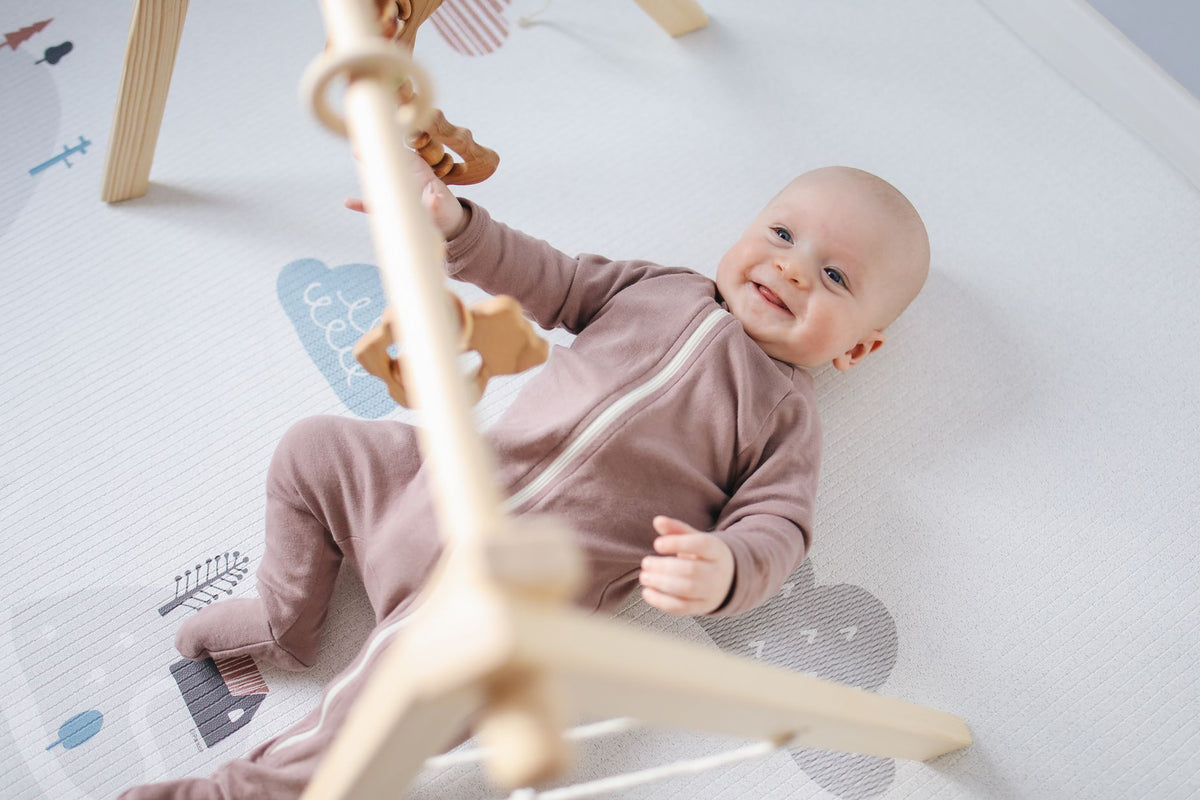
- by Infatot
Best Baby Teethers UK (2026): A Parent's Buying Guide
- by Infatot
Quick answer: The best baby teether for most UK families is a soft silicone teether that's easy for small hands to grip and suitable from birth, always supervised. In Women's Health's 2025 round-up of the best teething toys, the Infatot MultiTexture Baby Teether was named Best Overall and the Infatot Koda Koala Teething Pair won Best Teething Mitten. Below we compare teethers by age, material and how you'll use them.
Sore gums, endless chewing, a baby who suddenly wants everything in their mouth — teething has a way of arriving without warning, and the choice of teethers on offer can feel overwhelming when you're tired and just want something that helps.
🏆 As featured in Women’s Health (2025): the MultiTexture Sea Teether was rated “Best Overall Teething Toy for Babies” and the Koda Koala Teething Pair “Best Teething Mitten for Babies.” Read the review →
| Teether | Material | Suitable from birth (always supervised) | Best for |
|---|---|---|---|
| MultiTexture Sea Teether — 🏆 Best Overall (Women’s Health 2025) | Soft silicone + natural wood, 10 textures | Yes (birth to 24 months) | Best all-rounder — sensory play + teething relief |
| Koda Koala Teething Pair — 🏆 Best Teething Mitten (Women’s Health 2025) | Food-grade silicone, 2-pack incl. wearable mitten | Yes (birth to 24 months) | Teething mitten + handheld toy; excellent gift |
| Barbell Buddy | Soft silicone | Yes (birth to 6 months) | First teether — lightweight, easy grip |
| Koda Koala Bitey Pair | Soft silicone, pack of 2 | Yes (birth to 24 months) | Self-soothing & on-the-go |
| Suction Toy | Wood + silicone, suction base | Yes (labelled 0+, supervised play) | Supervised sensory play at a table or high chair (a play toy, not sold as a teether) |
Both are good when made to UK safety standards. Silicone is soft on sore gums, easy to clean and sterilise, and gentle for newborns. Wood is firmer and offers more texture. Combined wood-and-silicone teethers, like the MultiTexture, give you both in one toy. Wood and silicone need different care, so follow the care instructions on the pack. The MultiTexture's product page says not to put the assembled toy in a dishwasher, steriliser or boiling water.
In Women’s Health’s 2025 testing, the Infatot MultiTexture Baby Teether was rated the best overall teething toy for babies, with the Koda Koala Teething Pair named the best teething mitten.
The safest teethers are one-piece, food-grade silicone (or natural wood) with no small detachable parts, no liquid or gel filling, and UKCA/CE marking to the BS EN 71 standard.
Some silicone teethers are suitable from birth, always supervised. Most babies start teething at around 6 months, but some start before 4 months and some after 12 months.
Never put a teether in the freezer, as it could damage your baby's gums if it gets frozen. Some teethers can be cooled in the fridge first, which may help to soothe your baby's gums, but only chill one if its own instructions allow it, and for the time they state.
Follow the care instructions on the pack, as methods differ between teethers. Only use a dishwasher, steriliser or boiling water if those instructions allow it. One-piece silicone teethers are easiest to keep hygienic.
Fireworks and babies: protecting sleep and hearing around Bonfire Night
Read moreabout Fireworks and babies: protecting sleep and hearing around Bonfire Night
What should a baby wear to bed when the house gets colder?
Read moreabout What should a baby wear to bed when the house gets colder?
Halloween with a baby or toddler: costumes, face paint and sweets
Read moreabout Halloween with a baby or toddler: costumes, face paint and sweets

Share:
Pregnancy Week 40: Your Due Date — What Happens Next
Are Silicone Teethers Safe for Babies?