

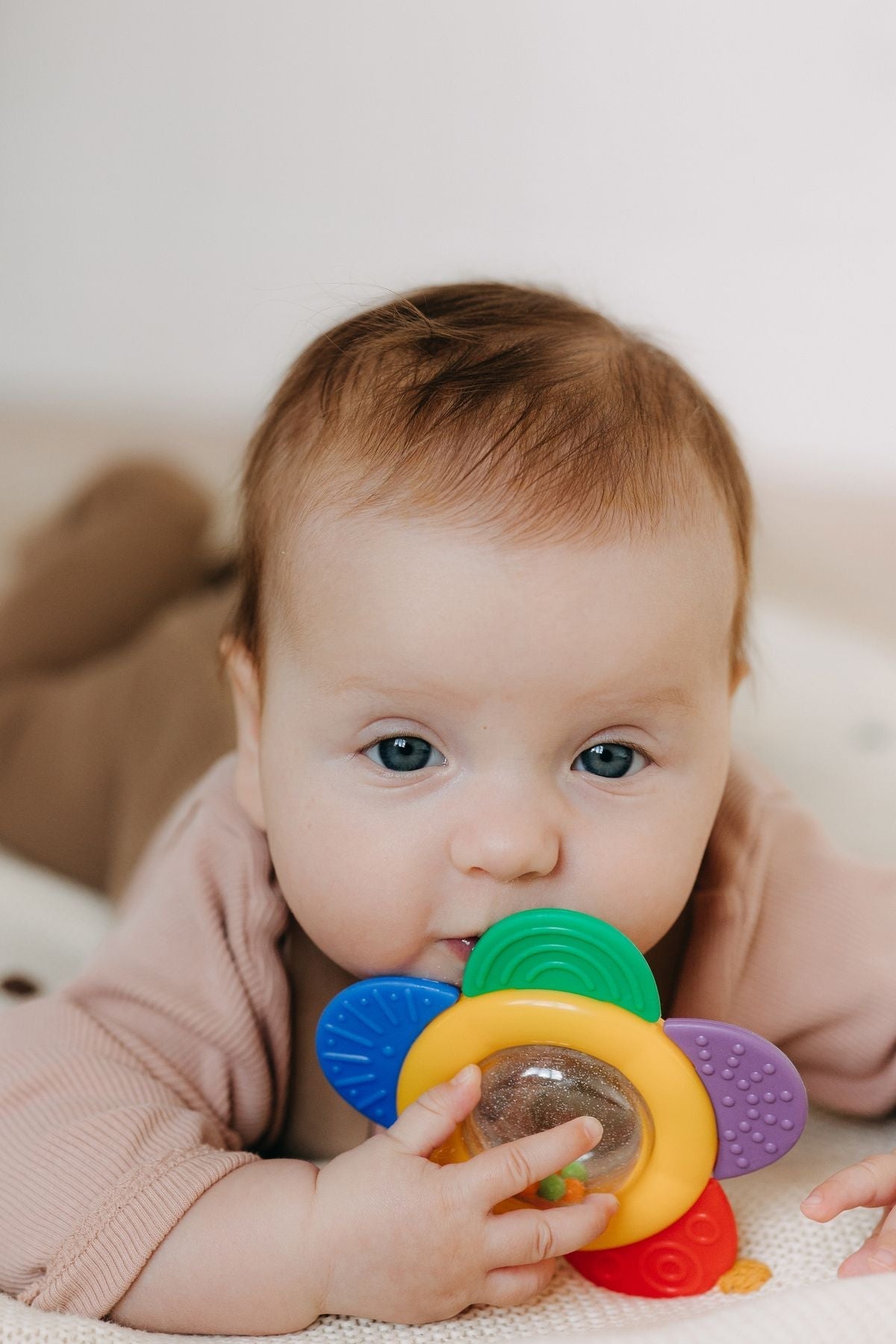
Quick answer: Baby teethers come in several styles. This guide compares a silicone mitten and handheld set, natural rubber, cooling keys and a mini teether. Choose according to your baby’s age and the manufacturer’s instructions, and supervise use.
This guide compares four baby teether styles to help you understand the differences. Infatot makes the Koda Koala set featured below; this is a brand-authored comparison, not an independent product test. Check the current product page and packaging for prices, age guidance and care instructions.

The Koda Koala Teething Pair contains one silicone koala mitten and one handheld remote-shaped teether. The mitten has textured ears, while the remote has raised buttons to explore. The two shapes offer a choice for supervised teething time.
Choose Blue, Plum, Cream, Teal or Pink. Both pieces come in the selected colour. Follow the age and care guidance supplied with your set, check the mitten’s fit and inspect both pieces regularly.
View the Koda Koala Teething Pair for current pricing and details.
Sophie la Girafe is made from natural rubber from the Hevea tree and decorated with food-grade paint. Its animal shape offers different areas to hold and chew. Check the manufacturer’s instructions for age suitability, inspection and cleaning; care requirements vary between materials and designs.
See Sophie la Girafe’s product information and current price.
Nuby Icy Bite Keys contain PureIce gel and are intended for babies aged three months and over. They can be chilled in the fridge according to Nuby’s instructions. Do not put them in the freezer.
See Nuby’s age, cooling and care guidance.
MAM Bite & Relax Phase 1 is a mini teether designed for babies aged two months and over. A small handheld design is another option to consider as your baby develops their grip. Follow MAM’s current product instructions for suitability and cleaning.
See MAM’s product information and current price.
Explore the Koda Koala Teething Pair for current colour availability, pricing and care details. For more shapes, browse our baby teethers collection.
The NHS advises against freezing teething rings because this can damage your baby’s gums. Follow the manufacturer’s instructions about whether and how a product can be chilled in the fridge.
A mitten-style design may be worth considering. Check its fit and age guidance, and supervise your baby. The Koda Koala pair contains one mitten and one handheld remote-shaped teether.
No. Materials and designs differ. Use the cleaning method specified by the manufacturer for your exact product.
Manufacturer links are provided with each product above. For general guidance, read:
General information, not individual medical advice. Speak to your GP or health visitor about concerns with your baby’s symptoms.
Blocked nose in babies: how to help them feed and sleep
Read moreabout Blocked nose in babies: how to help them feed and sleep
Baby eczema and dry skin when the heating goes on
Read moreabout Baby eczema and dry skin when the heating goes on
Flu and RSV vaccines in pregnancy: when to have each one this autumn
Read moreabout Flu and RSV vaccines in pregnancy: when to have each one this autumn


Share:
Baby-Led Weaning: A Beginner's Complete Guide for UK Parents