

- by Infatot
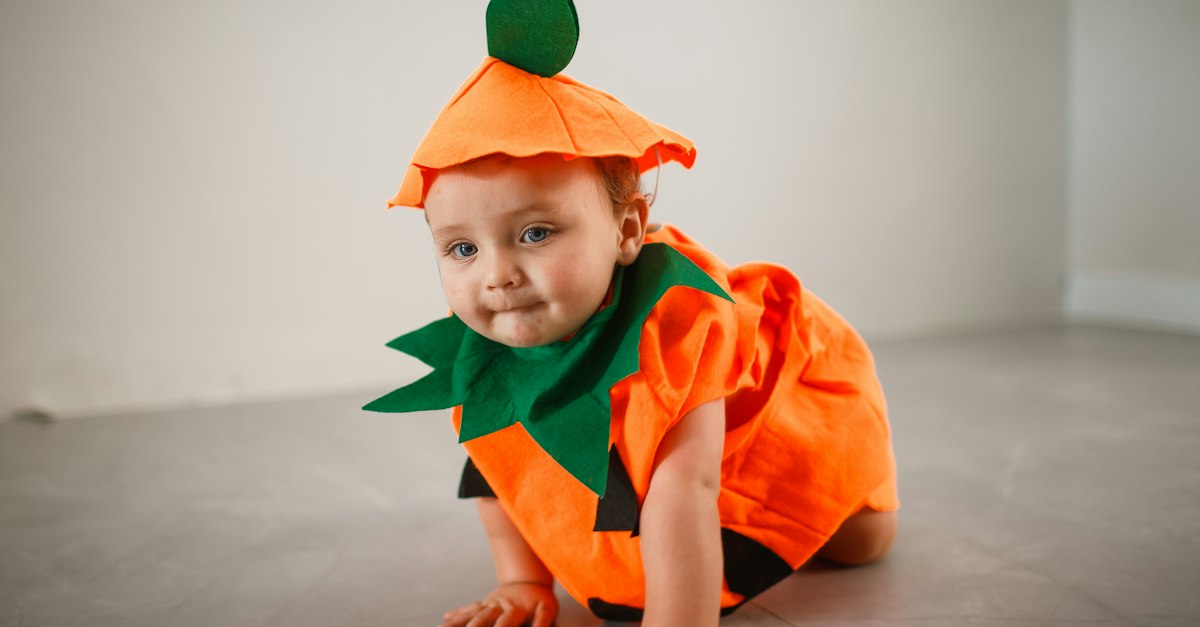
Halloween with a baby or toddler: costumes, face paint and sweets
- by Infatot
Quick answer: Buy costumes from a reputable shop, check for a UKCA or CE mark, remove long cords and keep children away from candles. Start a face paint patch test at least a week before. Keep lollipops away from under-threes, and hard round sweets and mini eggs until your child is a confident eater. Use a dim, familiar bedtime routine afterwards.
By 31 October it's getting dark at about 5pm. That means a first trick-or-treat or costume party often happens after dark, with candles, decorations and a bowl of sweets at a toddler's eye level.
CAPT warns that cheap costumes may not meet UK safety standards. In 2024 the Office for Product Safety and Standards tested 128 children's costumes bought from online marketplaces, aimed at under-sevens, and more than 80% failed basic safety tests. The failures included flammability and strangulation risks from cords. OPSS chose these costumes for their low price, poor reviews and apparent low quality, so the figure isn't a national failure rate.
CAPT says many fancy dress costumes aren't made to the same safety standards as everyday clothing. They can catch fire almost instantly and burn much faster. Paying a little more at a reputable shop or website lowers the risk.
Look for a UKCA or CE mark. CAPT explains that this doesn't make a costume fireproof, but it means the costume has been tested and should burn more slowly. The British Retail Consortium has also brought in stricter tests, so look for a label that says "This garment has undergone additional safety testing for flammability".
In the OPSS tests, 61 of the 74 costumes checked for cords and drawstrings failed. Cords and drawstrings around the head and neck can strangle or trap a child. Check for long ones before your child wears the costume, and remove them or choose a costume without them.
Put normal clothes on under the costume. CAPT notes that this layer helps protect the skin if the costume catches fire. At parties and on doorsteps, keep your child well away from lit pumpkins, candles and other heat sources the whole time.
CAPT suggests face paint rather than a mask for trick-or-treating, because masks make it harder for children to see and hear traffic. The skin on the face, and especially the eyelids, is thinner and reacts more easily to irritants, according to Allergy UK. An allergic reaction may not show until several hours or even days later, so test well ahead of the night.
Young children have narrow airways and are still learning to chew, breathe and swallow in the right order. CAPT names several typical Halloween treats among the foods to avoid until a child is a confident eater. Sort through the bag at home before your child gets to it, and save treats for later rather than letting them eat while walking or running.
| Treat | Why it's risky | What to do |
|---|---|---|
| Lollipops | Become a hard sweet if they come off the stick | Avoid for under-threes |
| Hard round sweets, mini eggs | Slippery, so they can be swallowed and block the airway completely | Keep out of reach of young children |
| Marshmallows, jelly cubes | Go sticky when wet and can seal the airway | Avoid until your child is a confident eater |
| Popcorn | Hard and can get stuck | Avoid until your child is a confident eater |
| Whole nuts | Can block the airway | Don't give to under-fives |
CAPT says that anything smaller than a 2p coin can choke a young child. Cheap toys and party-bag fillers may not meet the safety standards for under-threes, so check them for loose small parts. Broken balloons can seal a child's airway, so keep crawling babies off the floor until any pieces are cleared away.
Flameless LED candles lower the fire risk, but many of them, and their remote controls, run on button batteries. The same goes for light-up pumpkins, wands and torches. CAPT advises checking that the battery compartment is closed with a screw or similar fastener, because a swallowed button battery can badly hurt or kill a small child.
If you use real candles, keep them out of the way of trick-or-treaters and decorations, put them on a surface that won't burn, and blow them out when you're done. Bright or fluorescent clothing helps your child be seen while it's still light. Reflective tape on a costume or pram shows up in car headlights at dusk.
A familiar routine helps your child's body clock and helps them relax. The Sleep Charity suggests starting it about an hour before sleep and keeping the same steps in the same order every night.
If your child is coughing loudly, encourage them to keep coughing and stay with them. If the cough is silent or they can't breathe in properly, shout for help. If they're still conscious, the NHS advises up to 5 back blows, then up to 5 chest thrusts for babies under 1, or abdominal thrusts for children over 1. Call 999 if the object doesn't come out, and keep repeating the cycle until help arrives. Get medical help even if it does come out.
If your child is or becomes unconscious, put them on a firm, flat surface and shout for help. Call 999 with the phone on speakerphone so your hands are free, and don't leave them at any stage. Open their mouth and remove the object only if it's clearly visible and you can grasp it easily, then start CPR.
If you think your child has swallowed a button battery, take them to the nearest A&E straight away. CAPT explains that it may not affect their breathing, but if it gets stuck in the food pipe it can burn through to the main artery, which can be fatal.
CAPT suggests saving masks for indoors because they make it harder for children to see and hear traffic. Face paint is a better choice for trick-or-treating.
No. Allergy UK warns that products described as hypoallergenic or natural can still contain common allergens, so patch test them in the same way.
Wash it off and stop using the product on that area. Allergy UK advises getting medical advice if the reaction is severe or doesn't settle within a few days. For a baby or toddler, your pharmacist, health visitor or GP can advise.
General information, not individual medical advice. Speak to your GP, midwife or health visitor about your baby’s needs.
Fireworks and babies: protecting sleep and hearing around Bonfire Night
Read moreabout Fireworks and babies: protecting sleep and hearing around Bonfire Night
What temperature should your baby's room be once the heating goes on?
Read moreabout What temperature should your baby's room be once the heating goes on?
How to dress your baby for cold-weather pram walks
Read moreabout How to dress your baby for cold-weather pram walks

Share:
Baby eczema and dry skin when the heating goes on