

- by Infatot
Cradle Cap: What It Is, Why It Happens and How to Treat It
- by Infatot
Quick answer: Cradle cap is a common, harmless newborn skin condition causing greasy yellowish or brownish crusty patches, usually on the scalp. It's linked to overactive oil glands stimulated by maternal hormones, not poor hygiene, and it isn't contagious. Most cases need no treatment and clear within a few months. If you want to treat it, apply a gentle oil, loosen scales softly and wash with baby shampoo. Never pick the scales.
You notice yellow, crusty, scaly patches on your newborn's scalp. Or maybe it's spread to their eyebrows, nose, or ears. It looks a little alarming — but cradle cap is one of the most common and completely harmless newborn skin conditions there is. Almost half of all babies get it to some degree.
Cradle cap (seborrhoeic dermatitis) is a common skin condition that causes greasy, yellowish or brownish crusty patches on a baby's scalp. It can also appear on the face, ears, neck, armpits, and nappy area. Despite looking uncomfortable, cradle cap doesn't cause itching or pain — it bothers parents far more than it bothers babies.
The exact cause isn't fully understood, but it's thought to be related to overactive sebaceous glands (oil-producing glands in the skin) stimulated by maternal hormones still present in the baby's system after birth. It's not caused by poor hygiene, and it's not contagious. It can't be prevented or caused by anything you've done.
It most commonly develops in the first few weeks of life and usually resolves on its own within a few months. Some babies have it for up to a year. It's uncommon after 12 months.
In most cases, cradle cap doesn't need any treatment. It will go away on its own. If you're not bothered by the appearance, you don't need to do anything at all.
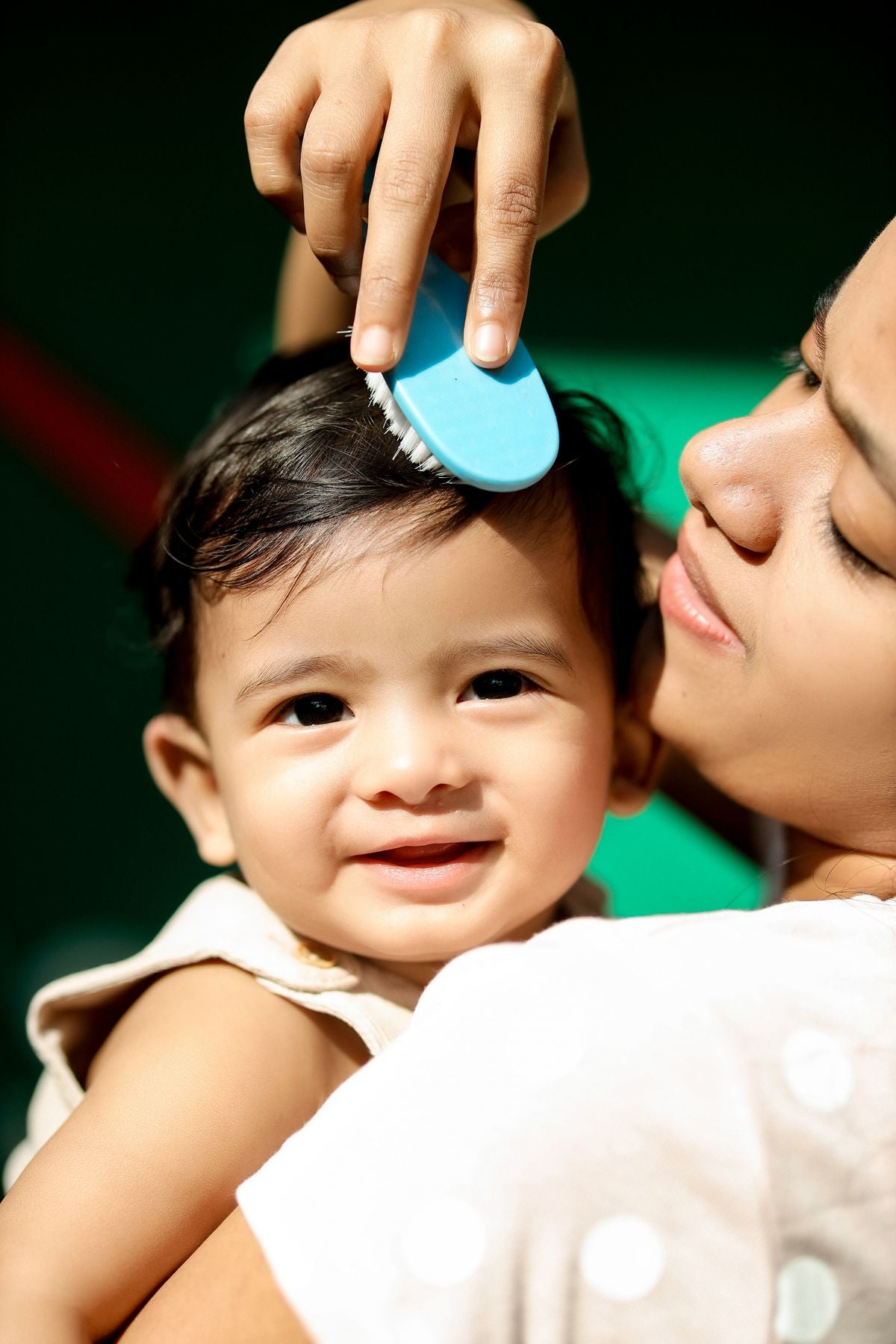
If you want to treat it, the most commonly recommended approach is:
Don't pick or scratch the scales. This can cause the skin to break and increase the risk of infection.
For more persistent cradle cap, there are specially formulated cradle cap shampoos available (e.g., Dentinox Cradle Cap Treatment Shampoo) that can help loosen scales during washing. These are available over the counter.
See your GP if:
In some cases, what looks like cradle cap is actually infantile eczema or a fungal skin condition, both of which need different treatment.
Cradle cap often clears up and then reappears a few times before going away for good. This is normal. Continue with gentle treatment as needed.
No. Cradle cap doesn't cause itching or pain, and it bothers parents far more than it bothers babies. If your baby does seem itchy, it may be eczema rather than cradle cap, so speak to your GP.
No. The NHS advises against olive oil because it may not be suitable for use on skin, and the National Eczema Society says it has been found to damage the skin barrier. Use an emollient (moisturiser) or coconut oil instead, and avoid peanut oil, adult shampoos and anything containing fragrance or perfume.
It usually develops in the first few weeks of life and resolves on its own within a few months. Some babies have it for up to a year, but it's uncommon after 12 months.
Often, yes. Cradle cap frequently clears up and then reappears a few times before going away for good. This is normal: continue with gentle treatment as needed.
General information, not individual medical advice. Speak to your GP, midwife or health visitor about your baby’s needs.
Blocked nose in babies: how to help them feed and sleep
Read moreabout Blocked nose in babies: how to help them feed and sleep
Baby eczema and dry skin when the heating goes on
Read moreabout Baby eczema and dry skin when the heating goes on
Flu and RSV vaccines in pregnancy: when to have each one this autumn
Read moreabout Flu and RSV vaccines in pregnancy: when to have each one this autumn

Share:
Tongue Tie in Babies: Signs, Diagnosis and Treatment
Baby Car Seat Safety: What Every UK Parent Needs to Know