

- by Infatot
When Do Babies Start Crawling? A Month-by-Month Guide for UK Parents
- by Infatot
Quick answer: Most babies start crawling between 7 and 10 months, though anywhere from 6 to 12 months is perfectly normal, and some babies skip crawling entirely and go straight from sitting to walking. Styles vary: hands-and-knees, bottom shuffling, commando and bear crawling all count. Speak to your health visitor or GP if your baby cannot sit unsupported by 9 months or isn't attempting any movement by 12 months.
Most parents look forward to seeing their baby crawl for the first time: it's one of those big moments that signals the start of real independence. But when exactly does it happen, and what's considered normal?
The short answer: most babies start crawling between 7 and 10 months, though anywhere from 6 to 12 months is perfectly normal. And some babies skip crawling entirely — going straight from sitting to walking. That's absolutely fine too.
| Typical crawling age | 7 to 10 months |
|---|---|
| Normal range | 6 to 12 months |
| Sitting unsupported | Around 6 months for most babies |
| First steps | Typically between 9 and 15 months |
| NHS review | Developmental review at around 9–12 months |
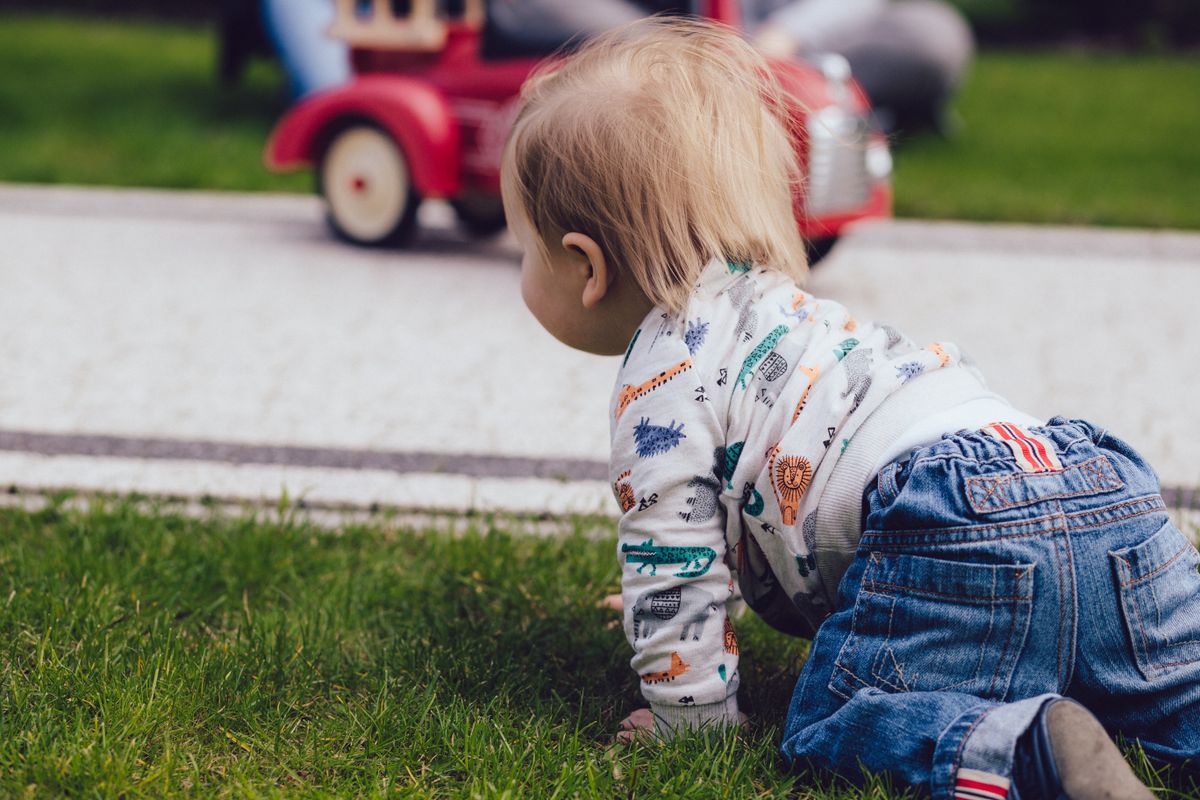
There's no single "correct" way to crawl. Babies find all sorts of creative methods to get moving:
All of these count. The goal is movement and exploration — not technique.
Your baby is building the core strength needed for crawling. During tummy time, they'll start lifting their head and chest, pushing up on their arms, and rocking on their hands and knees. Consistent tummy time helps at this stage.
Most babies are sitting unsupported by around 6 months and starting to lean forward to reach for toys. You may notice them rocking, pivoting, or attempting to lunge towards objects they're interested in.
This is when most babies take their first proper crawling movements. Once they figure out that moving one arm and the opposite knee together gets them somewhere, they tend to speed up very quickly — often from tentative to fast in just a few days.
By now most babies are crawling confidently. Some will also start pulling themselves up to standing, which can sometimes pause crawling as they focus on that exciting new skill.
Most delayed crawling is nothing to worry about — babies develop at their own pace. However, it's worth speaking to your health visitor or GP if your baby:
The NHS offers developmental reviews at around 9–12 months — a great opportunity to raise any concerns with your health visitor.
Once your baby is crawling, pulling to stand isn't far behind, followed by cruising (walking along furniture) and eventually those first independent steps, typically between 9 and 15 months. It all happens fast, so enjoy every stage.
Most babies start crawling between 7 and 10 months, although anywhere from 6 to 12 months is perfectly normal. Most take their first proper crawling movements between 8 and 10 months, then speed up quickly.
Yes. Some babies skip crawling entirely and go straight from sitting to walking, which is absolutely fine. Bottom shuffling, commando crawling and bear crawling all count too — the goal is movement and exploration, not technique.
Offer short, frequent tummy time daily, place toys just out of reach, get down on the floor and crawl with them, and give them a safe, comfortable surface such as a soft play mat for grip and cushioning.
Speak to your health visitor or GP if your baby cannot sit unsupported by 9 months, isn't attempting any movement by 12 months, isn't pulling to stand or walking by 18 months, or loses a motor skill.
General information, not individual medical advice. Speak to your GP, midwife or health visitor about your baby’s needs.
Reading to Your Baby: When to Start and How to Make It Fun
Read moreabout Reading to Your Baby: When to Start and How to Make It Fun
When Do Babies Start Teething? A Month-by-Month Timeline
Read moreabout When Do Babies Start Teething? A Month-by-Month Timeline
Separation Anxiety in Babies: What's Normal and How to Help
Read moreabout Separation Anxiety in Babies: What's Normal and How to Help
Share:
Best Foods for Babies Aged 6 to 12 Months: What to Feed and When
Baby Eczema: Causes, Symptoms and Gentle Care Tips for UK Parents