

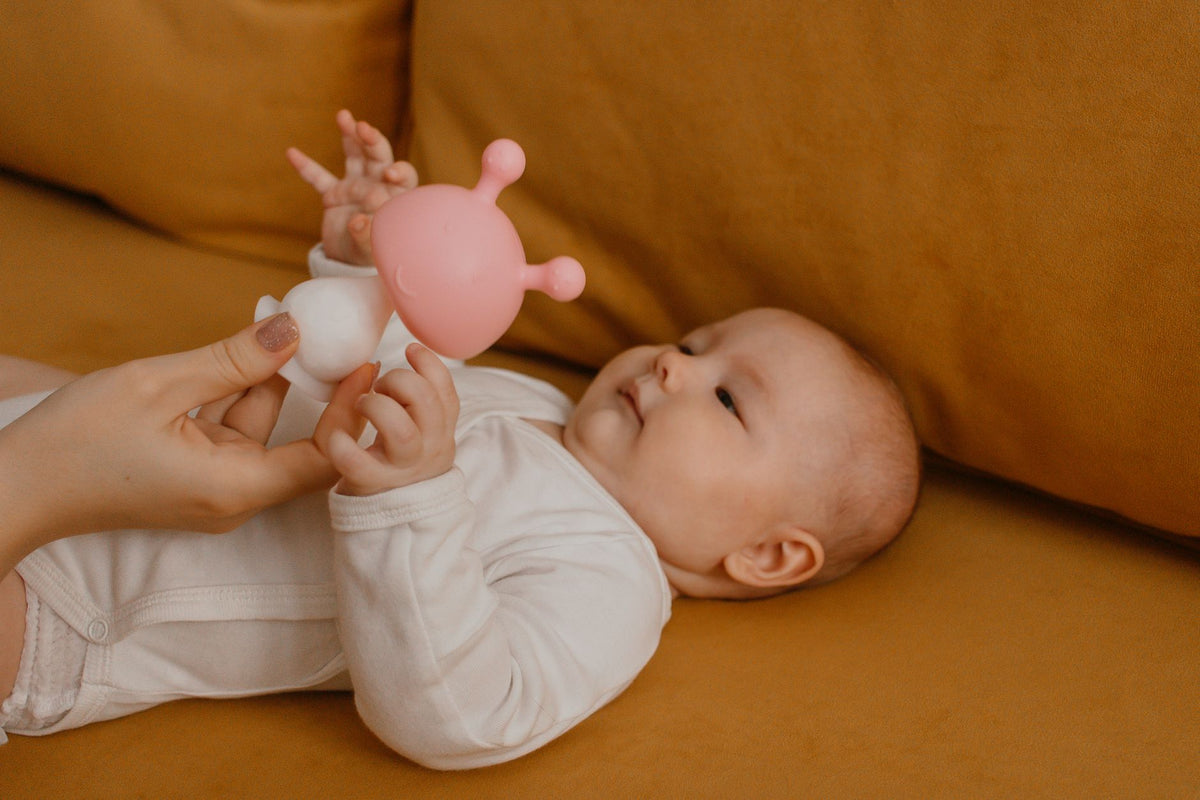
- by Infatot
When Do Babies Start Teething? A Month-by-Month Timeline
- by Infatot
Quick answer: Most babies start teething at around 6 months, but some get their first tooth before 4 months and others after 12 months — a few are even born with a tooth. The bottom front teeth usually come through before the matching top ones, and most children have all their milk teeth by 2 to 3 years old.
Teething follows a rough pattern rather than a fixed schedule. Here is the usual order teeth appear, the signs worth knowing, and what helps.
Most babies start teething at around 6 months. Some start before they are 4 months old, and some not until after 12 months — all of these are normal.
A small number of babies are born with their first teeth. Whichever end of the range your baby sits at, they'll probably get their first tooth some time during their first year.
This is a rough guide to how teeth usually emerge, not a schedule to measure your baby against. Every baby is different.
The central incisors at the front are usually first, at around 6 months.
Bottom teeth often emerge before the matching upper teeth, so the bottom front teeth will usually start to come through before the top front teeth.
Baby teeth sometimes emerge with no pain or discomfort at all, or with only mild symptoms that last a few days. At other times you may notice a cluster of the signs below.
Some people think teething causes symptoms such as diarrhoea, but there is no evidence to support this.
You know your baby best. Get medical advice if your baby has any symptoms that are causing you concern — you can call NHS 111 or contact your GP.
A teething temperature is slightly raised but less than 38C. A temperature of 38C or more is a high temperature, so do not assume it is teething.
Call 999 or go to A&E if your baby:
Call NHS 111 or contact your GP urgently if your baby:
The NHS also has guidance on high temperature (fever) in children and on when to get urgent medical help for babies and children under 5.
Every baby is different, and you may have to try a few things before you find what works.
There is a lack of evidence that teething gels are effective. Teething rings or simple sugar-free painkilling medicines are recommended first.
If you do use a gel, choose one specially designed for young children — general oral pain relief gels are not suitable. Teething gels contain a mild local anaesthetic and are only available from pharmacies, so ask a pharmacist for advice.
Homeopathic products are not recommended for teething. If you use one, make sure it is licensed for use in the UK; some unlicensed products advertised online have been linked to serious side effects.
Helpful tip
Register your baby with a dentist when their teeth start coming through, and start brushing as soon as the first milk tooth breaks through, using a baby toothbrush with a tiny smear of fluoride toothpaste.
Brush at least twice a day, just before bed and at one other time that suits your routine. Sitting your baby on your knee with their head resting against your chest is the easiest position, brushing in small circles over all the surfaces.
Do not worry if you do not manage much at first; the aim is simply to make brushing part of the daily routine.
The central incisors at the front usually come first, at around 6 months. Bottom teeth often emerge before the matching upper teeth, so the bottom front teeth usually appear before the top front teeth.
A teething temperature is slightly raised but less than 38C. There is no evidence that teething causes diarrhoea. If any symptoms are causing you concern, call NHS 111 or contact your GP.
There is a lack of evidence that teething gels are effective. Teething rings or simple sugar-free painkilling medicines are recommended first. If you do use a gel, choose one designed for young children and ask a pharmacist for advice.
Start brushing as soon as the first milk tooth breaks through, using a baby toothbrush with a tiny smear of fluoride toothpaste, at least twice a day. Register your baby with a dentist when their teeth start coming through.
General information, not individual medical advice. Speak to your GP, midwife or health visitor about your baby’s needs.
Reading to Your Baby: When to Start and How to Make It Fun
Read moreabout Reading to Your Baby: When to Start and How to Make It Fun
Separation Anxiety in Babies: What's Normal and How to Help
Read moreabout Separation Anxiety in Babies: What's Normal and How to Help
When Do Babies Start Crawling? A Month-by-Month Guide for UK Parents
Read moreabout When Do Babies Start Crawling? A Month-by-Month Guide for UK Parents


Share:
How to Soothe a Teething Baby at Night
Nursery Germs: Why Babies Get Ill So Often in Their First Term