

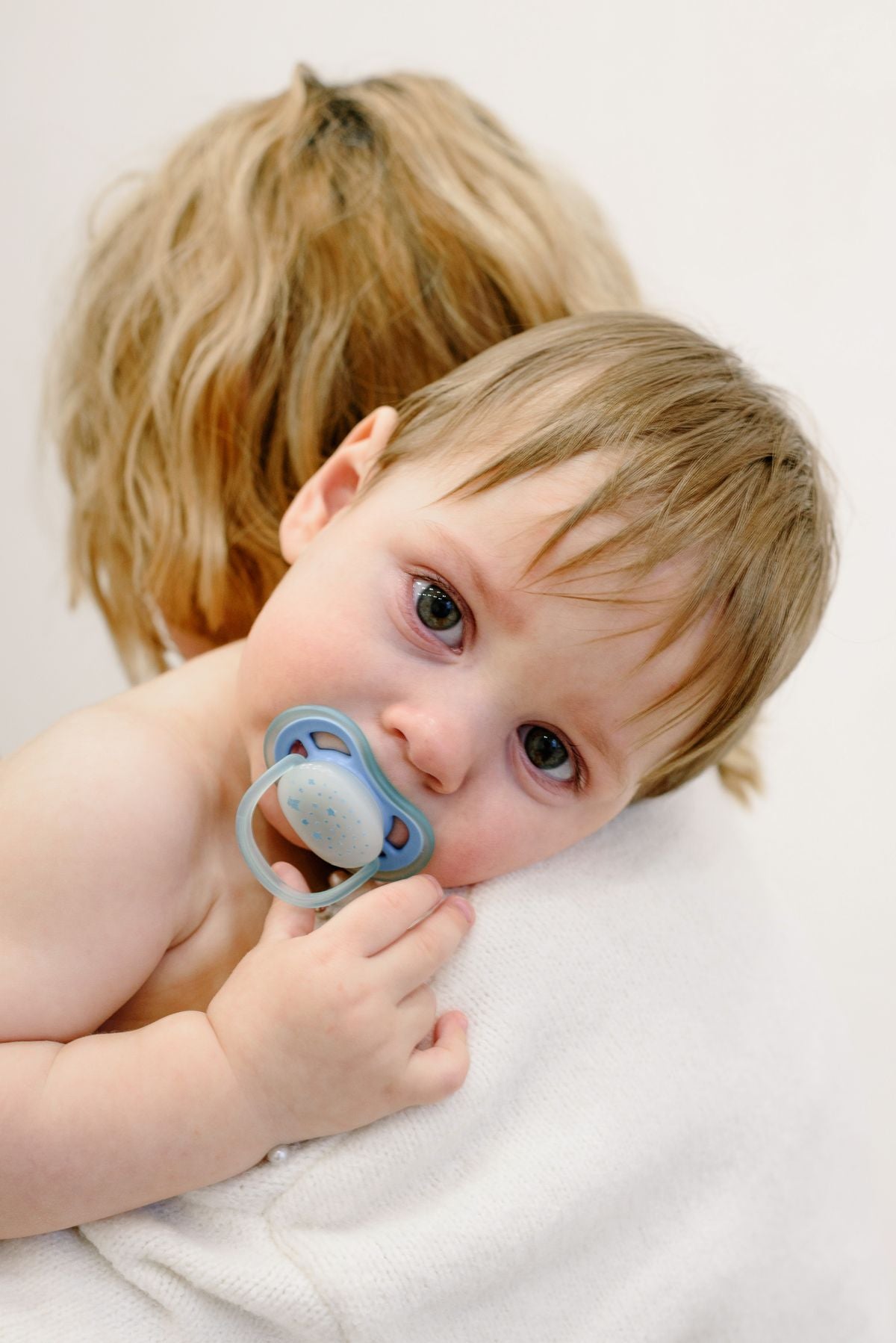
Quick answer: Wean gently by choosing one method and staying consistent: cold turkey suits babies aged 6 to 12 months, gradual restriction cuts dummy use back stage by stage, the Dummy Fairy works for toddlers of about 2–3 years, cutting or puncturing the teat once means the dummy has to go in the bin, and a comforter offers something else to hold. Most children give up dummies themselves before age 4.
The dummy — or soother, or pacifier — can feel like an absolute lifeline in those early weeks. Many newborns are soothed almost instantly by it, and some research suggests that using a dummy to settle your baby to sleep can help lower the risk of SIDS. But at some point, most parents start wondering: how do I get rid of it?
The good news is that most children will give up dummies on their own before age 4. The even better news is that, with the right approach, the transition doesn't have to be as dramatic as you might fear.
Before tackling how to wean, it's worth understanding when (and why) you might want to:
On the other hand, dummies also have genuine benefits, especially for sleep in the early months, and there's no reason to rush if you and your baby are happy.
If your baby uses a dummy for sleep, keep offering it for every sleep until they are around 6 months old, which is past the peak age for SIDS. After that, there's no single "right" age, but general guidance suggests:
The NHS recommends restricting dummy use to sleep times only from around 6 months, which naturally reduces dependency over time.
Simply remove the dummy in one go. This works best in babies aged 6 to 12 months who don't yet have strong emotional attachment to the object. Expect a few difficult days and nights, then it's done.
Reduce dummy use progressively: first, limit it to sleep times only. Then, limit it to the cot only (it stays in bed when baby wakes). Then remove it from nap times. Then bedtime. Each stage allows gradual adjustment.
Popular with toddlers old enough to understand stories (usually 2–3 years). The child "gives" their dummies to the Dummy Fairy (or hangs them on a tree in the garden) in exchange for a small gift or treat. It gives the child a sense of agency in the process.
Cut or puncture the teat once so that the dummy is broken, then put it in the bin straight away. Do not give your child a cut or damaged dummy to keep using. A damaged teat could split or come away, and dummies are often used at sleep time when nobody is watching. The NCT advises checking dummies regularly for wear and tear and throwing one away if you see any.
Introduce a soft toy or comforter (a small, safe muslin or soft toy that smells familiar) as an alternative comfort object before starting the dummy removal process. This gives your child something else to reach for at night. If your baby is under 12 months, do not leave a soft toy or muslin in their cot: the NHS advises keeping the cot clear of soft toys and anything that could cover your baby's face.
There is no single right age. The NHS advises limiting dummy use and stopping before 12 months if possible for dental health, and restricting dummies to sleep times only from around 6 months.
Yes, it is described as an ideal window because babies are less attached than older toddlers and don't have the language to negotiate.
Dummy use beyond 2–3 years can affect tooth alignment, particularly the front teeth. Constant use can also reduce babbling practice, so limiting dummies during awake, active periods from around 6 months is advisable.
Only as a way to finish with the dummy. Cut or puncture the teat once so that it is broken, then put the dummy in the bin. Do not let your child keep using a cut or damaged dummy: the NCT advises checking dummies for wear and tear and throwing one away if you see any.
General information, not individual medical advice. Speak to your GP, midwife or health visitor about your baby’s needs.
Fireworks and babies: protecting sleep and hearing around Bonfire Night
Read moreabout Fireworks and babies: protecting sleep and hearing around Bonfire Night
What should a baby wear to bed when the house gets colder?
Read moreabout What should a baby wear to bed when the house gets colder?
What temperature should your baby's room be once the heating goes on?
Read moreabout What temperature should your baby's room be once the heating goes on?


Share:
Postpartum Recovery: A Realistic Guide for New UK Mums
How Much Sleep Does My Baby Need? A Guide by Age