

- by Infatot
Baby Massage: Benefits, Techniques and How to Get Started
- by Infatot
Quick answer: Many parents wait until 4 to 6 weeks after birth to start gentle baby massage, as an NHS service in Norfolk recommends. Choose a calm, alert moment at least 45 minutes after a feed, warm the room to about 20–22°C, lay your baby on a towel on the floor, use an unscented plant oil such as sunflower, grapeseed or fractionated coconut, and work with long, gentle strokes from the legs and feet to the tummy, chest, arms and back.
Baby massage is one of the most intimate and beneficial things you can do with your baby. Widely practised around the world and increasingly recommended by health professionals in the UK, regular gentle massage can do wonders for both your baby's wellbeing and your own.
Research supports a wide range of benefits from regular baby massage, including:
Many parents wait until 4 to 6 weeks after birth. An NHS service in Norfolk (Just One Norfolk) recommends this, so that your baby's skin can adapt and your baby is more settled into the world outside the womb. Not every baby enjoys massage at first, and that's fine: stop and try again when they are a little older. There's no upper age limit — massage remains beneficial throughout childhood and beyond.
Massage works best when your baby is calm and alert — not immediately after a feed (wait at least 45 minutes to reduce the risk of reflux) and not when they're hungry or very tired. A relaxed baby who's in a sociable mood will get the most from it. Do not massage your baby if they are unwell or have any open wounds or broken skin.
One of the principles taught in infant massage classes (based on IAIM, the International Association of Infant Massage) is to always ask your baby before you begin. Hold your hands in front of them and say "Can I give you a massage?" Watch for an open, receptive response (relaxed body, open hands, eye contact) versus a closed one (fussing, turning away, arching back). Respecting these cues builds trust and communication.
Most babies enjoy having their legs massaged first (it's a less sensitive area than the tummy or face). Use long, gentle strokes from the hip down to the foot. Gently circle the ankle and squeeze each toe.
For the tummy, use slow, gentle clockwise circular motions (following the direction of the digestive system). Place both hands flat on the tummy and make "I Love You" strokes: an I down the left side, an L across the bottom and up the left side, and a U around the outside of the whole tummy. Particularly good for colic and wind.
With flat hands, sweep outward across the chest. Gently stroke down each arm and squeeze the hands.
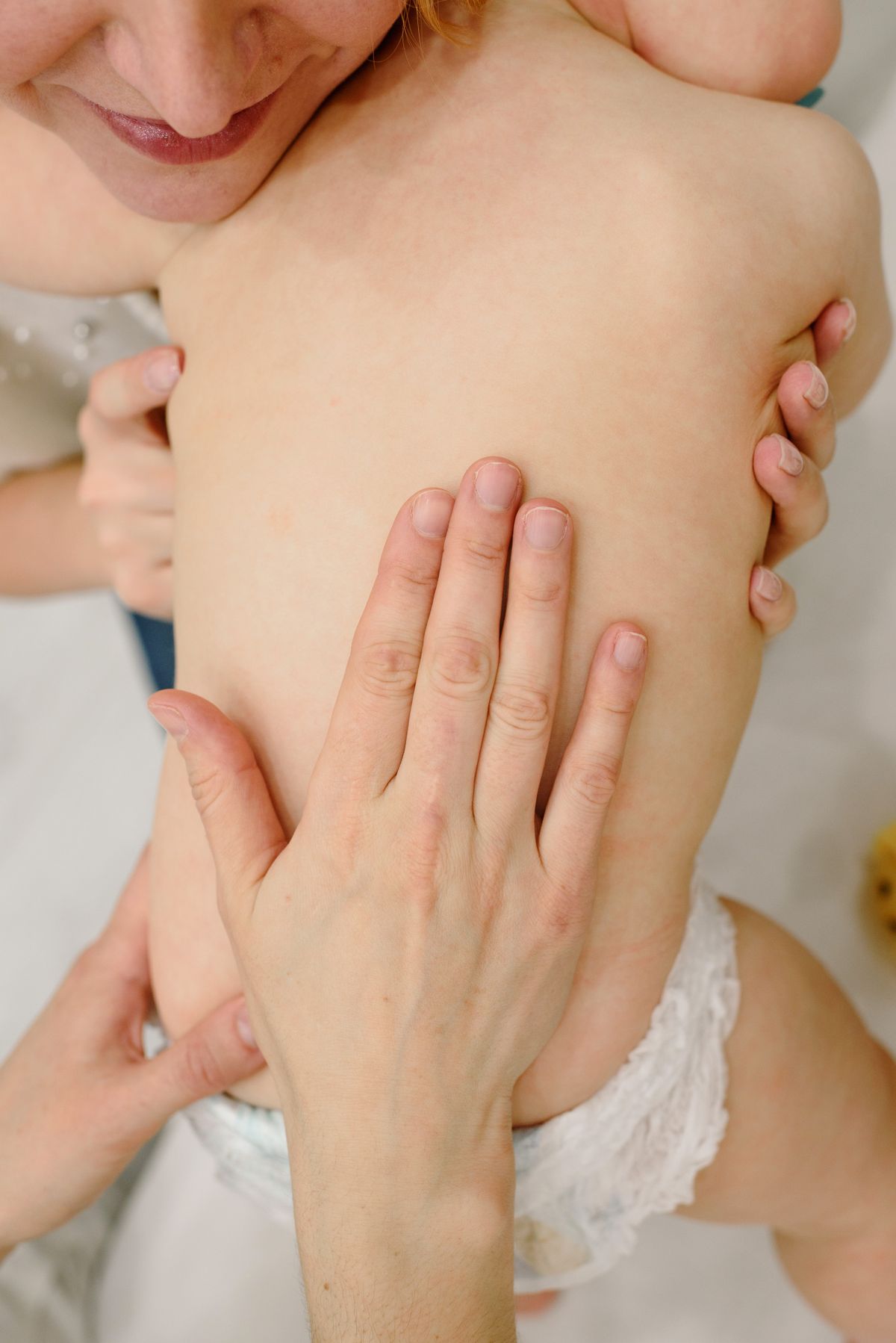
Turn your baby onto their tummy (only when they can hold their head up comfortably). Use long, slow strokes from the shoulders down to the bottom.
Many children's centres and NHS trusts offer baby massage classes. These are a way to learn correct technique, meet other parents, and give your baby a structured, regular massage experience. Ask your health visitor about classes in your area.
Many parents wait until 4 to 6 weeks after birth, which an NHS service in Norfolk recommends so that your baby's skin can adapt and your baby is more settled. There is no upper age limit, as massage stays beneficial throughout childhood and beyond.
Wait at least 45 minutes after a feed to reduce the risk of reflux. Massage works best when your baby is calm and alert, rather than hungry or very tired. Do not massage your baby if they are unwell or have any open wounds or broken skin.
Use an unscented plant oil such as sunflower, grapeseed or fractionated coconut oil. Avoid nut- or wheatgerm-based oils, olive, mustard and mineral oils, and essential oils.
Use slow, gentle clockwise circles following the digestive system, then place both hands flat and make "I Love You" strokes. This is particularly good for colic and wind.
General information, not individual medical advice. Speak to your GP, midwife or health visitor about your baby’s needs.
Halloween with a baby or toddler: costumes, face paint and sweets
Read moreabout Halloween with a baby or toddler: costumes, face paint and sweets
When Do Babies Start Crawling? A Month-by-Month Guide for UK Parents
Read moreabout When Do Babies Start Crawling? A Month-by-Month Guide for UK Parents
Tummy Time: The Complete Guide for UK Parents (When to Start, How Long & Tips That Work)

Share:
Postpartum Hair Loss: Why It Happens and When It Stops
When Do Babies Start Pulling Themselves Up to Stand?