

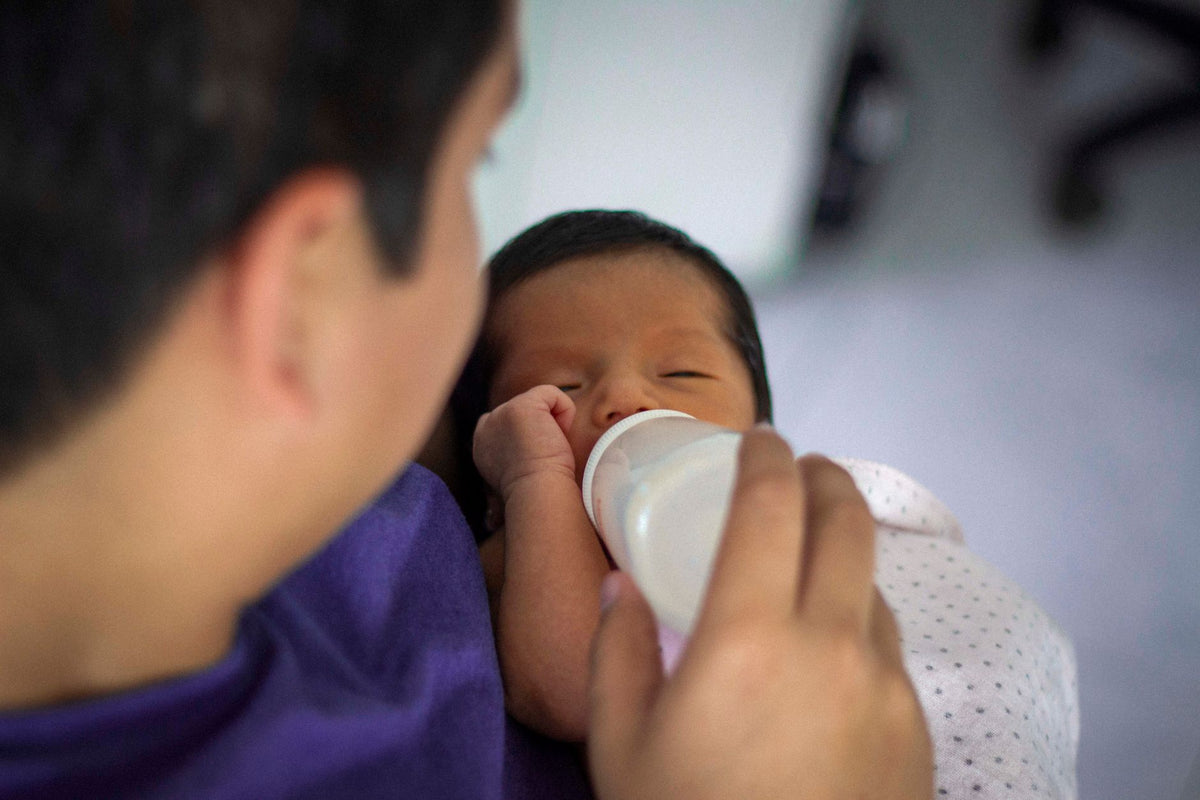
Quick answer: Baby hiccups are caused by sudden contractions of the still-maturing diaphragm, and they are almost always harmless. They do not hurt your baby or affect breathing. Winding, a more upright feeding position, a dummy, or simply waiting usually helps, and most bouts settle within 5–10 minutes. See your GP if hiccups are frequent or distressing. Refuses feeds or keeps being sick: call 111 urgently. Green or yellow-green vomit, or blood in vomit: call 999 or go to A&E.
Hiccups are one of those things that can send a new parent into a mild panic, especially when they happen frequently or seem difficult to stop. The reassuring truth is that hiccups in babies are almost always completely harmless, and many babies hiccup a great deal, especially in the newborn weeks.
Hiccups are caused by sudden contractions of the diaphragm — the large muscle beneath the lungs that controls breathing. In babies, the diaphragm is still maturing and can be easily triggered by:
Interestingly, babies hiccup in the womb too — you may remember feeling those rhythmic little jolts during pregnancy.
No. Hiccups do not hurt babies and do not affect their breathing. Many babies sleep through them without any bother at all. While frequent hiccupping can look distressing to a parent, your baby is generally quite unbothered.
There is no guaranteed cure, but the following often help:
Avoid the home remedies sometimes suggested for adults (like holding your breath or drinking upside down) — these are not safe or appropriate for babies.
Yes, if your baby is hungry. Hiccups do not prevent a baby from feeding safely. If anything, the sucking motion can sometimes help the hiccups settle faster.
Frequent hiccups can sometimes be associated with gastro-oesophageal reflux (GOR), where stomach acid travels back up into the oesophagus. If your baby has hiccups alongside other reflux symptoms, such as bringing up large amounts of milk, arching their back during feeds, or seeming in persistent discomfort, it's worth discussing with your GP or health visitor.
Hiccups rarely require medical attention. However, speak to your GP if hiccups are very frequent and persistent (lasting more than an hour regularly) or appear to be causing your baby distress.
Ask for an urgent GP appointment or call NHS 111 if your baby is refusing to feed, keeps being sick and cannot keep fluid down, or is projectile vomiting (being sick with more force than usual).
Call 999 or go to A&E if your baby has green or yellow-green vomit, is vomiting blood, or has vomit that looks like ground coffee.
Most bouts settle on their own within 5–10 minutes, without you needing to do anything at all.
Yes, if your baby is hungry. Hiccups don't stop a baby feeding safely, and the sucking motion can sometimes help the hiccups settle faster.
Frequent hiccups can sometimes be linked with reflux. If they come with bringing up large amounts of milk, back arching during feeds, or persistent discomfort, speak to your GP or health visitor.
General information, not individual medical advice. Speak to your GP, midwife or health visitor about your baby’s needs.
Blocked nose in babies: how to help them feed and sleep
Read moreabout Blocked nose in babies: how to help them feed and sleep
Baby eczema and dry skin when the heating goes on
Read moreabout Baby eczema and dry skin when the heating goes on
Flu and RSV vaccines in pregnancy: when to have each one this autumn
Read moreabout Flu and RSV vaccines in pregnancy: when to have each one this autumn

Share:
Fever in Babies: When to Worry and When to Call the GP
Flat Head Syndrome in Babies: Causes, Prevention & What UK Parents Can Do