

Quick answer: At week 15 your baby is about the size of an apple, roughly 10cm crown to rump, with eyes sensitive to light and taste buds forming. Your bump is showing and you may feel better than in the first trimester. The NHS recommends at least 150 minutes of moderate activity a week, plus daily pelvic floor exercises.
What parents need to know
Week 15 finds many mums-to-be in one of the most enjoyable phases of pregnancy. The worst of the first trimester is behind you, the bump is showing, and your baby is developing in fascinating ways. This week we look at staying active during pregnancy and the remarkable development of your baby's senses.
| Size | About the size of an apple |
|---|---|
| Length | Around 10cm crown to rump |
| Exercise target | 150 minutes of moderate activity per week |
| Pelvic floor | Three sets of exercises daily |
How big is your baby at 15 weeks?
Your baby is now about the size of an apple — around 10cm from crown to rump. They're putting on weight steadily, though they are still quite lean at this stage.
What's happening with your baby?
Your baby's senses are beginning to develop in remarkable ways this week. Their eyes, while still sealed shut, are sensitive to light. If you were to shine a torch near your bump, your baby would likely move away from it. Taste buds are forming on your baby's tongue, and they are already tasting the amniotic fluid — which is flavoured by whatever you eat. Research suggests that babies exposed to a wide variety of flavours in the womb may be more receptive to different foods after birth.
Your baby's bones continue to harden and ossify. The skeleton is becoming stronger by the day, supported by the calcium in your diet. The skin, while still very thin and transparent, is developing layers. Lanugo (the fine body hair) continues to grow. Your baby's legs are now longer than their arms, and all four limbs are moving actively in the amniotic fluid.
What's happening in your body?
At week 15, you're likely feeling noticeably better than you did in the first trimester. Your uterus continues to rise out of the pelvis, and you may be able to feel a firm, rounded shape just below your navel when you press gently. Your bump is properly showing now — you may find that strangers are starting to notice.
Nosebleeds and nasal congestion are common in the second trimester due to increased blood flow and the effect of hormones on the nasal membranes. This is harmless, though it can be uncomfortable. Keep well hydrated, use a humidifier if nasal dryness is a problem, and see your GP if nosebleeds are very frequent or heavy.
Round ligament pain — a sharp, stabbing or stretching sensation in the lower abdomen or groin — may become more noticeable as your bump grows. This is caused by the ligaments that support the uterus stretching under pressure. It typically eases with rest. Pelvic girdle pain (PGP), a common pregnancy complaint, can also begin around this time. If you experience significant pain in the pelvis, hips, or lower back, speak to your midwife for a referral to a physiotherapist.
Exercise in the second trimester
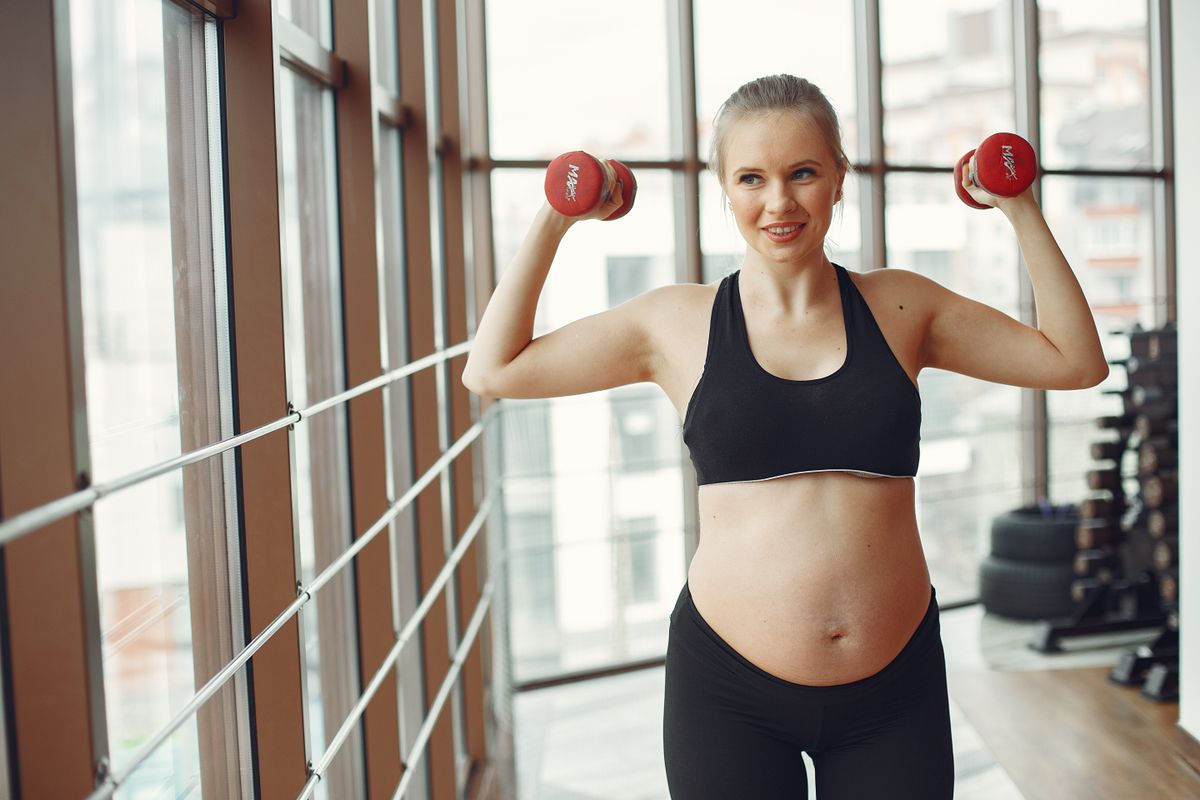
The second trimester is an excellent time to establish or maintain a regular exercise routine. The NHS recommends at least 150 minutes of moderate activity per week for pregnant women, spread over several days. Moderate activity means you can hold a conversation but are slightly breathless.
Excellent pregnancy-safe exercise options include walking, swimming (gentle swimming or aquanatal classes are particularly good for pregnancy as the water supports your bump), pregnancy yoga or Pilates (which also helps prepare your body for labour), cycling on a stationary bike, and low-impact aerobics classes specifically designed for pregnancy. Avoid contact sports, activities with a high risk of falling (such as horse riding or skiing), and high-impact running if it causes discomfort.
If you haven't been exercising before pregnancy, now is the time to start gently. Begin with short walks or a gentle pregnancy yoga DVD, and gradually increase the duration and intensity as you feel comfortable.
Pelvic floor exercises
It's never too early to start pelvic floor exercises. The pelvic floor muscles support the uterus, bladder, and bowel, and they undergo significant strain during pregnancy and childbirth. Regular pelvic floor exercises throughout pregnancy and after birth significantly reduce the risk of urinary incontinence and support recovery. Aim to do three sets of exercises daily, holding and releasing the pelvic floor muscles. Your midwife or a physiotherapist can guide you on technique if you're unsure.
Your week 15 checklist
This week:
- Aim for 150 minutes of moderate exercise per week.
- Start daily pelvic floor exercises.
- Eat a calcium-rich diet to support your baby's bone development.
- Mention any pelvic pain to your midwife.
- Enjoy the food you're eating knowing your baby can already taste it.
Sources & further reading
- NHS — You and Your Baby at 15 Weeks Pregnant
- NHS — Pelvic Floor Exercises
- Tommy's — Week 15 of Pregnancy
- NCT — Week 15 of Pregnancy
General information, not individual medical advice. Speak to your GP, midwife or health visitor about your baby’s needs.

Share:
Pregnancy Week 14: Bump Growing, Energy Returning and Your 16-Week Check
Pregnancy Week 16: Your Midwife Appointment and Antenatal Classes