

Quick answer: At 9 weeks your baby is about the size of a grape, roughly 23mm from crown to rump, and this is the last week of the embryonic period — next week they are called a foetus. Fingers and toes are more distinct but still slightly webbed, the embryonic tail has gone, and fatigue often peaks as progesterone rises.
What parents need to know
Week 9 is an exciting milestone: your baby is nearly finished with the embryonic period, and next week they will officially be called a foetus. Growth is rapid, and small but significant details — fingers, toes, eyelids — are becoming more defined every day.
| Size | About the size of a grape |
|---|---|
| Length | Approximately 23mm crown to rump |
| Stage | Last week of the embryonic period |
| Oily fish | Up to two portions a week |
| NHS dental care | Free in pregnancy and 12 months after birth |
How big is your baby at 9 weeks?
Your baby is now about the size of a grape — approximately 23mm from crown to rump. This might not sound like much, but your baby has grown enormously since the moment of fertilisation just seven weeks ago.
What's happening with your baby?
The embryonic tail, a remnant from very early development, has now completely disappeared. Your baby's fingers and toes are much more distinct now, though they are still slightly webbed at the tips. The eyes, while still sealed shut by developing eyelids, are moving to the front of the face. Your baby's ears are forming on the outside, taking on a shape that will eventually be recognisable.
The digestive system is becoming more sophisticated — the intestines are growing so quickly that they temporarily loop into the umbilical cord because there isn't enough room in the abdomen yet. Don't worry: this is completely normal and will resolve naturally in the coming weeks. Your baby's muscles are developing, enabling primitive movements, though these remain far too small to feel.
What's happening in your body?
Many women find that week 9 is one of the hardest in terms of first trimester fatigue. Your body is producing an enormous amount of progesterone — the hormone that maintains the pregnancy — and this has a sedative effect. Combined with the physical demands of growing a baby, it's completely understandable to feel exhausted.
Your blood volume is increasing significantly to support the placenta and growing baby. This can leave some women feeling dizzy when they stand up quickly (a phenomenon known as postural hypotension). Getting up slowly, staying well hydrated, and eating regularly can help.
You may also notice that your skin and hair are changing. Some women develop acne in early pregnancy due to hormonal fluctuations. Others find their skin is drier than usual. These changes are entirely normal and usually resolve as pregnancy progresses.
Supplements in pregnancy
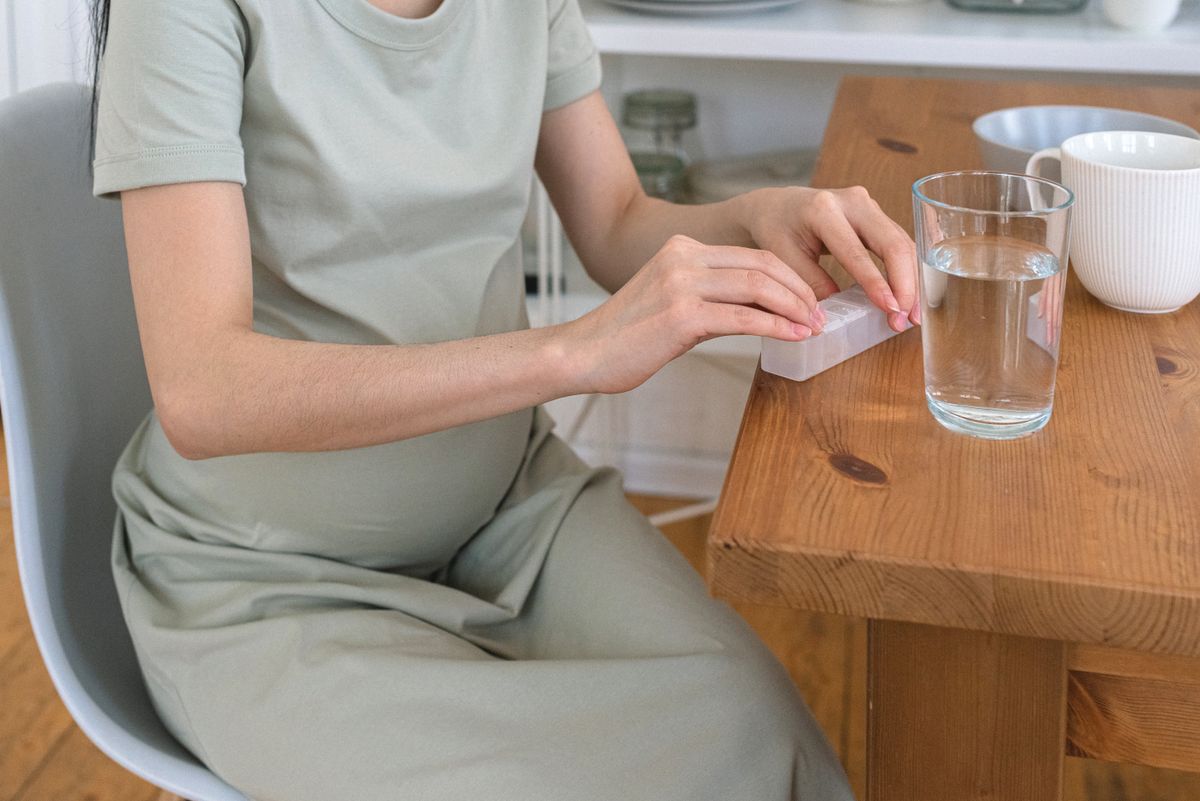
Alongside folic acid and vitamin D, which are recommended throughout pregnancy, there are other supplements you might consider. Iron-rich foods or iron supplements may be suggested by your midwife if your blood test shows low iron levels. Calcium is important for your baby's developing bones — dairy products, fortified plant milks, and green leafy vegetables are good dietary sources. Omega-3 fatty acids, found in oily fish (up to two portions a week) or in algae-based supplements, support your baby's brain and eye development.
Avoid high-dose vitamin A supplements (including cod liver oil) and any herbal supplements not specifically approved by your GP or midwife, as some herbs can be harmful during pregnancy.
Dental care in pregnancy
Pregnancy hormones can affect your gums, making them more sensitive, swollen, and prone to bleeding — a condition known as pregnancy gingivitis. Good dental hygiene is more important than ever. Book a dental appointment if you haven't had one recently: all NHS dental treatment is free during pregnancy and for 12 months after your baby's birth, using your Maternity Exemption Certificate. Inform your dentist that you are pregnant, particularly if X-rays are required.
When to call your midwife
Most symptoms at this stage are normal, but do contact your midwife or GP if you experience any heavy bleeding, severe or persistent abdominal pain, signs of a urinary tract infection (such as pain when urinating, cloudy urine, or a high temperature), or if you are unable to keep any fluids down for more than 24 hours. Your health and your baby's wellbeing always come first, so never hesitate to seek advice.
Your week 9 checklist
This week:
- Rest when you need to — fatigue is at its peak for many women.
- Book a dental check-up if needed.
- Review your supplement routine with your GP or midwife.
- Stay hydrated and eat little and often.
- If you haven't had your booking appointment, chase your referral urgently.
Sources & further reading
- NHS — You and Your Baby at 9 Weeks Pregnant
- NHS — Vitamins, Supplements and Nutrition in Pregnancy
- Tommy's — Week 9 of Pregnancy
- NCT — Week 9 of Pregnancy
General information, not individual medical advice. Speak to your GP, midwife or health visitor about your baby’s needs.

Share:
Pregnancy Week 8: Baby's Major Organs Are Forming
Pregnancy Week 10: Your Baby Is Now a Foetus