

Quick answer: At 36 weeks your baby measures about 47.4cm and weighs around 2.6kg, and your midwife appointment this week focuses on checking their position by feeling your bump. Head-down is ideal for a vaginal birth; breech or transverse means a referral for further assessment, and an ECV may be offered. Your midwife will also discuss Group B Strep, and your hospital bag should now be packed.
At 36 weeks, you're considered late preterm, and if your baby were born now, they'd need very little medical support in most cases. You have an important midwife appointment this week that focuses on checking your baby's position ahead of birth. With just four weeks to go, it's time to make sure everything is in place.
| Length | About 47.4cm crown to heel |
|---|---|
| Weight | Around 2.6kg, like a large papaya |
| Weekly weight gain | Around 200–250g each week |
| This week's appointment | 36-week midwife check of baby's position |
| Group B Strep carriage | About 2 to 4 in 10 women (20 to 40%) |
Your baby now measures approximately 47.4cm from crown to heel and weighs around 2.6 kilograms, roughly the weight of a large papaya. They're continuing to put on weight, gaining around 200–250g each week in preparation for birth.
Your baby is almost fully developed. Most of the lanugo (fine body hair) has now been shed, and the vernix caseosa (white waxy coating) is beginning to diminish too. Your baby's gums are firm — even though teeth won't appear until around 6 months of age, the tooth buds are fully formed beneath the gums. The digestive system is ready for life outside the womb, though it won't be fully mature until your baby has had several months of feeding. Meconium — your baby's first bowel movement — is accumulating in the intestines. It's dark green or black and is made up of materials swallowed during pregnancy.
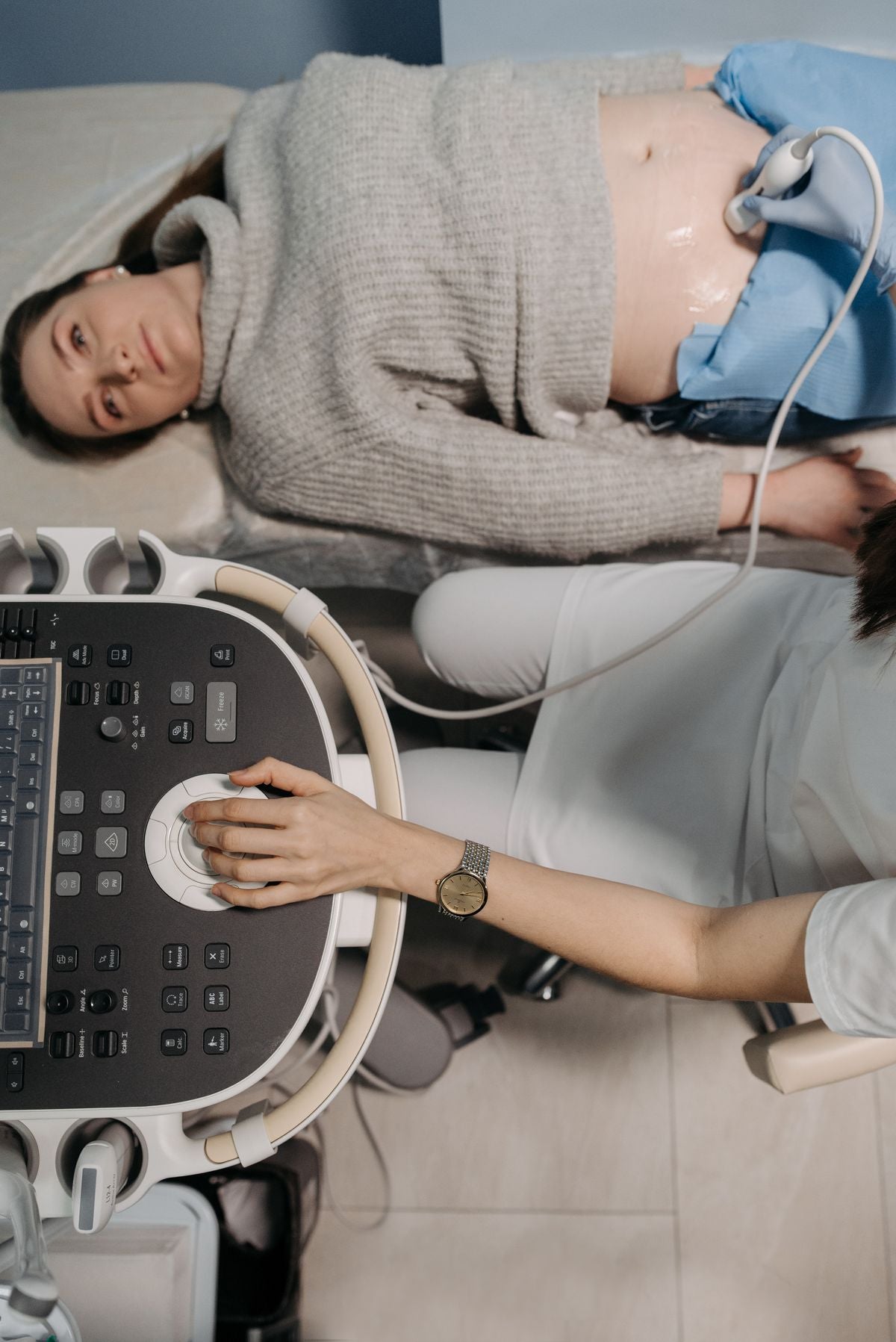
At your 36-week appointment, your midwife will check your baby's position by feeling your bump. If your baby is head-down (cephalic presentation), this is ideal for a vaginal birth. If your baby is in a breech position (bottom or feet first) or in a transverse lie (lying across the womb), your midwife will refer you for further assessment. An External Cephalic Version (ECV) may be offered to attempt to turn a breech baby. If this is not possible or not desired, your care team will discuss the options for a planned caesarean section.
Your midwife will also discuss Group B Streptococcus (GBS) with you. GBS is a bacterium carried by about 2 to 4 in 10 women (20 to 40%) in the UK and is usually harmless to the mother. However, it can occasionally be passed to the baby during birth and cause serious infection. Call 999 or go to A&E if your baby shows signs of a group B strep infection, such as being floppy or not responding normally, grunting or working hard to breathe, very fast or slow breathing, an unusually high or low temperature, changes in skin colour or blotchy skin, or not feeding well or vomiting milk up. These signs can develop up to 3 months after birth. The UK does not routinely screen for GBS, but if GBS has been detected incidentally during this pregnancy, you'll be offered intravenous antibiotics during labour to protect your baby. If so, contact your midwife or maternity unit as soon as you go into labour or your waters break, so you can have the antibiotics as soon as possible.
By 36 weeks, your hospital bag should be fully packed. Ensure your birth partner knows the route to the hospital, where to park, and how to contact the maternity unit out of hours. Know the signs of labour: regular, painful contractions that become stronger, longer, and closer together; your waters breaking (a gush or trickle of clear or pinkish fluid); or a 'show' (mucus plug, often slightly bloodstained).
Some symptoms in pregnancy can be a sign of something serious and need checking quickly. This is who to contact, and how soon.
Call 999 if:
Always call 999 if you think it's a life-threatening emergency, no matter what stage of pregnancy you are.
Call your midwife or maternity unit now if:
If your baby's movements change, do not wait until the next day: call immediately, even if it's the middle of the night. Do not use a home doppler to check the heartbeat yourself. Even if you hear a heartbeat, this does not mean your baby is well.
If your waters break, use a period pad (not a tampon) so your midwife can check the colour of the waters, and tell them immediately if the waters are smelly or coloured.
You can also call your midwife or maternity unit if you're unsure or worried about anything.
If you cannot reach them, or you're not sure what to do, call NHS 111.
Speak to your midwife or GP if:
Go to sleep on your side. From 28 weeks, the safest position to go to sleep is on your side, either left or right. Research suggests that, after 28 weeks, falling asleep on your back can double the risk of stillbirth. This includes daytime naps. If you wake up on your back, just turn onto your side and go back to sleep.
This week:
General information, not individual medical advice. Speak to your GP, midwife or health visitor about your baby’s needs.
Flu and RSV vaccines in pregnancy: when to have each one this autumn
Read moreabout Flu and RSV vaccines in pregnancy: when to have each one this autumn
Pregnancy Week 40: Your Due Date — What Happens Next
Read moreabout Pregnancy Week 40: Your Due Date — What Happens Next
Pregnancy Week 39: Almost There — Overdue Options and Your Baby Ready to Be Born
Read moreabout Pregnancy Week 39: Almost There — Overdue Options and Your Baby Ready to Be Born

Share:
Pregnancy Week 35: Birth Preferences, Hypnobirthing, and Your Baby's Final Preparations
Pregnancy Week 37: Full Term — What to Expect as Labour Approaches