

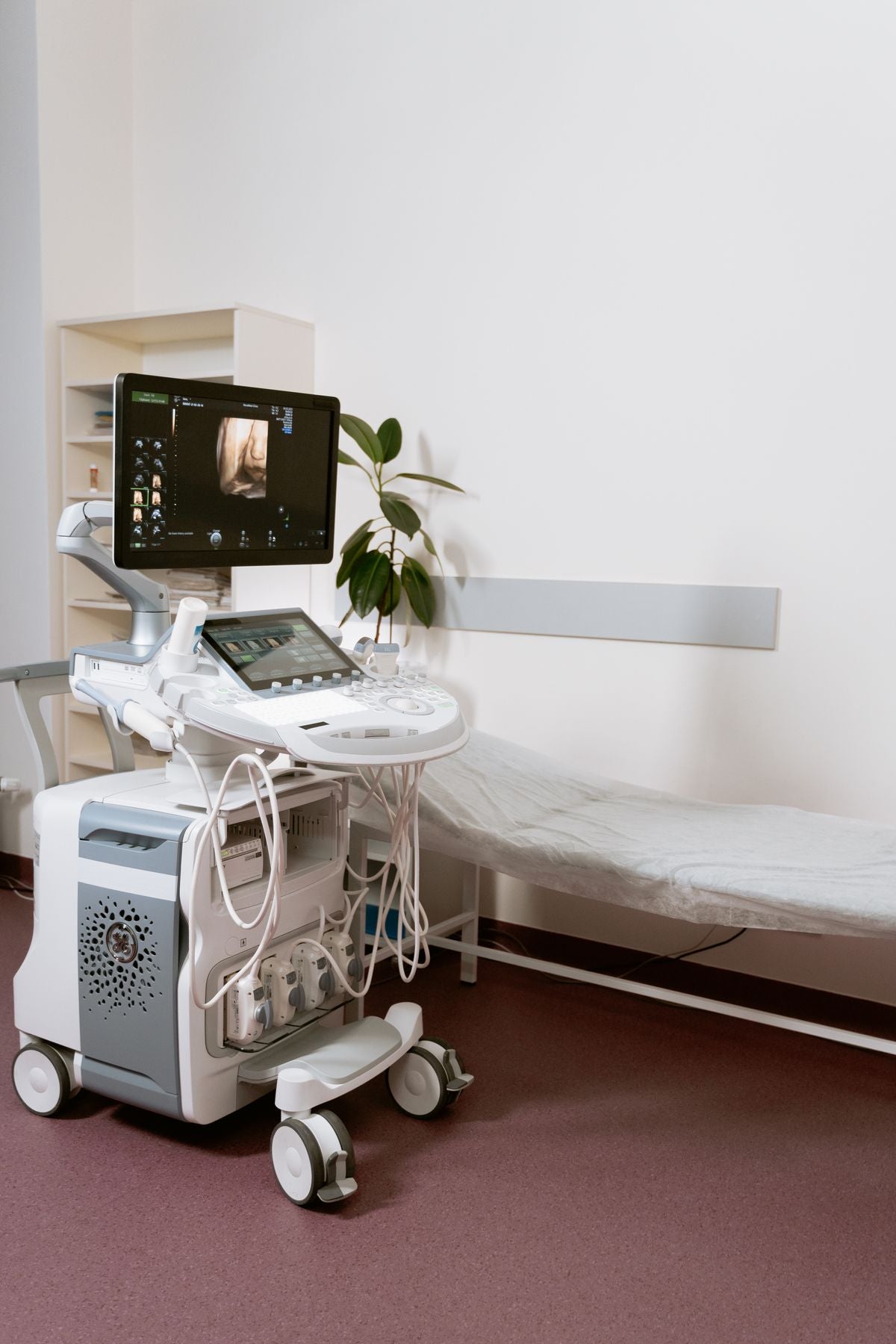
Quick answer: At 12 weeks your baby is about 60mm crown to rump, roughly the size of a plum, and fully formed. Your NHS dating scan measures your baby, checks the heartbeat and sets your estimated due date, with nuchal translucency measured as part of combined screening. Nausea often eases now, and miscarriage risk drops to around 1% or less.
What parents need to know
Week 12 is a milestone that many pregnant women have been counting down to. Your dating scan is happening (or has just happened), and you're approaching the end of the first trimester. For many families, this is the week they feel ready to share their wonderful news with the world.
| Baby's size | About 60mm crown to rump, roughly a plum |
|---|---|
| This week's appointment | NHS dating scan, usually abdominal |
| Scan checks | Crown-rump measurement, heartbeat, nuchal translucency |
| Screening offered | Combined screening: nuchal translucency plus blood test |
| Miscarriage risk | Drops to around 1% or less after 12 weeks |
How big is your baby at 12 weeks?
Your baby is now about 60mm from crown to rump — roughly the size of a plum. At this stage, the measurements your sonographer takes will be used to calculate your official estimated due date (EDD).
What's happening with your baby?
At 12 weeks, your baby is fully formed — every organ, muscle, limb, and bone is in place. The remaining weeks and months of your pregnancy are about growth and the gradual maturation of these systems. Your baby's face now looks distinctly human, with eyes close together at the front, ears in their final position, and a recognisable nose and mouth. Fingers and toes have nails beginning to grow. Your baby's kidneys are now functioning and producing urine, which is passed into the amniotic fluid (and swallowed again — a completely normal part of foetal development).
The most remarkable development at this stage is your baby's reflexes. They can now yawn, stretch, and make sucking movements. They may even have hiccups.
The 12-week dating scan: what happens
Your NHS dating scan is usually carried out abdominally (over your bump) with a gel applied to your skin. In some cases, particularly if the image is unclear, a transvaginal scan (internal) may be offered instead. You'll usually be asked to arrive with a full bladder, as this helps push the uterus up and gives a clearer view.
The sonographer will measure your baby from crown to rump and check the heartbeat. They will also look at the nuchal translucency (the fluid at the back of your baby's neck) as part of the combined screening for chromosomal conditions. You will usually see your baby moving on the screen, which is often an incredibly emotional experience for parents.
If the dating scan confirms a singleton pregnancy, you'll be given your EDD and may receive scan photos to take home. If twins or multiples are detected, you will be referred to a specialist team for more frequent monitoring.
Chromosomal screening: your choices
Combined screening (the nuchal translucency measurement plus a blood test) is offered to all women in England. It gives a risk score for Down's syndrome, Edwards' syndrome, and Patau's syndrome. Accepting or declining this screening is entirely your decision. If screening indicates an increased risk, you'll be offered further diagnostic tests, such as chorionic villus sampling (CVS) or amniocentesis, which give a definitive answer. Your midwife will explain all your options clearly and without pressure.
What's happening in your body?
You are now at the end of the first trimester. For many women, nausea starts to ease around now, and energy levels begin to recover. The second trimester is often described as the most comfortable phase of pregnancy. You may start to notice a small but definite bump emerging over the next few weeks as your uterus rises above the pubic bone.
Your risk of miscarriage drops significantly after 12 weeks, to around 1% or less. While miscarriage can occur later in pregnancy, it becomes increasingly uncommon after this point.
Your week 12 checklist
This week:
- Attend your 12-week dating scan.
- Ask any questions you have about screening.
- Celebrate reaching this significant milestone.
- Consider sharing your news with family and friends if you'd like to.
- Contact your employer if you haven't already done so.
- Look forward to the second trimester.
Sources & further reading
- NHS — You and Your Baby at 12 Weeks Pregnant
- NHS — Your 12-Week Pregnancy Scan
- Tommy's — Week 12 of Pregnancy
- NCT — Week 12 of Pregnancy
General information, not individual medical advice. Speak to your GP, midwife or health visitor about your baby’s needs.



Share:
Pregnancy Week 11: Almost at the Scan — What to Expect
Pregnancy Week 13: Welcome to the Second Trimester